2026–2027 Best K–12 Schools in Vermont: A Practical Guide for Families

Choosing a school for your child is both exciting and stressful. Vermont’s small class sizes, close-knit communities, and variety of public, independent, and regional options give families many good choices—but ‘‘best’’ depends on the child. This guide highlights notable K–12 options for 2026–2027, explains what to look for, and offers practical steps for visiting and applying.
What “best” means in Vermont
Rather than a single statewide ranking, think of “best” as the right match between a school’s strengths and your child’s learning style, interests, and needs. Families often consider academic programs, arts and athletics, special education services, social climate, extracurricular opportunities, proximity and transportation, and tuition or town-tuitioning rules. Vermont also has distinct types of schools: traditional public district schools, independent (private) day and boarding schools, career & technical centers, and some charter or alternative models.
Notable K–12 options to consider (by type)
Below are examples of well-known Vermont schools and school types across the state. These are provided as starting points for research, not as definitive rankings.
- Large public district high schools — Schools like Burlington High School and South Burlington High School serve larger student populations and typically offer a wide range of courses, AP or honors options, and more extracurriculars than very small towns.
- Regional high schools — Champlain Valley Union High School (serving several towns in the Champlain Valley area) and Essex High School are examples of regional schools that draw students from multiple communities and often have broad program offerings.
- Independent secondary schools — Schools such as Burr and Burton Academy (Manchester), The Putney School (Putney), St. Johnsbury Academy, Lyndon Institute, and Vermont Academy (Saxtons River) are independent options with varied missions—some are boarding or day schools, some accept town-tuition students, and many offer specialized programs or smaller student bodies.
- Career & technical education centers — Vermont’s regional technical centers let high school students pursue trades and CTE pathways while completing academic requirements. These can be a strong fit for students wanting hands-on learning and career preparation.
- Small K–8 and rural schools — Many Vermont towns have small elementary and middle schools with multi-grade classrooms and a community-focused atmosphere, which can suit students who thrive in close relationships with teachers.
How to evaluate and choose the right school
Use a checklist to compare options. Visiting schools and talking with staff and current families is the most informative step.

- Academic fit: What courses and pathways are available (AP, honors, college-prep, electives, arts)? Do teachers differentiate instruction?
- Student support: Is there robust special education, English learner support, counseling, and academic intervention?
- Culture and climate: How does the school address bullying, social-emotional learning, and inclusivity? Sit in on a class if possible.
- Extracurriculars and enrichment: Look for clubs, arts, sports, community service, and summer programs that match your child’s interests.
- Size and community: Smaller schools mean closer relationships but fewer course choices; larger schools offer breadth but can feel less personal.
- Logistics and cost: Consider transportation, tuition (for independent schools or town-tuition arrangements), and whether the schedule fits your family.
Practical steps: tours, applications, and questions to ask
Start early to learn about application processes and any lottery, tuition, or transfer procedures used by districts and independent schools. When you visit, bring a short list of questions and observe the school in session.
- Ask about class sizes, teacher turnover, and how the school measures student progress.
- Request examples of typical schedules, graduation requirements, and support services for diverse learners.
- Speak to a counselor about post-high-school planning and how the school supports college or career pathways.
- Attend open houses, student performances, or athletic events to get a feel for community involvement.
Where to find reliable information
Start with the Vermont Agency of Education and local district websites for official enrollment rules, contact information, and program descriptions. School websites often publish curricula, handbooks, and contact pages. Local parent groups and community forums can offer firsthand impressions—but pair those with direct visits and conversations with school staff.
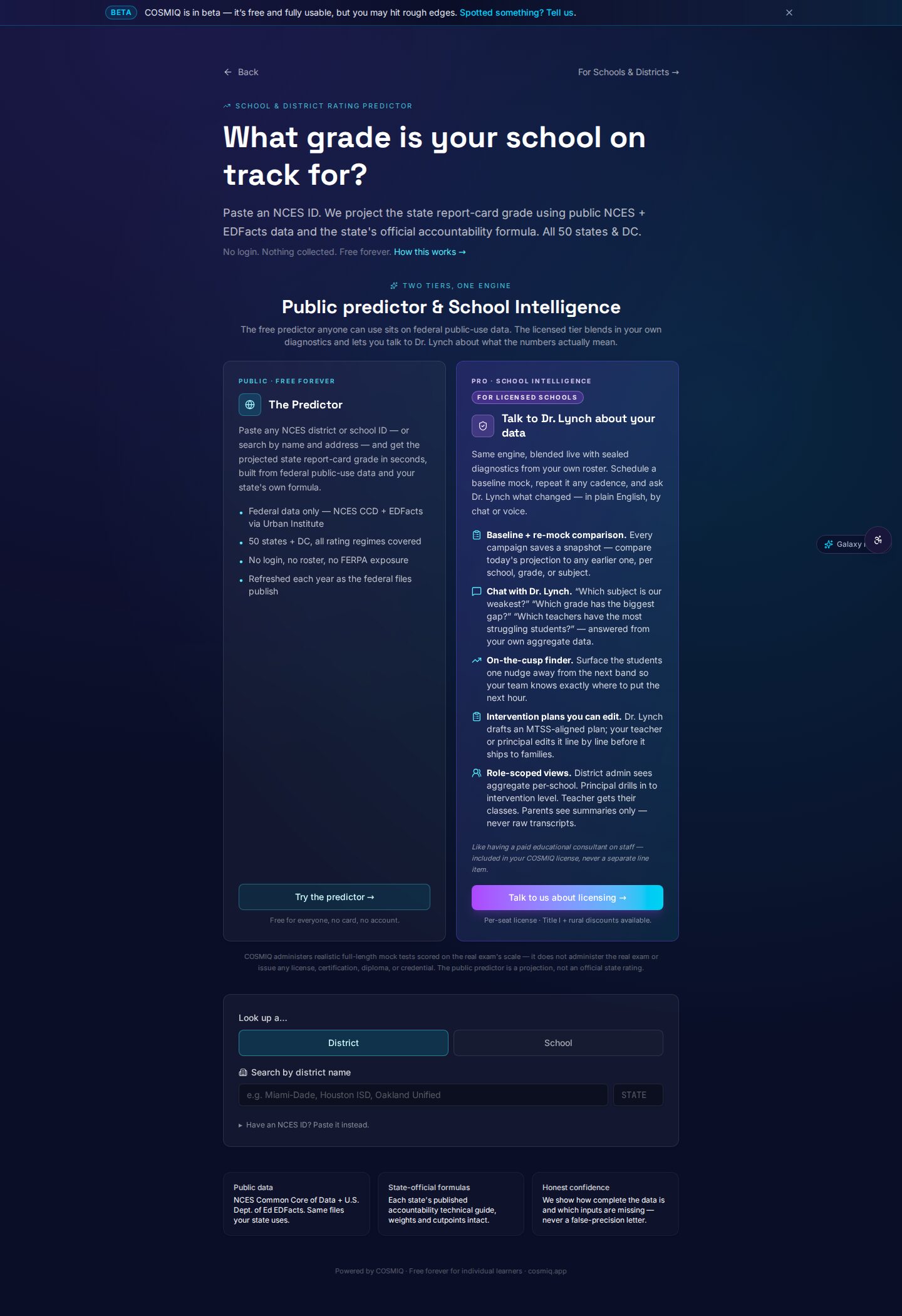
Online directories and review sites can be useful for initial research, but treat specific ratings or reviews as just one piece of information. For independent schools, contact the admission office to request a visit or shadow day.
Conclusion
Vermont offers a wide range of K–12 options for 2026–2027, from small, community-centered elementary schools to independent boarding schools and regional high schools with broad programs. The best choice depends on what will help your child thrive academically and socially. Start early, visit schools, ask specific questions about supports and programs, and involve your child in the decision when possible. That combination of research and firsthand experience will lead to the most practical school match for your family.
Learn anything, free.
COSMIQ is a free, voice-driven AI tutor for every learner. No credit card, ever.
Start learning free →