5 Ways AI Can Strengthen Your Teaching This School Year

The 2026-2027 school year presents an exciting opportunity for educators to explore new tools and approaches. Among the most transformative advancements is Artificial Intelligence (AI). Far from replacing the vital role of a teacher, AI can act as a powerful assistant, helping you to refine your pedagogical practices, lighten your workload, and ultimately create a more dynamic and responsive learning environment for your students. Let's explore five practical ways AI can strengthen your teaching this school year.
1. Personalize Learning Paths for Every Student
One of the greatest challenges in education is addressing the diverse learning needs within a single classroom. AI-powered platforms can help bridge this gap by offering truly personalized learning experiences. Imagine an AI tutor that adapts to each student's pace, identifies their specific areas of difficulty, and provides targeted practice or enrichment materials.
- Adaptive Practice: AI can generate practice problems that adjust in difficulty based on a student's performance, ensuring they are always challenged but not overwhelmed.
- Targeted Resources: For students struggling with a concept, AI can recommend specific videos, articles, or interactive exercises. For those ready for more, it can suggest advanced topics or projects.
- Real-time Feedback: Some AI tools can provide immediate feedback on assignments, helping students understand their mistakes and learn from them more quickly than waiting for a teacher's review.
2. Streamline Administrative Tasks and Save Time
Teachers often spend a significant portion of their time on administrative tasks, from grading to lesson planning. AI can free up valuable time, allowing you to focus more on direct student interaction and instructional design.
- Automated Grading: For certain types of assignments (e.g., multiple-choice, short answer, coding problems), AI can automate grading, providing instant feedback to students and saving you hours.
- Lesson Plan Generation: AI tools can assist in brainstorming lesson ideas, generating outlines, or even drafting initial content based on specific learning objectives and curriculum standards. You remain the expert, refining and adapting the AI's output to fit your unique classroom.
- Resource Curation: Need resources on a specific topic? AI can quickly search and curate relevant articles, videos, and worksheets, saving you extensive research time.
3. Enhance Student Engagement and Motivation
Engaged students are motivated students. AI can introduce novel ways to interact with content, making learning more dynamic and appealing.
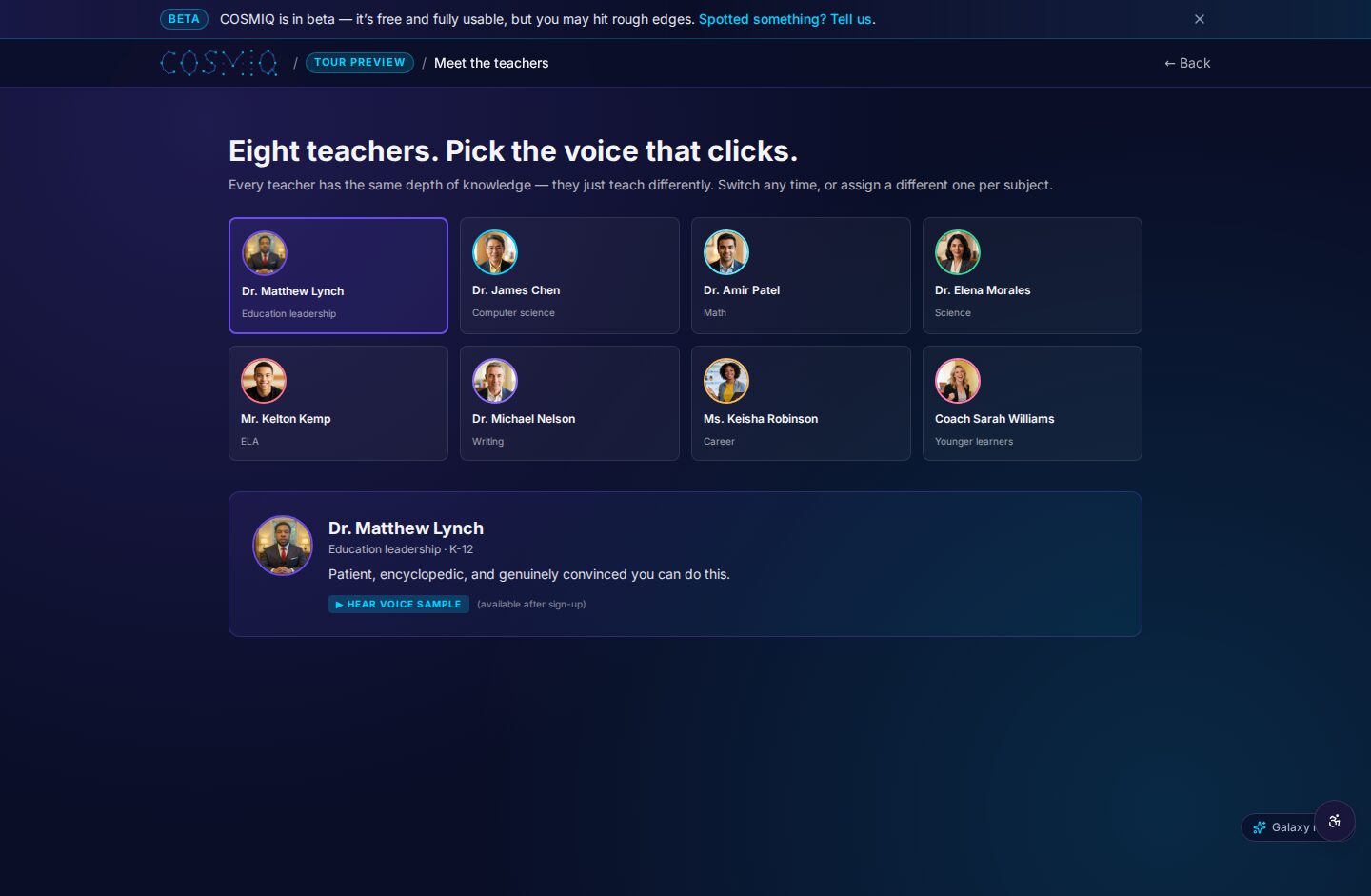
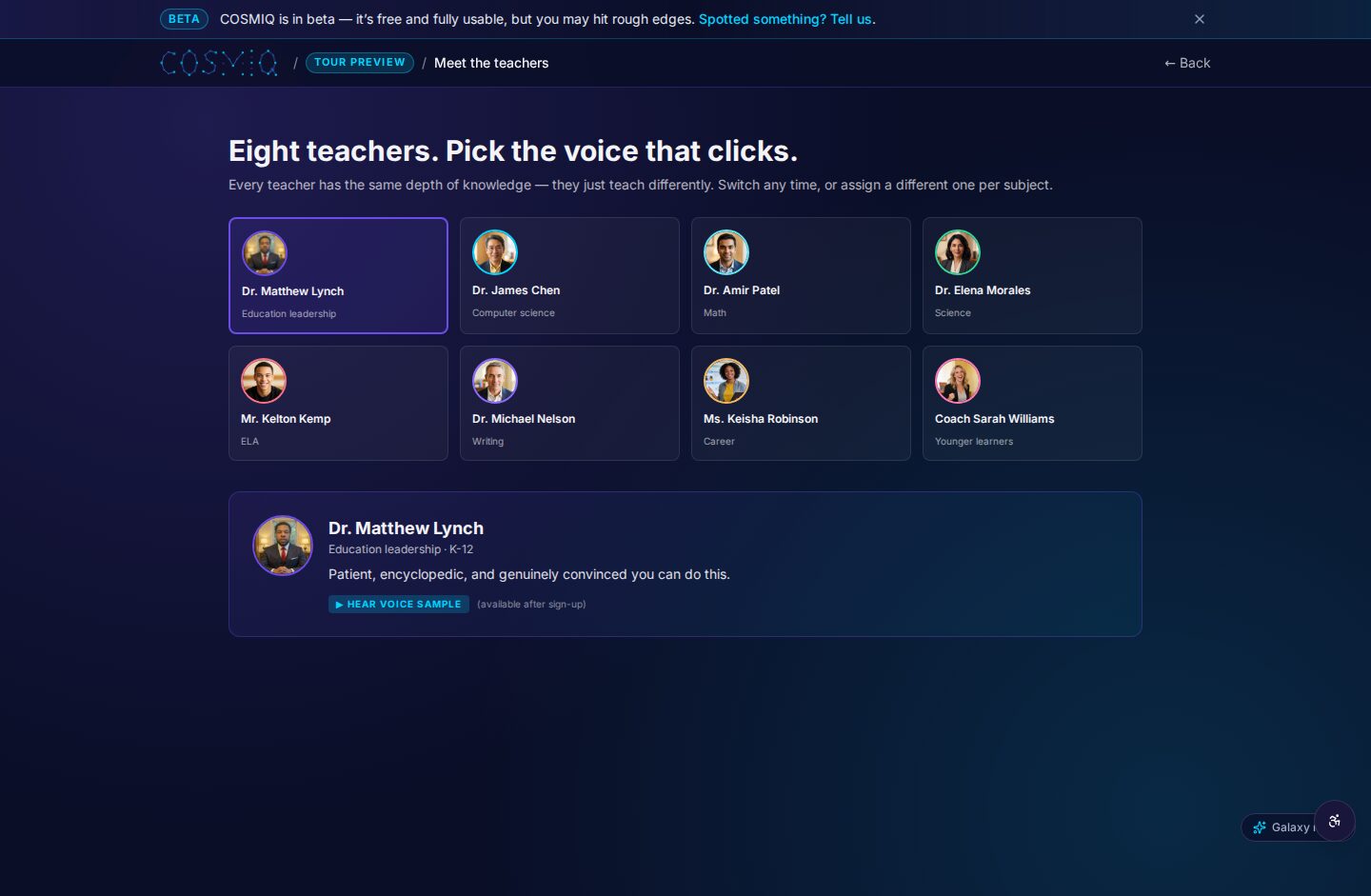
- Interactive Tutoring: Voice-driven AI tutors, like COSMIQ, can provide a safe, non-judgmental space for students to ask questions, explore concepts, and receive immediate, personalized explanations. This can be particularly beneficial for shy students or those who need extra reinforcement outside of class.
- Gamified Learning: AI can be integrated into educational games that adapt to a student's performance, keeping them challenged and fostering a sense of achievement.
- Creative Tools: AI image and text generators can inspire creative writing prompts, art projects, or even help students visualize complex concepts, turning abstract ideas into tangible explorations.
4. Improve Data-Driven Instruction and Assessment
Understanding student progress and identifying areas for intervention is crucial. AI can provide powerful insights into learning patterns, helping you make more informed instructional decisions.
- Performance Analytics: Many AI-powered learning platforms collect data on student performance, highlighting common misconceptions, areas where students excel, and individual growth over time.
- Predictive Insights: AI can sometimes identify students who might be at risk of falling behind, allowing for early intervention and targeted support before problems escalate.
- Formative Assessment Support: AI can help generate quick quizzes or exit tickets that provide immediate data on student understanding, enabling you to adjust your lessons on the fly.
5. Foster Research Skills and Critical Thinking
While AI can provide information, it also opens new avenues for teaching students how to critically evaluate sources, formulate effective prompts, and synthesize information responsibly.
- Source Evaluation: Students can use AI to generate initial research summaries, then be tasked with verifying facts, identifying biases, and finding original sources, thereby honing their critical evaluation skills.
- Prompt Engineering: Learning how to effectively communicate with AI tools (known as 'prompt engineering') teaches students precision, logical thinking, and how to break down complex requests into clear instructions.
- Ethical AI Use: Integrating AI into the classroom provides a natural opportunity to discuss the ethics of AI, intellectual property, and responsible digital citizenship, preparing students for a future where AI is ubiquitous.
Embracing AI in your classroom for the 2026-2027 school year isn't about replacing the human element of teaching; it's about augmenting your capabilities. By leveraging AI's potential for personalization, efficiency, and engagement, you can create a more effective, dynamic, and inspiring learning experience for every student, ultimately strengthening your impact as an educator.
Learn anything, free.
COSMIQ is a free, voice-driven AI tutor for every learner. No credit card, ever.
Start learning free →