An AI Tutor Aligned to Minnesota Academic Standards

In the age of technology, education is evolving. One of the most exciting developments is the use of artificial intelligence to help students learn. While AI tutors can support students outside the classroom, their effectiveness often hinges on one critical element: alignment with relevant academic standards. For educators and parents in Minnesota, understanding how an AI tutor can fit within the Minnesota curriculum and Minnesota learning standards is essential.
Understanding Minnesota Academic Standards
Before discussing AI tutors, let’s break down what the Minnesota learning standards entail. These standards serve as a roadmap to ensure that all students receive a consistent and quality education, no matter where they are in the state. They cover various subjects, from mathematics and science to language arts and social studies.
For instance, the Minnesota curriculum emphasizes critical thinking and problem-solving skills in mathematics. The standards are designed not just to teach students how to solve problems but to help them understand the underlying concepts. This means a tutor aligned with these standards must do more than provide answers—it should guide students in developing a deeper understanding of the material. Such depth of understanding can be illustrated with example scenarios, like a student who isn't just memorizing formulas, but actually comprehending why they work and how they apply in real-world situations.
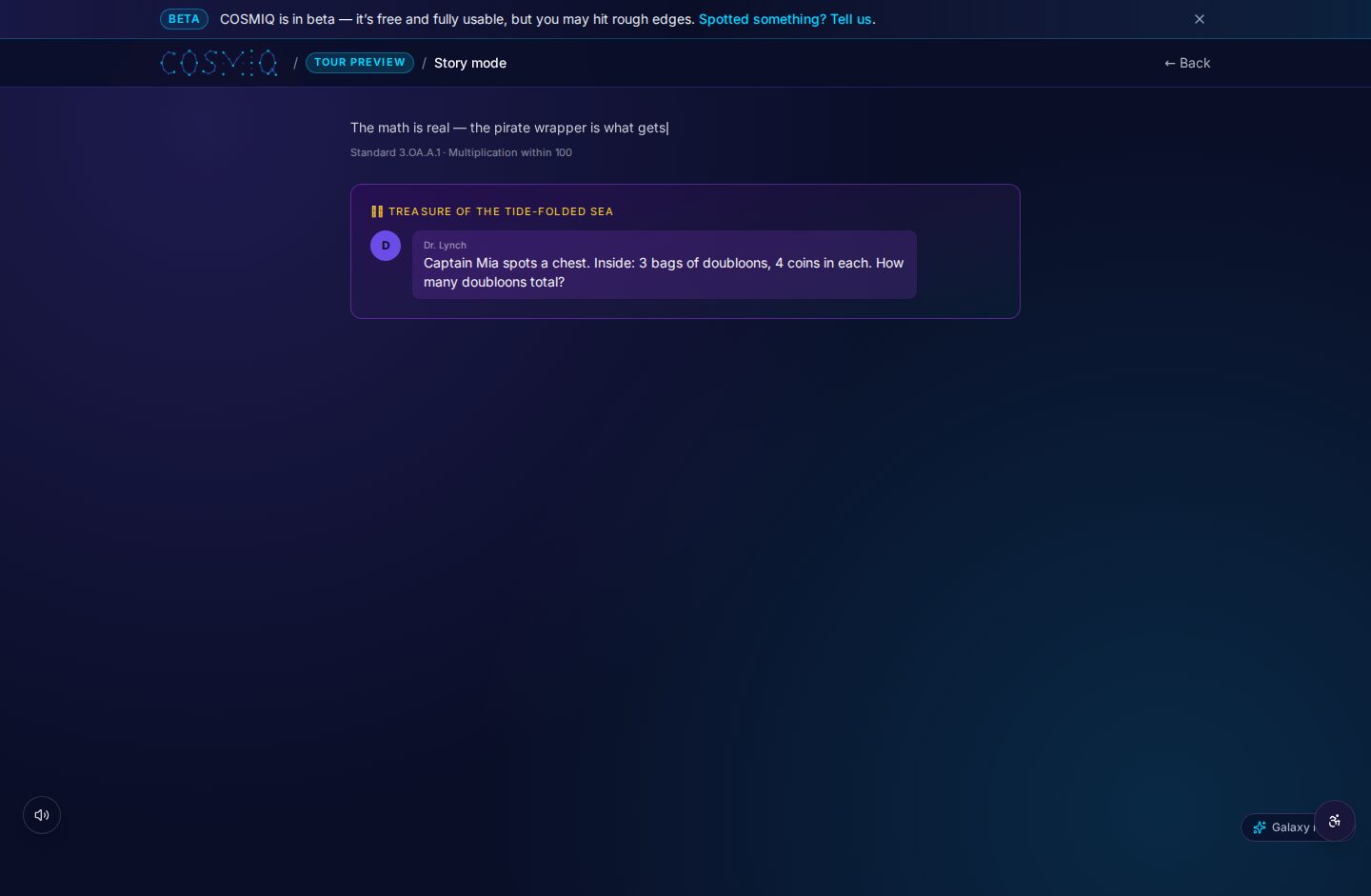
Take, for instance, the concept of ratios and proportions in mathematics. A student familiar with the Minnesota learning standards will approach these concepts not just by answering textbook questions, but by applying them to real-life contexts, such as cooking or budgeting. An AI tutor aligned with these standards could present challenges such as adjusting a recipe for a different number of servings, thus reinforcing the practical application of ratios and ensuring that the student grasps how these mathematical principles operate in daily life.
The Role of AI in Education
Let’s face it: traditional education methods don’t work for everyone. Each student has their own pace and learning style. That’s where AI comes in. An AI tutor can personalize learning experiences, adapting to each student's unique needs. It can analyze performance metrics and adjust lesson plans in real-time, making the learning experience more engaging and effective.
Imagine a fourth grader struggling with fractions. A good AI tutor can identify this struggle and offer targeted exercises that align with Minnesota learning standards related to fractions. It can provide visual aids, interactive activities, and instant feedback, keeping the student motivated. In this scenario, the AI might present a mix of visual representations, like pie charts or bar graphs, to help the student visualize fractions, thus bridging the gap between abstract concepts and tangible understanding.
In addition, AI can incorporate gamification strategies to make learning fractions more fun. For example, it might present a game where students earn points for correctly solving fraction problems. The game could provide immediate rewards for progress, encouraging students to tackle increasingly challenging questions. This playful approach not only helps solidify foundational concepts but also fosters a love for math, all while meeting Minnesota curriculum standards.
Alignment with Minnesota Curriculum
For an AI tutor to be genuinely effective, it must be closely aligned with the Minnesota curriculum. This means it shouldn't merely deliver generic lessons; it should tailor its curriculum to meet specific state standards. For example, Minnesota’s standards in science focus heavily on inquiry-based learning. An AI tutor designed for Minnesota students should incorporate hands-on experiments, virtual labs, and investigative projects that reflect these standards.
Moreover, alignment isn’t just about content. It involves the pedagogical approach as well. An AI tutor should facilitate collaborative learning opportunities, as the Minnesota curriculum often encourages group work and peer learning. Picture a scenario where students can collaborate on a project through an AI platform that simulates a group discussion, fostering teamwork—an essential skill for future success. Here, the AI could analyze each student's contributions and provide personalized feedback, thus reinforcing learning and collaboration.
Additionally, consider the importance of cultural relevance in the Minnesota curriculum. A well-aligned AI tutor could integrate local history or geography into its lessons. For instance, while teaching about ecosystems, it might use Minnesota’s lakes and forests as examples, making the content more relatable and engaging for students. By grounding lessons in their immediate environment, students are more likely to connect with the material and retain what they learn.
Benefits of Using an AI Tutor
So, what are the actual benefits of integrating an AI tutor that aligns with Minnesota learning standards? First and foremost, personalized learning stands out. Each student learns differently, and an AI tutor can adapt in ways that traditional methods often can’t. It can provide instant feedback, helping students correct misconceptions right away, rather than waiting for a teacher’s input days later.

Additionally, the flexibility of AI tutors means students can learn at their own pace and on their own schedules. If a student struggles with a concept one evening, they can revisit it without feeling pressured by the classroom setting. This self-paced learning can lead to higher retention rates and increased engagement. For instance, if a high school student is revisiting algebraic expressions late at night, an AI tutor can not only provide explanations but also adaptively assess their understanding through a series of related problems.
Another significant benefit is the potential for real-time data collection. AI tutors can track a student’s progress over time, providing insights into their strengths and weaknesses. Schools can use this data to inform instruction and tailor support for individual learners. Consider a high school math class where the AI identifies that multiple students are struggling with quadratic equations. This data can prompt the teacher to revisit the topic with the entire class, using targeted strategies to address common misunderstandings.
Challenges and Considerations
Of course, no technology is without its challenges. One major consideration is access. Not every student has the same level of access to devices and reliable internet. Schools and districts must ensure that all students can benefit from an AI tutor. This may involve providing devices or internet hotspots to underserved communities.
Furthermore, while AI can be a powerful tool, it’s not a replacement for human interaction. Teachers play an irreplaceable role in education, providing emotional support and motivation. An effective AI tutor should complement this, not compete with it. The best educational experiences happen when technology and human guidance work hand in hand. For example, a student may benefit from instantaneous feedback through AI, yet still need a teacher's encouragement to stay motivated during tougher subjects.
Another challenge is the potential for over-reliance on technology. Students might become too dependent on AI for problem-solving, rather than developing their own critical thinking skills. It’s vital for educators to strike a balance between using AI as a resource and fostering independent learning. A strategy might be to use AI for initial practice, but then require students to tackle similar problems without assistance. This dual approach helps reinforce skills while encouraging independence.
Measuring Effectiveness
To evaluate the success of an AI tutor, it’s vital to establish metrics that align with Minnesota learning standards. Schools should monitor not just academic performance, but also engagement and student feedback. Are students using the AI tool regularly? Are they showing improvement in the specific areas identified by the Minnesota curriculum?
Data analytics can play a significant role here. By collecting and analyzing data on student interactions with the AI tutor, educators can gain insights into what works and what doesn’t. This continuous feedback loop allows for ongoing adjustments and improvements to the AI system, ensuring it meets the changing needs of students. Additionally, developing surveys or focus groups among students can provide qualitative data to supplement quantitative measures, giving a fuller picture of how the AI tutor is impacting learning.
Moreover, assessments should not only focus on academic outcomes but also on softer skills such as collaboration and communication. For example, if an AI tutor incorporates peer feedback or group assignments, measuring how well students work together can provide a more comprehensive understanding of its effectiveness. Schools could track improvements in group dynamics and the development of problem-solving skills over time.
The Future of AI Tutors in Minnesota
Looking ahead, the potential for AI tutors aligned with Minnesota academic standards is immense. As technology continues to evolve, so too will the ways we can support students. Imagine a future where AI tutors can interact with students in a more natural, conversational way, making learning even more engaging.
However, it’s crucial that any advancements remain grounded in the Minnesota curriculum and standards. The goal should always be to enhance the educational experience rather than replace the essential human elements that make teaching so impactful. There could even be a hybrid model, where AI tutors handle routine practice and assessment, freeing teachers to focus on deeper learning and personal connection with students.
Consider the role of virtual reality (VR) in the future of AI tutoring. With the right tools, students might be able to explore complex scientific concepts through immersive experiences. For instance, a biology student could virtually dissect a frog or navigate through the human body to learn about anatomy. This experiential learning aligns perfectly with Minnesota learning standards, making complex subjects more accessible and engaging.
Ethical Considerations in AI Tutoring
As we incorporate AI tutors into educational settings, we must also consider the ethical implications involved. There's a valid concern regarding data privacy and security. AI systems often require access to student data to provide personalized learning experiences, which raises questions about how this information is collected, stored, and used.
Schools must ensure that they employ robust data protection measures in line with state and federal regulations. They should communicate transparently with parents and students about what data is collected and how it will be used. Additionally, ensuring that AI tutors do not perpetuate biases is crucial. This means the algorithms driving these tutors should be regularly audited to ensure they promote equity in learning outcomes across diverse student populations.
Moreover, we need to consider the long-term implications of using AI in education. Are we creating an environment where students become overly dependent on technology for learning? It's essential to think about how we can foster critical thinking and problem-solving skills in students while still utilizing AI as a resource. Balancing these elements will be key to successful integration.
Integrating AI Tutors into the Classroom Framework
Another angle worth exploring is how AI tutors can be seamlessly integrated into the existing classroom framework. Teachers can use AI as a supplemental resource to enhance traditional teaching methods. For example, a teacher might assign an AI tutor as homework, allowing students to reinforce what they learned in class through personalized practice.
This also opens the door for differentiated instruction. If a teacher has a classroom of diverse learners, they can assign different AI-driven tasks based on each student’s needs. For instance, while some students are mastering basic multiplication, others might be exploring more advanced concepts like algebraic equations through tailored AI lessons. This adaptability not only respects individual learning speeds but also maximizes classroom time.
Furthermore, teachers can use AI tutors to identify struggling students early on. By analyzing performance data, educators can pinpoint which students need extra support before they fall too far behind. This proactive approach ensures that no child is left behind and that all students have the opportunity to succeed.
The Role of Community and Parental Involvement
Lastly, the role of community and parental involvement cannot be overlooked. Engaging parents in the conversation about AI tutors and aligning them with Minnesota learning standards can greatly enhance their effectiveness. Schools can host workshops or informational sessions where parents learn how AI tools work, what standards they align with, and how they can support their children’s learning at home.
Community involvement can also extend to local organizations and businesses partnering with schools to provide resources, funding, or expertise in implementing AI systems. By fostering a collaborative environment, the educational experience for students can be enriched significantly. Imagine a scenario where local tech firms collaborate with educators to develop AI curricula that are uniquely tailored to Minnesota's educational needs.
Additionally, involving local universities in the development and evaluation of AI tutoring tools could be beneficial. College students studying education or technology could intern with schools to help refine these AI systems, ensuring they are not only effective but also relevant to the local context.
In wrapping up, as technology permeates every facet of life, education must embrace these changes wisely. An AI tutor can be a vital tool for educators and students alike, particularly when aligned with Minnesota learning standards. So, whether you’re a parent, teacher, or student, considering how AI can fit into your educational journey is a step in the right direction.
Learn anything, free.
COSMIQ is a free, voice-driven AI tutor for every learner. No credit card, ever.
Start learning free →