Autonomous AI Agents: Why Context is Key for Responsible AI in Education and Beyond

As artificial intelligence continues to evolve, the concept of autonomous AI agents — systems capable of performing tasks with minimal human intervention — sparks both excitement and important questions. Recent discussions around AI autonomy have naturally led to a closer look at how these agents understand and operate within their designated environments. Denodo, a leader in data virtualization, has been contributing to this vital conversation, with insights from their Senior Data Architect, Terry Dorsey, shedding light on a crucial aspect: the agent's ability to grasp context.
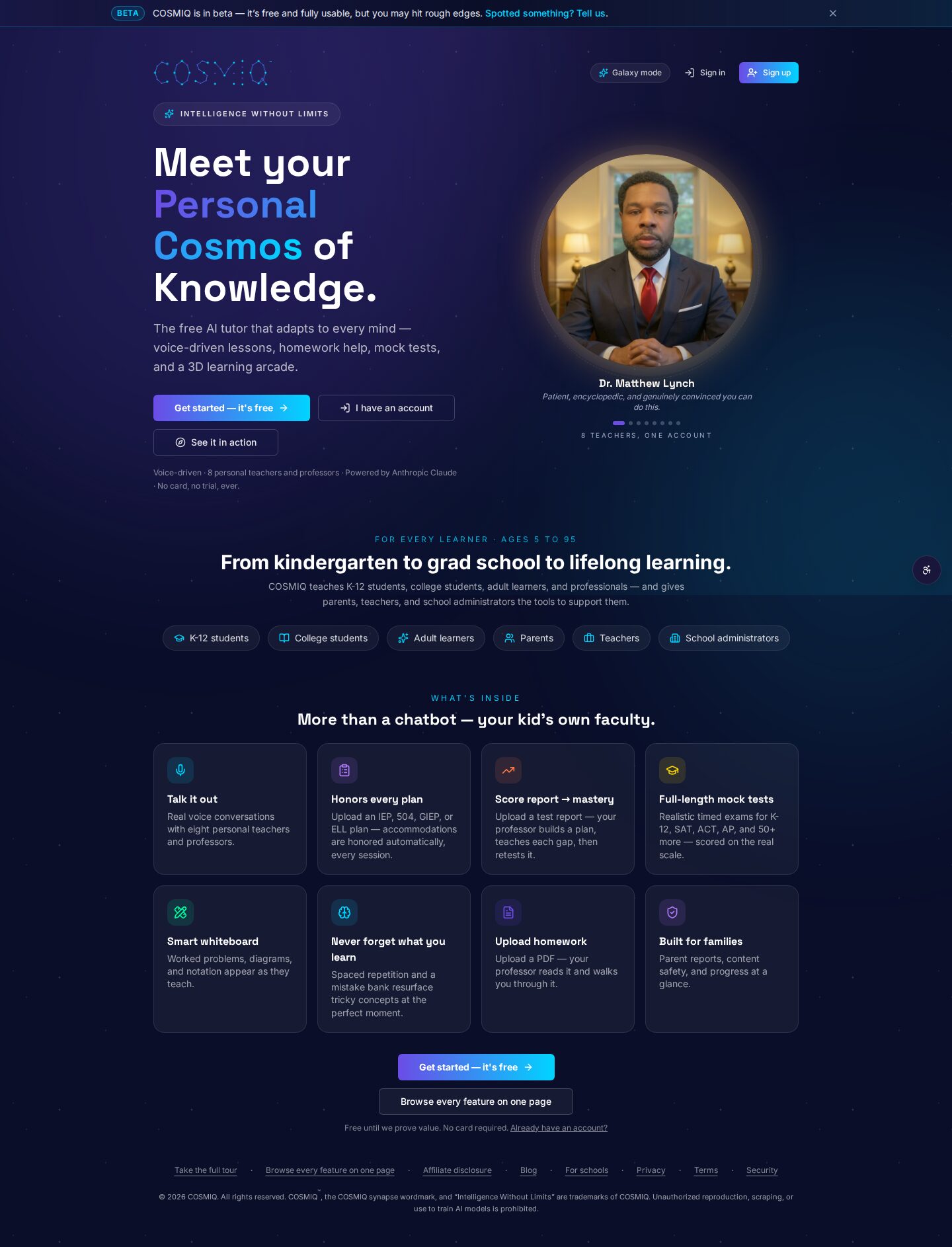
For students, parents, and educators, understanding these underlying principles of AI development is increasingly relevant. As AI tools become more integrated into learning environments, knowing how they are designed to function responsibly can help us all make informed decisions and leverage their benefits effectively. Platforms like COSMIQ, a free voice-driven AI tutor, exemplify how AI can provide valuable, free learning support for K-12 students when built with a strong focus on educational context and user safety.
The Challenge of Missing Information: More Than Just Retrieval
One of the core challenges Dorsey identifies, according to Denodo, is that AI agents don't just struggle when information is unavailable; they can also struggle to recognize that something important is missing in the first place. This distinction is subtle but profound. It suggests that simply providing more data or improving an agent's ability to retrieve information might not fully address the problem if the agent doesn't inherently understand the need to keep searching or to question its current scope of knowledge.
Imagine a student using an AI tutor to understand a complex math problem. If the AI agent lacks the contextual understanding of common student misconceptions or the prerequisite knowledge needed for that specific topic, it might provide an answer that is technically correct but not truly helpful for the student's learning journey. It might not 'know' it needs to ask clarifying questions or suggest foundational review.
Establishing Known Context: A Foundation for Responsible Autonomy
Denodo emphasizes that many organizations already possess a wealth of business rules, relationships, and authoritative data sources that should naturally guide an agent's actions. Dorsey argues that these shouldn't be left for an AI agent to 'rediscover' independently while completing a task. Instead, the organization suggests, companies should proactively establish this known context as an integral part of the environment in which the agent operates.
This approach has significant implications for how AI is deployed across various sectors, including education. For an AI tutoring system, this means embedding pedagogical best practices, curriculum standards, and an understanding of student learning stages directly into the AI's operational framework. Rather than letting the AI infer these crucial elements, they are explicitly provided, creating a more robust and reliable learning experience.
Why More Capabilities Aren't Always the Answer
A common intuition might be that making AI agents more capable — giving them more processing power, more advanced algorithms, or broader access to data — would solve these contextual challenges. However, according to Denodo's insights, this isn't necessarily the case. Dorsey suggests that increasing an agent's capabilities won't automatically solve the problem of what it doesn't know it's missing.
This perspective underscores the human element in AI design. It highlights the need for thoughtful engineering that prioritizes not just raw intelligence but also the careful definition of boundaries, responsibilities, and the contextual frameworks within which AI agents should operate. For educators, this resonates deeply with the idea that technology, no matter how advanced, is a tool that requires human guidance and ethical consideration to be truly effective in fostering learning.

The Path Forward: Deliberate Design for Trustworthy AI
Denodo's contributions to this discussion serve as a valuable reminder that as AI agents gain more autonomy, the responsibility for defining their operational parameters rests firmly with their human designers and deployers. By proactively embedding known context, rules, and boundaries, organizations can help ensure that AI agents act effectively, ethically, and in alignment with intended goals.
These expert insights are crucial for fostering a future where AI tools, whether in business or education, are not just powerful but also trustworthy and genuinely helpful. For students navigating their studies, and for the teachers and parents supporting them, understanding the importance of responsible AI development means we can embrace the benefits of AI with greater confidence.
Learn anything, free.
COSMIQ is a free, voice-driven AI tutor for every learner. No credit card, ever.
Start learning free →