Best K-12 Schools in Mississippi 2026–2027: How to Choose & Notable Options

Choosing the right K–12 school in Mississippi for 2026–2027 is about matching a child’s needs to what a school actually offers: academics, extracurriculars, support services and the everyday culture. This guide explains how to define "best" for your family, points you to notable districts and schools to investigate, and gives practical steps for visits, applications and payment choices.
Made this list? Show it off.
Grab a free "Featured in COSMIQ" badge for your site — no sign-up, no cost. It links back to this article.
Get your free badge →What "best" means for your family
There isn’t a single definition of the best school. Start by listing the priorities that matter to your child and household—examples include strong math and reading instruction, advanced coursework (AP/IB/dual enrollment), STEM or arts emphasis, athletics, special education support, school size, commute time, and community values. Consider these questions:
- Academic fit: Do you want a school focused on college prep, vocational pathways, or a balanced liberal-arts approach?
- Programs and enrichment: Are after-school activities, robotics, debate, band or theater important?
- Supports: Does your child need tutoring, counseling, or services for learning differences?
- Logistics: How will transportation, cost and schedule affect your choice?
Notable districts and schools to consider
Mississippi’s schooling landscape includes strong county and municipal public districts, private independent schools, and a smaller number of specialized programs. Rather than promising a single top list, below are categories and examples to research in 2026–2027.
- High-performing public districts: Look at districts that serve growing suburban and college communities—these typically invest in staff and programs. Examples to research include Madison County School District, DeSoto County Schools, Rankin County Schools, and Oxford School District. Each serves multiple elementary–high school pathways and often offers AP/dual enrollment options.
- Urban public options and magnets: Jackson and other cities offer magnet and themed programs aimed at specialized coursework or career pathways. Urban districts sometimes host arts, STEM or career-and-technical education centers that draw students from across the city.
- Independent and religious private schools: Private schools can offer smaller classes or particular philosophies. Well-known independent schools to consider include Jackson Academy, St. Andrew’s Episcopal School (Ridgeland), and Hartfield Academy (Flowood). These schools typically offer K–12 continuity, extracurricular breadth and distinct tuition models.
- Specialized programs: If your child needs IB, strong AP tracks, dual-enrollment with community colleges, or career/technical training, ask each district or private school about partnerships with local colleges and regional career centers.
How to compare programs and visit schools
A school visit is the most revealing step. Plan two or three different types of visits—an information session, a classroom walkthrough, and meeting with a counselor or principal. Use a consistent checklist to compare schools fairly:
- Curriculum breadth: What advanced courses are offered in middle/high school? Is there a clear K–12 curriculum pathway?
- Teacher stability and credentials: Ask about teacher turnover, average experience, and professional development.
- Student support: Inquire about tutoring, special education services, and mental health supports.
- Extracurriculars and culture: Are clubs, athletics and arts active? Is there evidence of student leadership and engagement?
- Family communication: How does the school share progress (apps, conferences, report cards) and handle concerns?
Application, costs and next steps
Timelines and costs vary. Public school enrollment is typically handled by district registration windows and residency rules; many districts open kindergarten and transfer enrollment in late winter to spring, but confirm dates with the local district office. Private schools have their own calendars and tuition schedules—ask about application deadlines, entrance assessments, and financial aid or sibling discounts.
- Financial aid: Private schools often offer need-based aid and payment plans; request the deadline and required documents early.
- Transportation: Public districts usually provide bus service for in-district students; private schools may offer bus routes, carpool networks, or rely on family transport.
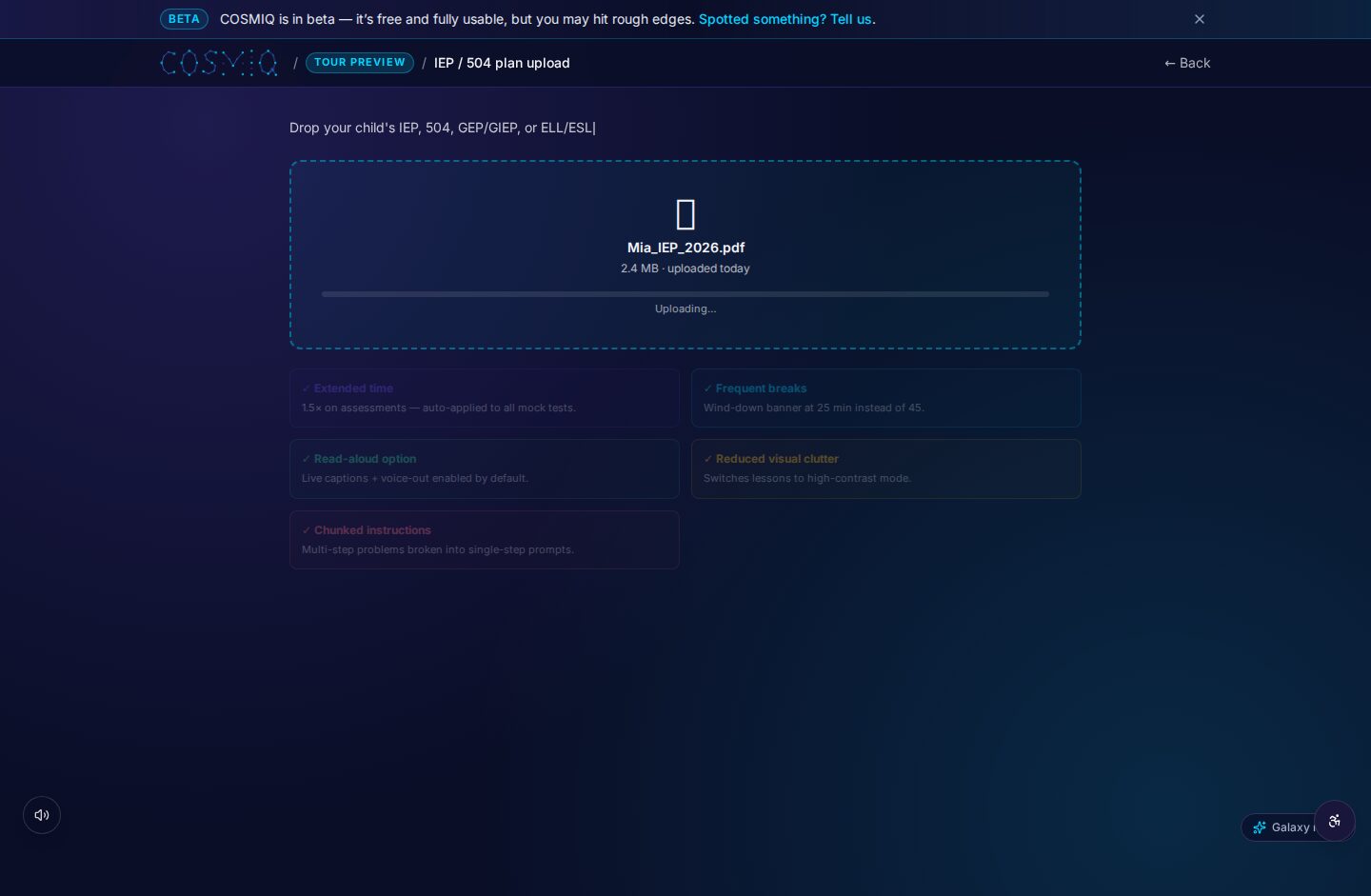
- Prepare records: Collect transcripts, immunization records, previous evaluations (if any), and any IEP/504 documentation ahead of visits or applications.
If you’re moving to Mississippi, reach out to both the assigned public district and the private schools you’re considering—comparing options side-by-side gives you the clearest sense of fit.
Conclusion
Finding the best K–12 school in Mississippi for 2026–2027 means matching school strengths to your child’s needs and visiting options with clear questions in hand. Begin with a short list of priorities, research districts and independent schools in your area, schedule visits, and get application and financial details early. With a focused, practical approach you’ll be able to choose a school where your child can learn and thrive.
Learn anything, free.
COSMIQ is a free, voice-driven AI tutor for every learner. No credit card, ever.
Start learning free →