Beyond Crisis: 4 Ways to Rethink When Student Support Starts

When we think about student support, our minds often jump to intervention – tutoring for struggling grades, counseling for behavioral issues, or extra help when a student is already falling behind. While these reactive measures are undoubtedly crucial, a truly effective educational system considers support not as a last resort, but as an integral, ongoing part of the learning journey. By shifting our perspective on when student support starts, we can move from crisis management to proactive empowerment, benefiting every learner.
Let's explore four key ways educators, parents, and students themselves can rethink the timing and nature of support, embedding it into the very fabric of the learning experience from the outset.
1. Start with Universal Design for Learning (UDL)
Instead of designing lessons for the 'average' student and then adding accommodations for those who struggle, Universal Design for Learning (UDL) advocates for designing learning experiences that are accessible and engaging for all students from the very beginning. This means offering multiple means of representation (how content is presented), multiple means of action and expression (how students demonstrate learning), and multiple means of engagement (how students are motivated).

- For Teachers: Integrate varied formats for material (e.g., text, audio, video, hands-on activities), provide choices in how students complete assignments (e.g., written essay, oral presentation, project), and build in opportunities for self-reflection and goal setting. This proactive approach reduces the need for later individual modifications.
- For Parents: Look for schools or classrooms that embrace UDL principles. Ask teachers how they differentiate instruction for diverse learners, even before specific challenges arise.
- For Students: Understand that there are many ways to learn and show what you know. Advocate for learning methods that best suit your style.
2. Cultivate a Culture of Open Communication and Early Check-ins
Often, the first sign of a student needing support is a dip in grades or a noticeable change in behavior. However, by fostering an environment where open communication is the norm, we can identify potential challenges much earlier. Regular, low-stakes check-ins can reveal minor difficulties before they escalate.
- For Teachers: Implement quick, anonymous sentiment checks (e.g., exit tickets asking "How are you feeling about today's lesson?"), one-on-one brief conversations, or digital check-ins at the start of a unit. Create a classroom where asking questions and admitting confusion is celebrated, not stigmatized.
- For Parents: Maintain consistent communication with your child's teachers, not just during formal parent-teacher conferences. Ask your child regularly about their school day, beyond just "What did you learn?" – inquire about their feelings, challenges, and triumphs.
- For Students: Feel empowered to voice concerns, ask for clarification, or share when something feels difficult. Knowing that your teachers and parents are ready to listen without judgment is key.
3. Proactive Skill-Building: Academic and Socio-Emotional
Support isn't just about fixing deficits; it's about building strengths. Many student struggles stem from underdeveloped executive function skills (like organization, time management, and planning) or socio-emotional skills (like resilience, self-regulation, and collaboration). Integrating explicit instruction in these areas from an early age can prevent future difficulties.
- For Teachers: Dedicate time to teach study skills, organizational strategies, and time management techniques. Incorporate socio-emotional learning (SEL) into daily routines, teaching conflict resolution, empathy, and self-awareness. These are life skills that benefit all students.
- For Parents: Support the development of these skills at home. Encourage routines, help children break down large tasks, and talk through emotions and social situations. Model these behaviors in your own life.
- For Students: Recognize that learning isn't just about subjects like math or history. Developing skills like how to plan a project or manage your emotions are equally important for success in school and life.
4. Leverage Technology for Early Insights and Personalized Learning
Educational technology offers powerful tools to provide support even before a human intervention is explicitly requested. AI-powered platforms, like COSMIQ, can offer immediate, personalized tutoring and practice, identifying misconceptions in real-time and adapting to a student's pace and learning style.
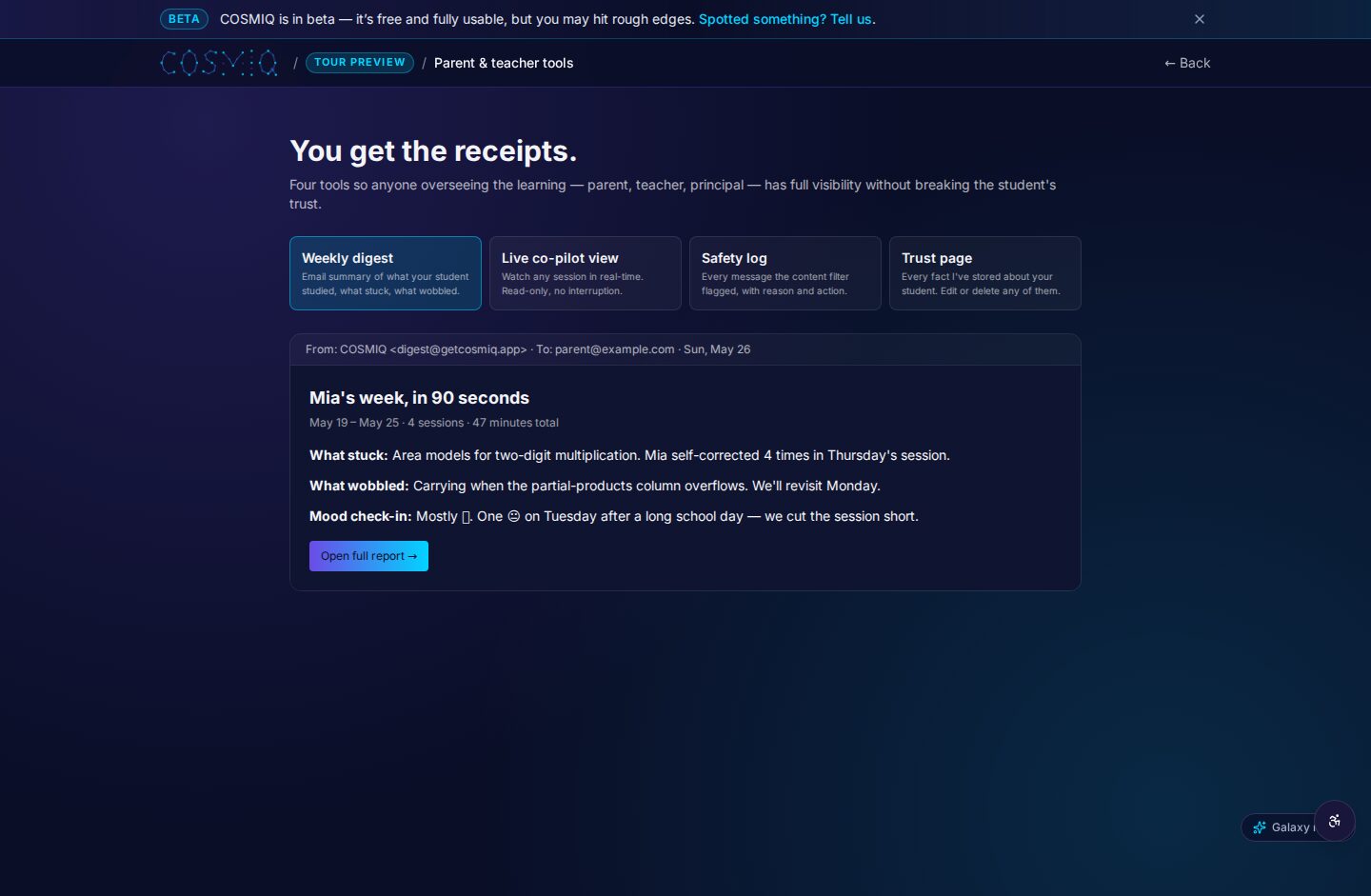
- For Teachers: Utilize learning management systems and educational apps that provide analytics on student progress, highlighting areas where an individual or a group might be struggling. Assign adaptive practice that provides immediate feedback and tailored support.
- For Parents: Explore educational platforms that offer personalized learning paths and instant feedback. These tools can supplement classroom learning and provide 'just-in-time' support at home, preventing small misunderstandings from becoming larger gaps.
- For Students: Embrace AI tutors and interactive learning tools. These resources are available 24/7 to help you understand a concept, practice a skill, or prepare for an exam, offering support precisely when and where you need it.
By shifting our mindset to view student support as an ongoing, proactive, and integrated aspect of education, we empower students to thrive. It's about building strong foundations, fostering open environments, teaching essential skills, and leveraging modern tools to ensure every learner has the opportunity to succeed, long before a challenge turns into a crisis.
Learn anything, free.
COSMIQ is a free, voice-driven AI tutor for every learner. No credit card, ever.
Start learning free →