Beyond the Checklist: Why Digital Accessibility in Schools Matters for Every Student

In an increasingly digital world, the promise of education hinges on access. For public school districts across the nation, an important deadline looms: by April 2027, larger districts must ensure their digital content complies with WCAG 2.1 Level AA standards under Title II. While this mandate focuses on technical compliance, accessibility experts like Luis Perez from CAST emphasize that true inclusivity in learning environments requires a much deeper commitment.
CAST, a pioneer in universal design for learning (UDL) and accessibility since 1984, highlights that meeting a technical standard is only the first step. According to Luis Perez, CAST's Senior Director of Disability and Accessibility, districts risk missing the true spirit of accessibility if they treat it merely as a compliance exercise. Perez, a disabled educator himself, brings a vital perspective on what accessibility genuinely means for students.
The Pitfalls of a 'Check-the-Box' Mentality
It's easy to view accessibility as a list of technical requirements to fulfill, but Perez cautions against this narrow approach. According to CAST, focusing solely on compliance can lead districts astray, resulting in digital content that technically meets standards but still falls short of providing a genuinely equitable learning experience for all students. The organization suggests that such an approach often overlooks the diverse needs of learners and the practical realities of how students interact with digital tools and content.
For parents, this distinction is critical. A compliant website might be navigable for a screen reader, but is the underlying curriculum truly designed to be understood and engaged with by a student with a visual impairment? For teachers, the challenge lies in selecting and creating digital materials that are not just technically accessible but also pedagogically sound and universally designed. This means thinking about multiple means of representation, engagement, and action and expression from the outset, rather than retrofitting accessibility after content has been created.
Asking the Right Questions of Technology Vendors
With an eye toward the April 2027 deadline, districts are likely evaluating and acquiring new educational technologies. CAST advises that this is a crucial moment for districts to ask probing questions of their technology vendors. Beyond simply inquiring if a product is "WCAG compliant," Perez suggests districts should delve deeper. Questions might include:
- How was accessibility integrated into the design process from the beginning?
- What user testing with individuals with disabilities was conducted?
- What ongoing support and training are provided to ensure educators can implement accessible features effectively?
- How does the platform support various assistive technologies commonly used by students?
These types of questions, according to CAST, help districts move beyond superficial compliance and ensure they are investing in tools that truly empower all learners. For educators, understanding these nuances can help them advocate for technologies that genuinely support their students' diverse needs.
A History of Accessibility: What CAST Has Learned
CAST's commitment to accessibility dates back decades. The organization, founded in 1984, has been at the forefront of this work, even launching Bobby, an early web accessibility checker, in 1996. This extensive history provides a valuable lens through which to understand today's compliance push. According to CAST, decades of experience have shown that technology alone is not the answer; it's the thoughtful integration of accessible design principles into pedagogy and curriculum that makes the real difference.
This enduring commitment to inclusive education is something to celebrate. CAST's work has consistently championed the idea that learning environments should be designed to be flexible and responsive to individual differences, benefiting not just students with disabilities but all learners. Their insights remind us that accessibility is not a niche concern but a fundamental aspect of quality education.
COSMIQ's Role in Supporting Accessible Learning
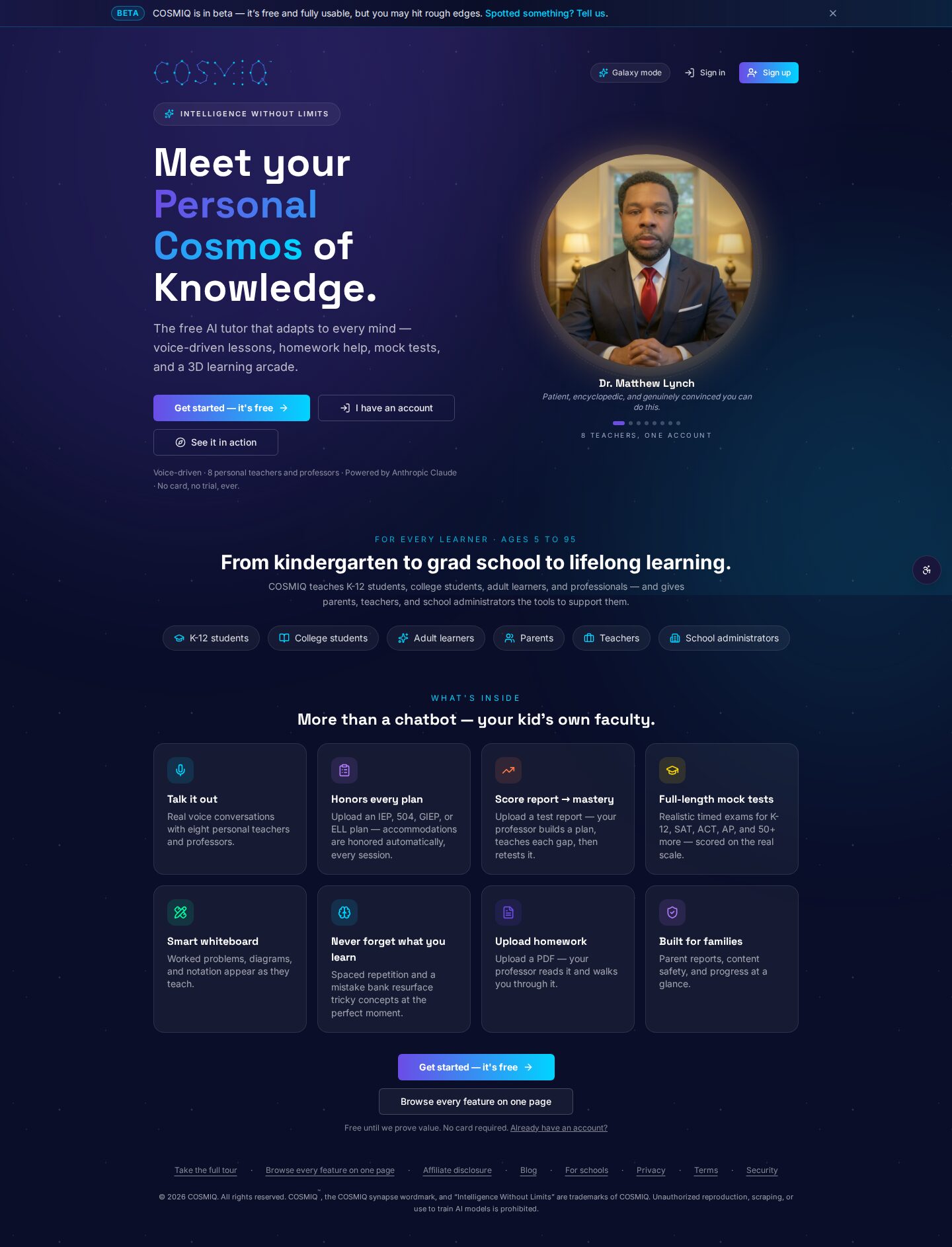
Platforms like COSMIQ also recognize the importance of accessible learning. As a free voice-driven AI tutor, COSMIQ aims to provide flexible, on-demand support for every K-12 student. By offering voice interaction, it provides an alternative mode of engagement that can benefit students with various learning styles and needs, complementing the efforts of schools to create more inclusive digital environments. Students can explore a wide range of subjects and get personalized help through COSMIQ's free voice AI tutoring.
Conclusion: Towards Truly Accessible Learning Environments
The upcoming April 2027 deadline for digital accessibility in public schools is an important milestone. However, as Luis Perez and CAST remind us, the ultimate goal extends far beyond technical compliance. It's about fostering learning environments where every student, regardless of their abilities, can fully participate and thrive. By embracing a holistic view of accessibility, asking critical questions, and integrating universal design principles, districts can move past the 'check-the-box' mentality to create genuinely inclusive and empowering educational experiences for all.
Learn anything, free.
COSMIQ is a free, voice-driven AI tutor for every learner. No credit card, ever.
Start learning free →