Beyond the Classroom: Why Career Readiness and Math Matter More Than Ever

In today's dynamic world, preparing students for life beyond graduation means more than just teaching academic subjects. It involves equipping them with the skills, knowledge, and mindset to thrive in their chosen paths. This understanding is at the heart of the Bill & Melinda Gates Foundation's recent emphasis on career readiness, a strategic shift that recognizes the evolving needs of students and the workforce. While the focus expands, one core subject continues to stand out as a non-negotiable priority: mathematics.
The Evolving Landscape of Education and Work
For decades, education has aimed to provide a broad foundation. However, the pace of change in industries and the job market demands a more direct link between what students learn in school and what they'll need to succeed professionally. Career readiness isn't just about vocational training; it encompasses a broader set of competencies:
- Critical Thinking and Problem-Solving: The ability to analyze situations, identify challenges, and develop effective solutions.
- Communication Skills: Expressing ideas clearly, both written and verbally, and listening effectively.
- Collaboration: Working effectively in teams, respecting diverse perspectives, and contributing to shared goals.
- Adaptability and Resilience: Navigating change, learning new skills, and bouncing back from setbacks.
- Digital Literacy: Proficiency in using technology tools and understanding digital information.
- Financial Literacy: Understanding personal finance and economic principles.
These skills are essential whether a student pursues a four-year degree, a technical certificate, enters the military, or starts an apprenticeship. The Gates Foundation's renewed focus on career readiness underscores the importance of integrating these elements throughout the K-12 experience, ensuring that every student has a clear pathway to a fulfilling future.
Math: The Unseen Engine of Career Readiness
Amidst this broader push for career readiness, the consistent prioritization of mathematics by the Gates Foundation speaks volumes about its fundamental importance. Why does math remain such a critical pillar?
-
Foundation for STEM Fields: Science, Technology, Engineering, and Mathematics (STEM) careers are growing rapidly and are vital to innovation and economic growth. Strong math skills are the gateway to these fields, from understanding algorithms in computer science to calculating structural integrity in engineering.
-
Analytical Thinking and Logic: Learning math trains the brain to think logically, break down complex problems into manageable parts, and identify patterns. These analytical skills are transferable to virtually every profession, from strategic planning in business to diagnosing issues in healthcare.
-
Data Literacy in Every Sector: From marketing analytics to medical research, data drives decision-making across industries. Understanding statistics, probability, and data interpretation (all rooted in math) is crucial for navigating and contributing to a data-rich world.
-
Problem-Solving Prowess: Math is inherently about problem-solving. Each equation or proof is a puzzle waiting to be solved, fostering persistence and innovative thinking that are invaluable in any career.
-
Financial Acumen: Whether managing a budget, understanding investments, or running a business, practical financial literacy relies heavily on basic arithmetic, algebra, and an understanding of percentages and interest rates.
It's not just about advanced calculus for every student, but ensuring a robust understanding of foundational math concepts that build confidence and capability. When students grasp mathematical principles, they gain a powerful tool for understanding the world and shaping their place within it.
Integrating Career Readiness and Math in the Classroom
So, how can educators and parents help students connect the dots between their math lessons and their future careers?
- Real-World Applications: Emphasize how math is used in various professions. A chef uses fractions, an architect uses geometry, a nurse calculates dosages, and a graphic designer uses ratios and proportions.
- Project-Based Learning: Engage students in projects that require mathematical problem-solving within a career context. Design a budget for a school event, calculate the materials needed for a small construction project, or analyze data from a mock scientific experiment.
- Guest Speakers and Mentors: Invite professionals from diverse fields to speak about how they use math in their daily work. This can inspire students and make abstract concepts tangible.
- Developing a Growth Mindset: Encourage students to view challenges in math as opportunities for growth, reinforcing the resilience needed in any career.
COSMIQ: Supporting Your Journey to Readiness
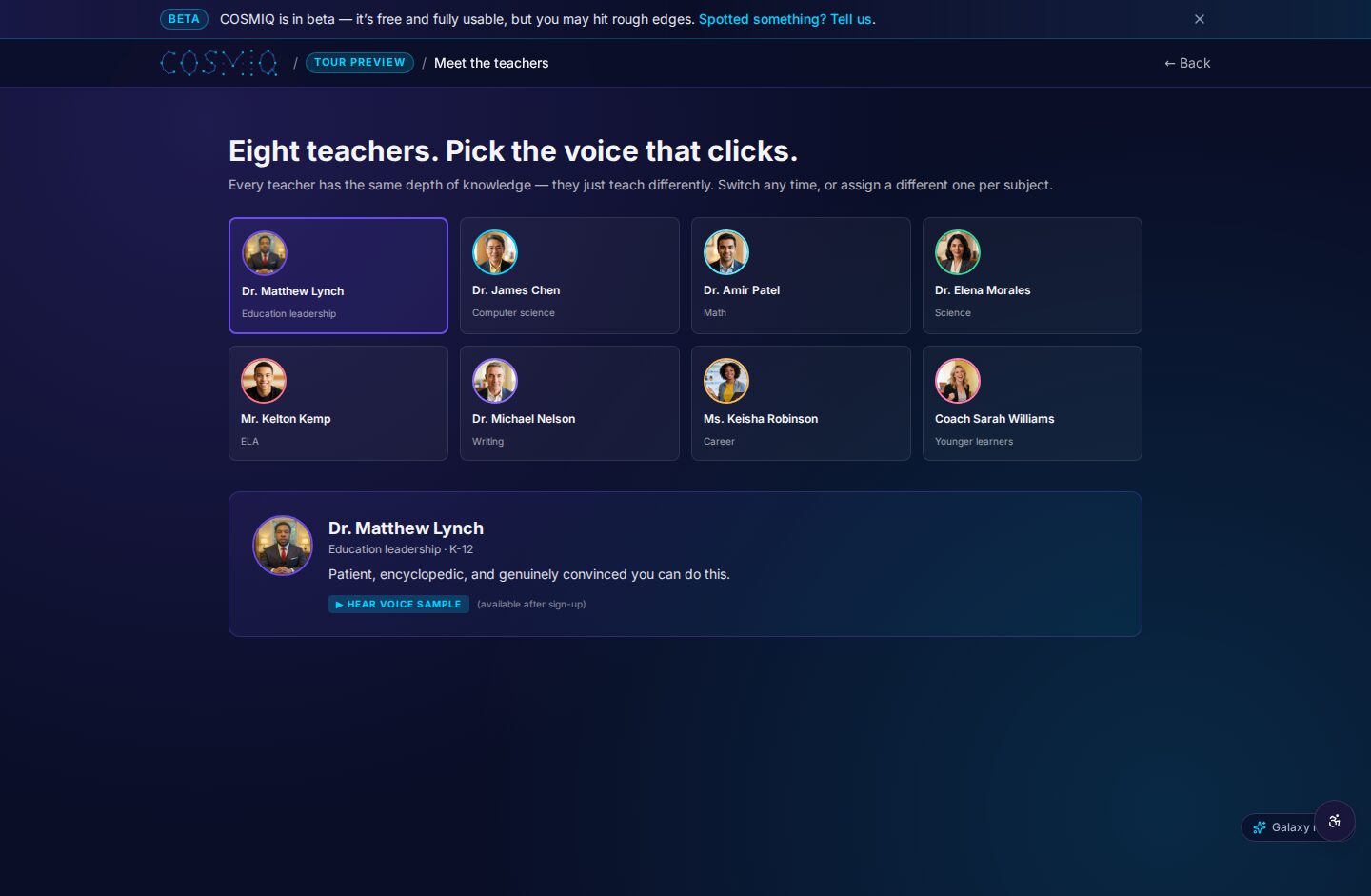
At COSMIQ, we understand the vital role that both career readiness and strong foundational skills play in a student's success. Our AI-powered tutoring platform is designed to support learners in mastering critical subjects like mathematics, providing personalized, voice-driven guidance that adapts to individual needs. By building confidence and competence in core areas, we aim to empower students to tackle complex problems, think critically, and ultimately, be well-prepared for whatever exciting career path they choose.
The emphasis on career readiness, coupled with a continued focus on math, is a powerful combination for preparing the next generation. It’s about ensuring that every student not only learns but also understands why what they learn matters, opening doors to a future filled with possibility.
Learn anything, free.
COSMIQ is a free, voice-driven AI tutor for every learner. No credit card, ever.
Start learning free →