CoSN Advocates 'Purpose Over Panic' in New Guidance on Screen Time and Student Outcomes

In an educational landscape increasingly shaped by digital tools, the Consortium for School Networking (CoSN) has provided timely and thoughtful guidance for K-12 district leaders. Rather than focusing solely on the number of minutes students spend with devices, CoSN's new recommendations, titled "Purpose Over Panic: Screen Time, Accessibility and Student Outcomes for District Leaders," urge a shift towards evaluating technology based on its intentional use, accessibility, and measurable impact on student learning.
This proactive stance by CoSN, a leading professional association for school system technology leaders, is designed to help districts navigate complex decisions around educational technology. The organization emphasizes distinguishing between technology that genuinely enhances learning and accessibility and technology that might merely distract. This perspective aligns with recent encouragement from the U.S. Department of Education for schools to assess technology by its purpose, implementation, and effect on student learning.
Shifting the Conversation: Beyond Minutes to Meaning
According to CoSN, the core question for district leaders should not be, "How much screen time is too much?" but rather, "How is technology helping students access, participate, and make progress?" This reframing is crucial because, as the organization points out, quality educational technology can significantly expand access, strengthen instruction, and support academic growth for all students. For learners with disabilities, technology is often an essential bridge to effective communication, curriculum access, equitable assessment, and meaningful participation.
CoSN's guidance is particularly valuable for parents and teachers who often grapple with the perceived downsides of screen time. By highlighting the deliberate application of technology, the organization empowers stakeholders to look for how digital tools are actively improving the learning experience, especially for those who rely on them most. For instance, a student using text-to-speech software to engage with a digital textbook isn't just accumulating screen time; they're accessing information in a way that might otherwise be impossible.
The CITES Framework: A Roadmap for Purposeful Tech
To help districts implement this new approach, CoSN points to the Center on Inclusive Technology & Education Systems (CITES) Framework. This framework offers a clear roadmap across five key areas: Leadership, Infrastructure, Teaching, Learning, and Assessment, with family engagement woven throughout. This comprehensive approach ensures that technology decisions are integrated into the entire educational ecosystem.
- Leadership: Start with Vision, Not Devices. CoSN emphasizes that strong district leadership is vital for establishing a shared vision where technology supports fair learning opportunities, improves accessibility, advances instructional goals, and is evaluated based on student outcomes. This means anchoring technology decisions in learning goals, not just the tools themselves.
- Infrastructure: Build Systems That Support Access. Intentional technology use requires robust infrastructure. According to CoSN, this includes accessible digital content, personalized learning devices, data privacy and security, reliable access to assistive technologies, and coordinated decision-making among various school teams.
- Teaching: Focus on Purposeful Use. Technology should enhance strong teaching practices, not replace them. CoSN suggests that purposeful, inclusive teaching uses technology to expand engagement, improve information access, and support learner variability, aligning closely with Universal Design for Learning (UDL) principles.
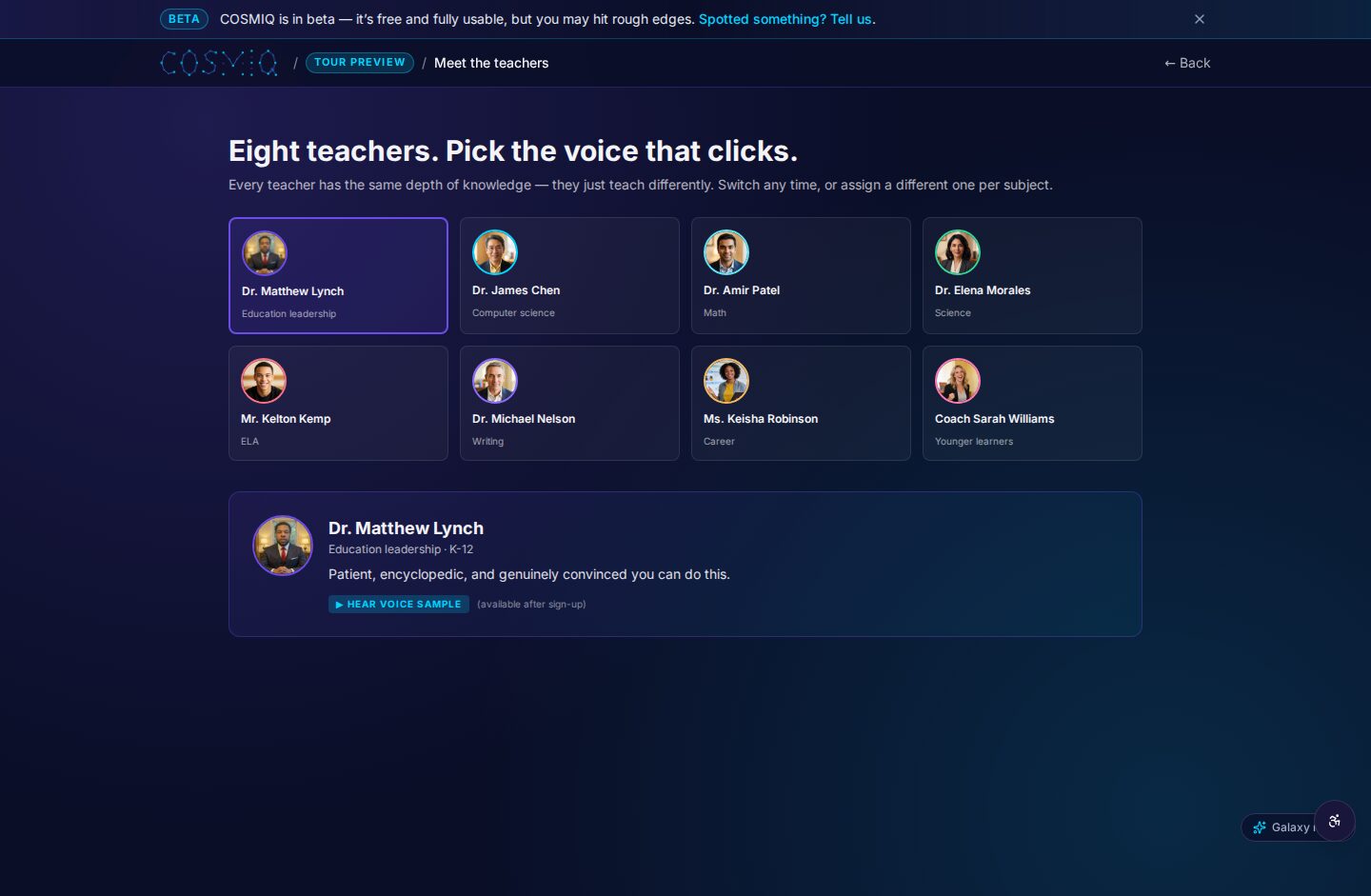
- Learning: Expanding Participation and Opportunity. For many students, technology is essential. CoSN highlights tools like text-to-speech, speech recognition, AAC systems, captioning, and accessible educational materials. In these cases, discussions about screen time must be balanced with the critical need for access. The key question is whether students can meaningfully participate and make progress because of technology. This is where COSMIQ, a free voice-driven AI tutor, can play a role, offering K-12 students accessible, personalized learning support that complements classroom instruction and helps them make progress.
- Assessment: Measure What Matters. CoSN encourages districts to evaluate technology based on measurable student outcomes. This means examining whether technology improves access to instruction, supports learner growth, provides accurate information about student performance, and reduces assessment barriers.
The Critical Role of Family Engagement
One of the distinctive features of the CITES Framework, as highlighted by CoSN, is the embedded role of family engagement across all areas of practice. As districts navigate conversations about educational technology and screen time, families need opportunities to understand why technology is being used, learn how accessibility features support learners, share concerns, and participate in decision-making. Meaningful partnerships help ensure technology supports learning in ways that align with family values, student needs, and district goals.
Parents and guardians can find resources on platforms like the COSMIQ user's guide, which helps them understand how free educational tools can be effectively integrated into their child's learning journey, fostering a collaborative approach between home and school.

Practical Takeaways for Districts
CoSN encourages district teams to use the U.S. Department of Education guidance and the CITES Framework to translate reflection into action. Key practical steps include:
- Starting with clear, rigorous learning goals.
- Separating educational and recreational screen use.
- Using the CITES Framework to guide decisions.
- Planning for accessibility from the start.
- Supporting educators with targeted professional learning and coaching.
- Engaging families as partners.
- Measuring impact, not minutes.
This comprehensive guidance from CoSN offers a positive and practical path forward for district leaders, educators, and families. By focusing on the purpose and impact of educational technology, schools can ensure that digital tools truly serve to enhance learning, promote accessibility, and ultimately improve student outcomes in 2026 and beyond.
Learn anything, free.
COSMIQ is a free, voice-driven AI tutor for every learner. No credit card, ever.
Start learning free →