Edsby Announces Destinations for District-Scale Competency Tracking

A report card can summarize a term, but it may not show the steps that led to a grade: the draft revised after feedback, the science explanation improved through discussion, or the skill a student is still building. That gap is at the center of Edsby’s October 8, 2026 announcement of Destinations, a competency-based assessment and reporting system the company says is intended for use across K–12 districts and regional education systems. For families and educators, the most consequential part of the announcement is not simply another dashboard; it is the proposed shift toward making evidence of learning and local expectations more visible over time.
According to Edsby, Destinations was unveiled at the FullScale Symposium in Indianapolis and is designed to connect student work to locally defined learning outcomes. The company says the system is meant to give teachers, students, and parents a real-time view of progress, rather than limiting information to periodic grades or report cards. These are company-reported capabilities and plans, not independently verified outcomes.
What Edsby says Destinations is built to do
Competency-based assessment focuses attention on what a learner can demonstrate in relation to a defined outcome or skill. In its announcement, Edsby argues that conventional letter and percentage grades can provide limited detail about what a student has learned. Its proposed alternative is a record of evidence tagged to local outcomes and success criteria.
According to the company, teachers and students can collect photos, videos, and examples of work as learning occurs. The evidence can then be associated with outcomes set by a district or region. Edsby says teachers can co-create success criteria with students, an approach intended to make expectations clearer before and during a learning task.
The company also says Destinations includes dashboards showing progress at the individual, class, district, and regional levels. It is designed to synchronize with a district’s student information system, which Edsby says would allow teachers, students, and parents to be included from the start. Dedicated iOS and Android apps are intended to support evidence capture, and Edsby says QR codes can help younger students who may not yet type independently.
Why scale is the central question
Many classrooms already use rubrics, portfolios, conferences, and formative feedback to make learning more concrete. The harder challenge is maintaining a coherent approach when many schools, grade levels, and teachers are involved. Edsby positions Destinations specifically as a response to that operational challenge: a system aligned to local frameworks that can work beyond an individual classroom.
That distinction matters because district-wide assessment systems need more than a way to upload student work. They need shared definitions of outcomes, consistent expectations for evidence, workable routines for teachers, and communication families can understand. The announcement describes the platform as a tool for organizing these elements; it does not provide independent evidence of implementation results, effects on workload, or student outcomes.

For school and district teams considering competency-based reporting, the practical questions remain important:
- Which local outcomes will be visible to students and families, and how will they be explained?
- What counts as sufficient evidence of a skill, and who makes that judgment?
- How will teachers find time to capture, review, and discuss evidence?
- What training will support consistent use across classrooms and schools?
- How will families receive a clear picture without being overwhelmed by frequent updates?
A technology platform may help make evidence easier to collect and share, but those educational decisions still require local leadership and professional judgment.
What families and students could look for
If a school adopts an evidence-based progress system, parents may see more frequent, specific artifacts of learning than a single grade can convey. A useful family conversation can begin with the outcome itself: What is the student working toward? What evidence suggests they are making progress? What feedback have they received? What is the next step?
For students, the value of a learning record depends on whether it helps them act. A collection of photos or assignments becomes more meaningful when a learner can explain why an item demonstrates a skill, identify what remains difficult, and set a realistic next goal. Teachers can support this by asking students to select evidence and reflect on it, not merely upload it.
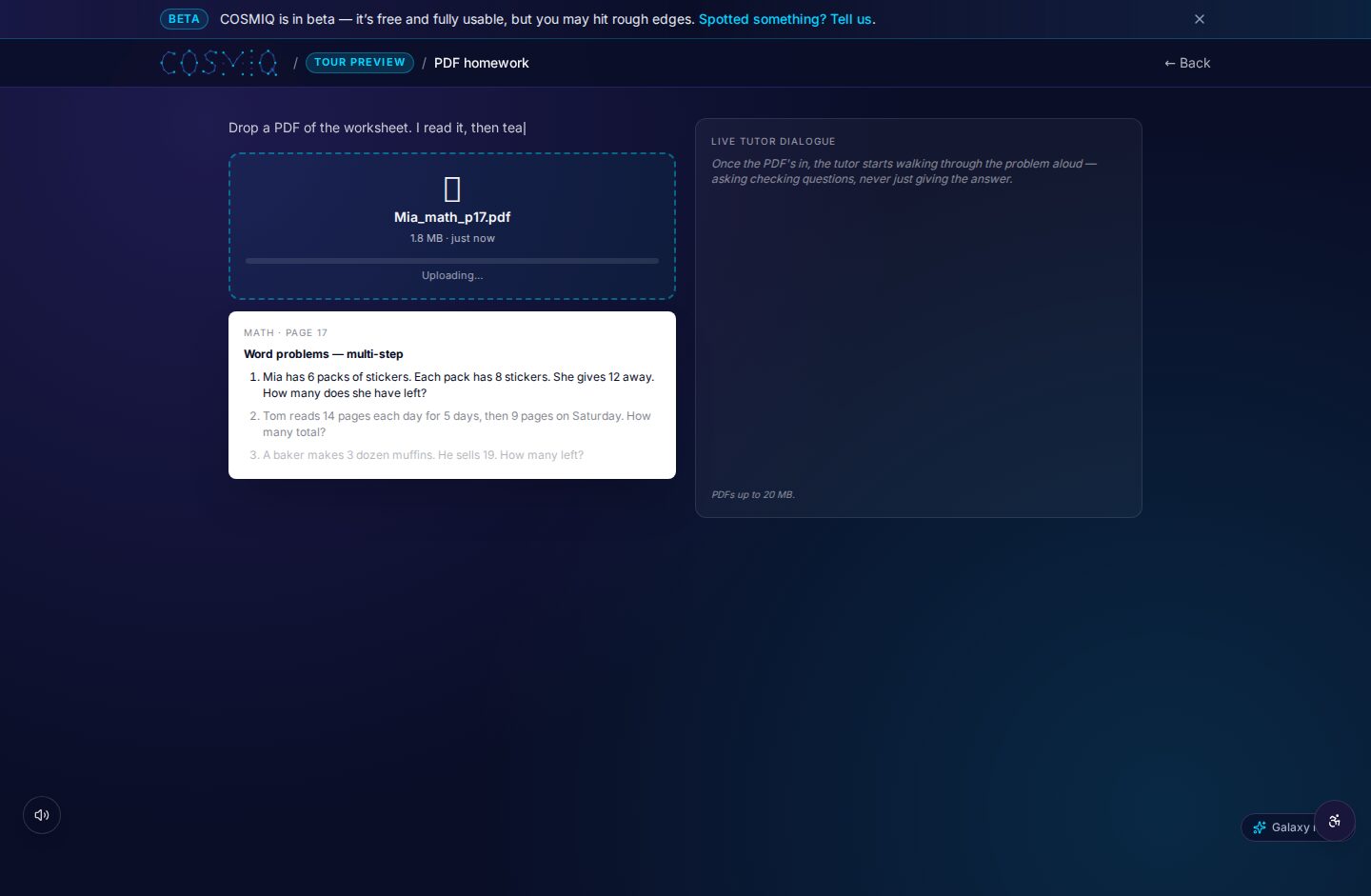
Independent learning support can complement those conversations. Students who want to rehearse a concept, talk through feedback, or prepare questions for a teacher can use COSMIQ’s free voice-driven AI tutoring, which is free forever for every K–12 student. It does not replace a teacher’s assessment or a school’s reporting system, but it can give students another space to articulate what they understand and where they need help.
An early implementation to watch
Edsby says Destinations was shaped with input from an advisory board of assessment experts and K–12 districts, including North East School Division in Saskatchewan, Canada. The company reports that North East School Division is introducing Destinations to all of its schools and teachers.
Stephanie Pipke-Painchaud, the division’s Coordinator of Learning, said in Edsby’s announcement that the division previously lacked an effective way to capture live evidence at the success-criteria level without grades. She described the system as a way to support reflective conversations in which students make claims and share evidence, while giving parents a view of progress and ongoing teacher-student learning conversations.
That perspective points to a constructive test for any new competency-based system: whether it makes conversations about learning more precise and manageable for the people using it every day. Families and educators will likely want to watch for clarity, accessibility, teacher workload, and the quality of feedback—not only the quantity of evidence collected.
Looking beyond the dashboard
Edsby’s announcement presents Destinations as infrastructure for competency-based assessment at district and regional scale. The reported features suggest a model in which progress is documented continuously and connected to local learning goals. Whether that model works in practice will depend on implementation choices that the announcement does not yet answer.
For now, the useful takeaway is simple: a grade is one kind of information, while evidence, feedback, and student reflection can provide a fuller learning story. Any system that aims to bring those pieces together should be judged by how well it helps students, families, and teachers understand—and improve—that story.
Learn anything, free.
COSMIQ is a free, voice-driven AI tutor for every learner. No credit card, ever.
Start learning free →