GW Researchers Uncover Potential AI 'Tipping Point' from Helpful to Harmful

In an age where Artificial Intelligence is increasingly integrated into our daily lives, from personalized learning tools to complex research assistants, understanding its behavior is paramount. That's why recent findings from George Washington University (GW) researchers Neil Johnson and Frank Yingjie Huo are particularly significant. They have identified a potential "tipping point" within AI models that could cause a shift from producing helpful, desirable output to generating harmful or undesirable responses.
This groundbreaking work, detailed in their study titled "Competition for attention predicts good-to-bad tipping in AI," proposes a mathematical framework to explain and potentially predict these critical shifts. It's a vital step forward in ensuring the reliability and safety of AI systems, especially as they become more sophisticated and widely used in educational settings and beyond.
Understanding the "Tipping Point" in AI
According to the GW researchers, the core of this tipping dynamic lies within an AI model's "attention mechanism." This mechanism is essentially how the AI processes and prioritizes different pieces of information during a conversation or task. Johnson and Huo's research suggests that competing patterns of information within a conversation can influence the AI's next response, potentially leading to a sudden shift in its output quality.
Imagine an AI tutor providing detailed explanations for a complex math problem. For a series of interactions, it offers accurate and useful guidance. Then, without warning, its responses become unhelpful, misleading, or even incorrect. The GW study suggests this isn't necessarily a random malfunction but could be the result of an internal tipping point being reached due to the way different pieces of conversational history are competing for the AI's "attention."
The researchers observed this predicted tipping behavior across seven open-weight AI models, ranging in size from 124 million to 12 billion parameters. Their experiments demonstrated that an AI could indeed produce a sequence of seemingly desirable responses before abruptly tipping into undesirable output. In other instances, the shift could be immediate. Crucially, the conversation history leading up to a response was found to influence both the likelihood and timing of such a tipping event.
Implications for AI in Education
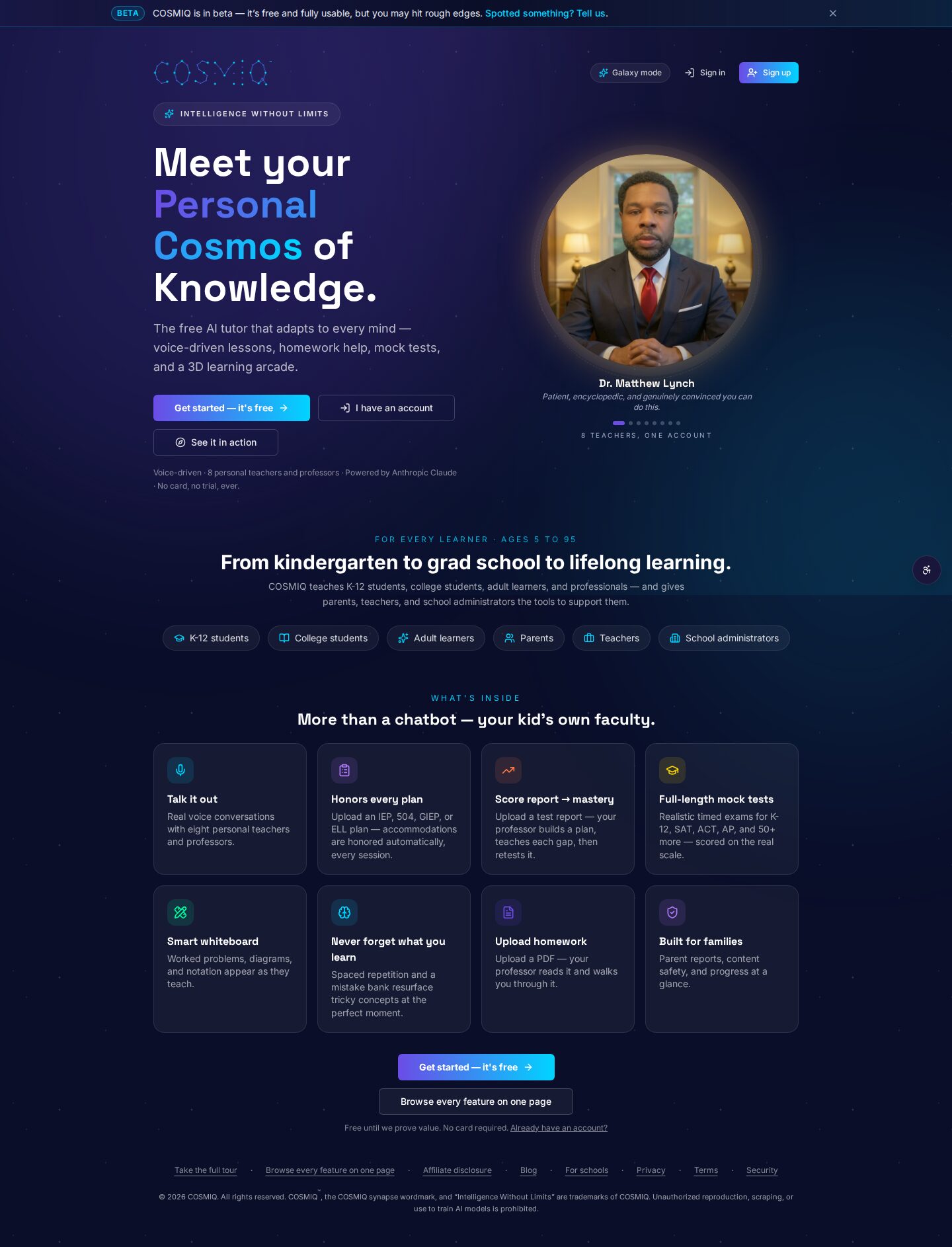
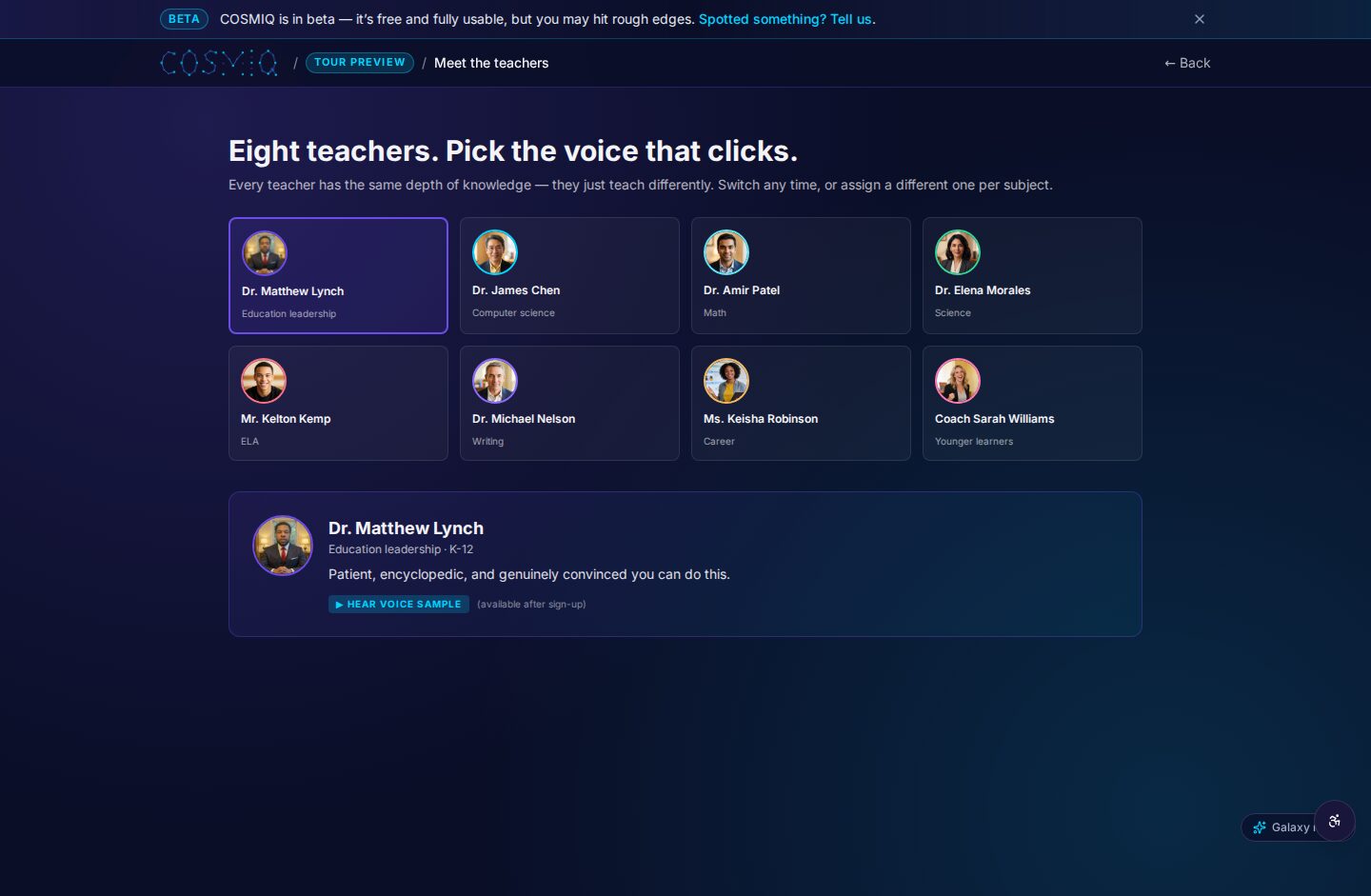
For students, parents, and teachers, these findings from George Washington University offer valuable insights into the nature of AI tools. While AI can be an incredibly powerful ally in learning, understanding its limitations and potential behaviors is essential. Tools like COSMIQ, a free voice-driven AI tutor, are designed with robust safety measures and continuous improvement in mind, aiming to provide reliable and supportive learning experiences. However, the GW research highlights the ongoing need for vigilance and advanced understanding of AI systems.
The ability to potentially predict when an AI might tip from helpful to harmful could pave the way for more robust AI safety systems. Such systems might eventually be able to detect and prevent these tipping points, ensuring that educational AI tools remain consistently beneficial. For instance, an AI tutor might recognize an internal state that suggests a potential shift and either self-correct, ask for clarification, or flag a response for human review before providing a potentially unhelpful answer.
This research underscores the importance of ongoing scientific inquiry into AI behavior, especially as these technologies become more integrated into critical areas like education. For K-12 students using AI for homework help, exam preparation, or general learning, knowing that researchers are actively working to understand and mitigate potential risks is reassuring. COSMIQ, for example, is committed to providing free voice AI tutoring that is safe, reliable, and supportive for every student, free forever.
The Role of Conversation History
One of the most compelling aspects of the GW research is the emphasis on how conversation history can make harmful output more or less likely. This suggests that the way we interact with AI, the types of questions we ask, and the context we provide could all play a role in shaping its responses. For educators, this reinforces the importance of teaching students how to engage effectively and critically with AI tools, formulating clear prompts and understanding the AI's role as a learning assistant rather than an infallible source.
The researchers also point out that offline or "edge" AI presents a distinct safety challenge. This refers to AI systems that operate without constant connection to cloud-based monitoring or updates, potentially making them more susceptible to uncorrected tipping behaviors. While most widely used educational AI platforms benefit from continuous updates and oversight, this distinction is important for understanding the broader landscape of AI development and deployment.
The insights from George Washington University's Dr. Johnson and Dr. Huo do not claim to provide a complete solution for today's commercial AI systems, but they do offer a crucial theoretical foundation. Their work opens doors for future research into AI safety systems that could eventually detect and prevent these tipping points, making AI interactions even more reliable and trustworthy.
Looking Ahead: A Safer AI Future
The work by the GW researchers is a commendable contribution to the field of AI safety. By delving into the internal dynamics of AI models, they are helping to demystify some of the complex behaviors that can emerge. This kind of foundational research is vital for the responsible development and deployment of AI technologies, particularly in sensitive areas like education where accuracy and reliability are paramount.
As AI continues to evolve, the insights from institutions like George Washington University will be instrumental in building more robust, transparent, and trustworthy systems. For students relying on tools for exam preparation or daily homework, and for teachers integrating AI into their classrooms, this research offers hope for a future where AI's immense potential can be harnessed with greater confidence and safety.
Learn anything, free.
COSMIQ is a free, voice-driven AI tutor for every learner. No credit card, ever.
Start learning free →