How AI Website Probing Affects Education Data and Digital Privacy

News that OpenAI’s models probed websites belonging to the U.S. Department of Education and other government agencies may sound technical, but it connects to an important everyday topic: how artificial intelligence finds, interprets, and uses information published online. For students, families, and educators, the key is not panic. It is learning to distinguish public information from personal data, to understand the limits of AI-generated answers, and to use digital tools thoughtfully.
What does it mean when an AI model “probes” a website?
In this context, probing generally refers to an automated system visiting or interacting with pages on a website to retrieve information, test how the site responds, or gather publicly accessible content. Software programs have long done similar work. Search engines use crawlers to index webpages so people can find them in search results.
AI-related web activity can be different because a system may use retrieved material to answer a question, summarize a page, compare documents, or complete a task. The precise effect depends on the tool, the website’s technical rules, and whether the system is merely accessing live public pages or collecting content for another purpose.
A public agency website often contains useful resources, such as financial-aid guidance, school data, policy documents, accessibility information, and family-facing explanations. Making this material easier to locate can be valuable. At the same time, agencies must protect systems, respect website terms and technical boundaries, and ensure that sensitive information is never exposed through poorly designed digital services.
Public information is not the same as personal information
A helpful rule for everyone online is that information being visible on a webpage does not automatically make every use of it appropriate. Government websites may publish documents intended for public access, but they can also contain forms, portals, databases, or pages that require extra protection.
Students and families should be especially careful with information connected to education records. In the United States, records such as grades, attendance details, disability accommodations, disciplinary information, student identification numbers, and financial-aid materials should be handled through secure, authorized systems. Do not paste this information into a general AI chatbot unless your school or provider has explicitly approved that use and explained its privacy practices.

A quick privacy check before using AI
- Ask whether the information includes a student’s name, ID number, contact details, grades, or other identifying details.
- Remove names and unnecessary personal details when seeking help with an assignment.
- Use official school or agency portals for applications, records, and account changes.
- Read the tool’s privacy settings and your school’s AI-use guidance.
- Tell a trusted adult, teacher, or school technology staff member if a site seems to request information it should not need.
Why AI answers still need verification
Even when an AI tool accesses a reliable public webpage, its response is not a substitute for the original source. AI can misunderstand a question, omit exceptions, combine information from different places, or present outdated guidance with too much confidence. This matters when the topic involves deadlines, eligibility rules, legal requirements, student services, or financial aid.
For example, an AI assistant may help a family generate a list of questions about college aid. But the family should confirm final instructions, dates, and required documents directly on the relevant official agency or school website. If the information could affect enrollment, benefits, funding, or a student’s rights, checking the primary source is essential.
Use a simple “source trail” routine
- Start with the AI answer as a draft explanation, not a final authority.
- Find the official page, document, or contact office behind the claim.
- Check the publication or update date.
- Look for conditions, exceptions, and eligibility requirements.
- Save the official link or write down the office that confirmed the information.
AI can help people find and understand information, but important education decisions deserve a direct check of the official source.
What schools can teach from this moment
Stories about AI and government websites are a useful opening for digital literacy lessons. Rather than treating AI as mysterious or automatically trustworthy, teachers can help learners ask practical questions: Who published this information? Is the site official? What data did I share? Can I verify the answer? What might the tool have missed?
These questions strengthen research skills across subjects. In a history class, students can compare an AI summary with a primary-source document. In science, they can check whether a claim is supported by a credible agency or academic institution. In counseling or career-readiness settings, they can practice locating official information about applications and programs without entering personal details into unfamiliar tools.
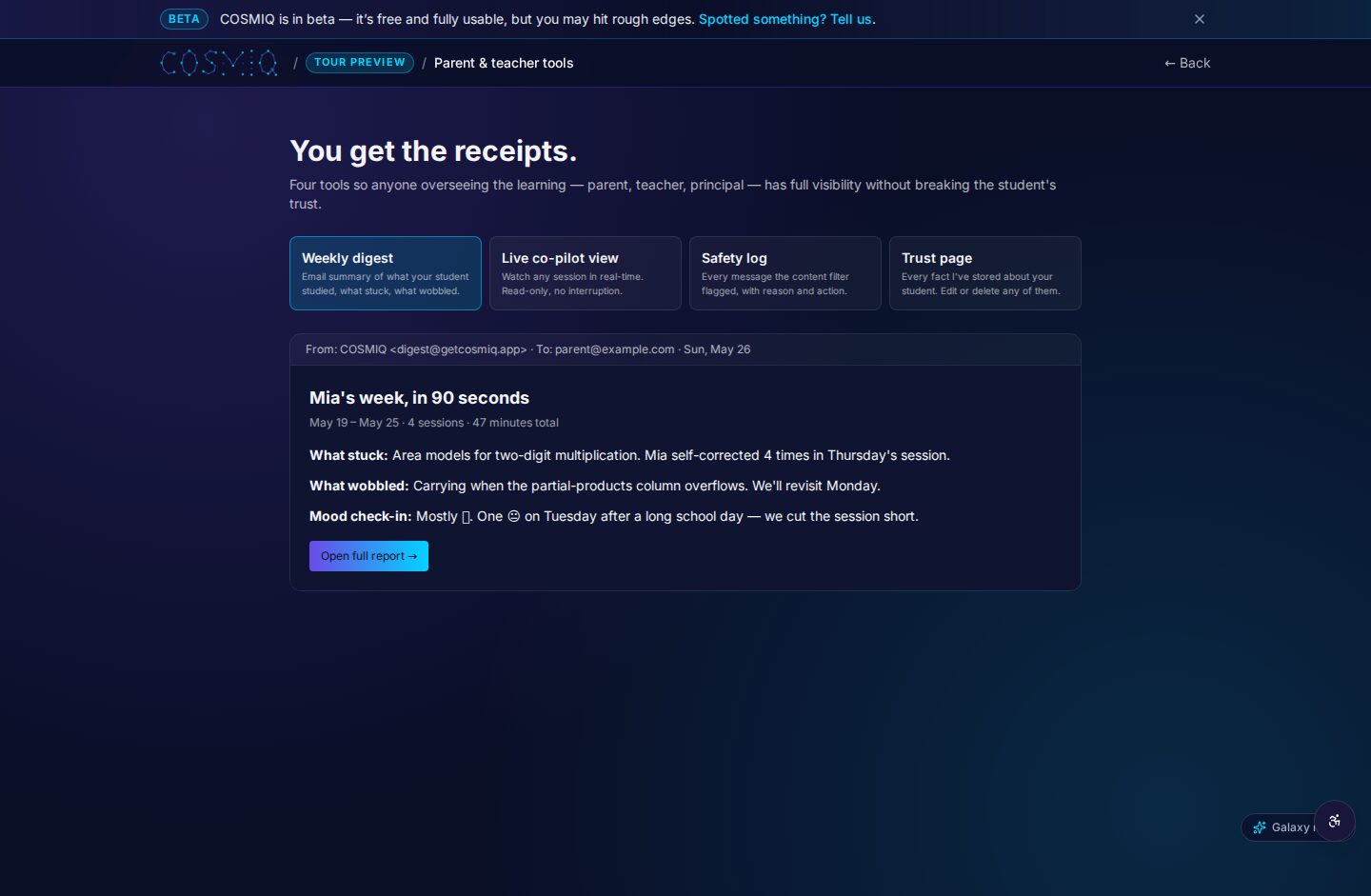
Schools can also make expectations clear. A useful AI policy explains which tools are permitted, what student information must never be entered, when citation or disclosure is required, and where learners can ask for help. Clear guidance supports both responsible experimentation and student protection.
Practical next steps for families and educators
Keep the conversation grounded. Ask students what AI tools they use, what kinds of questions they ask, and how they decide whether an answer is accurate. Encourage them to use AI for brainstorming, practice questions, plain-language explanations, and feedback on work they have already started. Encourage caution when a task involves personal records, official submissions, or high-stakes decisions.
For educators, voice-driven tutoring tools can be particularly useful for helping students talk through a concept, rehearse reasoning, or receive immediate practice support. The same standards apply: choose tools deliberately, avoid sharing identifiable student data, and teach learners to verify important claims.
AI activity on public websites will continue to raise technical and policy questions. For students, parents, and teachers, the most durable response is practical digital judgment: protect personal information, rely on official sources for important decisions, and treat AI as a helpful starting point rather than the final word.
Learn anything, free.
COSMIQ is a free, voice-driven AI tutor for every learner. No credit card, ever.
Start learning free →