How School Ratings Are Actually Calculated
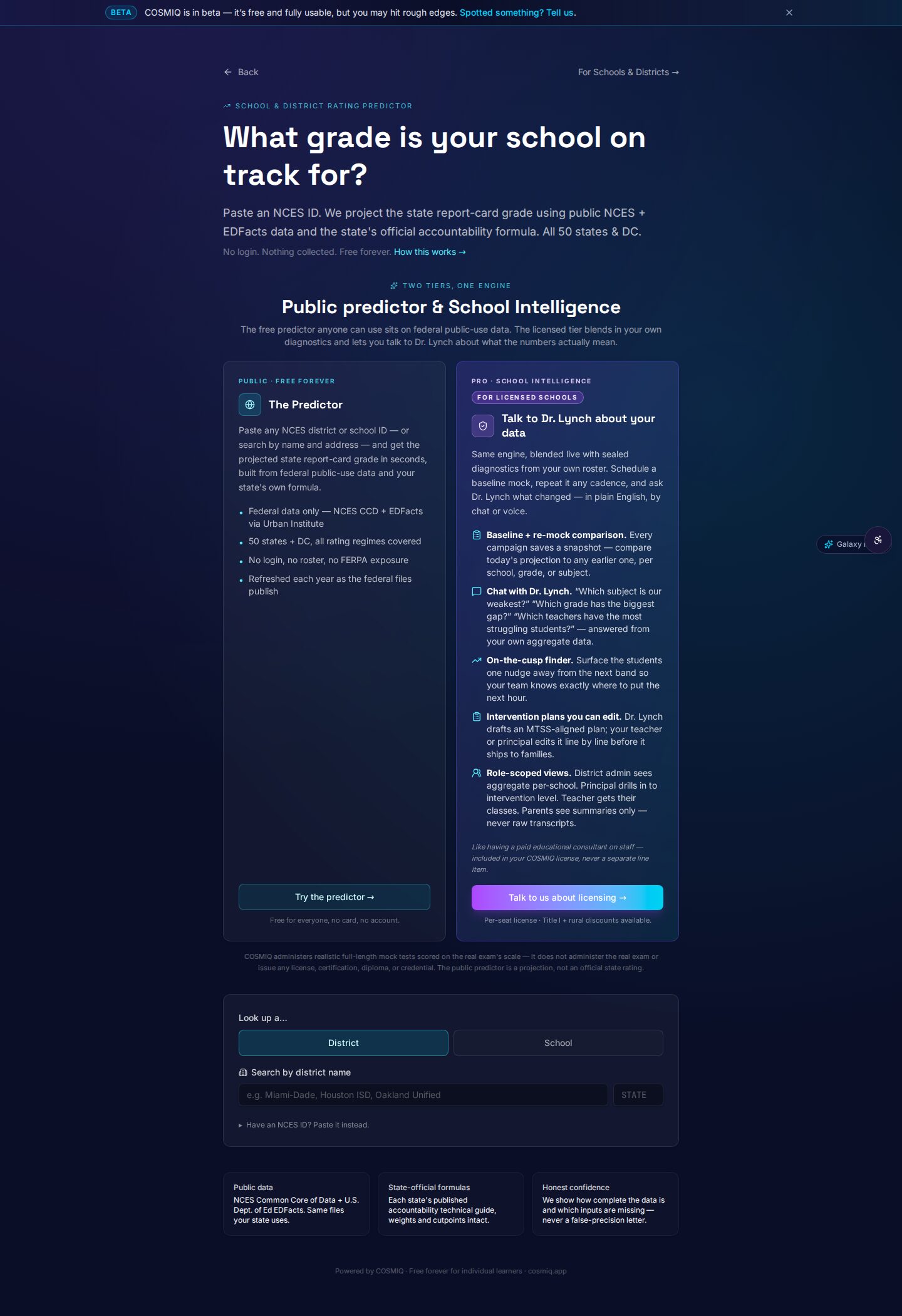
School ratings look like a single tidy grade, but under the hood they're a weighted recipe of a few public measures — and the exact formula differs from state to state. We document our approach openly in the rating predictor methodology, which relies entirely on federal public-use education data with zero student personal information involved. Here's how these numbers generally come together.
The common ingredients
Most state and third-party systems blend a handful of indicators, then convert the total into a grade, score, or star rating.
- Achievement — the share of students meeting proficiency on state tests.
- Growth — how much students progressed compared with similar peers.
- Graduation rate — typically a four-year rate for high schools.
- Attendance or chronic absenteeism, and sometimes college or career readiness measures.
Why the weights matter so much
Two schools with identical test scores can earn different grades because states weight these pieces differently — one might count growth heavily, another might lean on raw proficiency. That's why I always tell people the same school could be a "B" in one framework and a different mark in another. The weights are choices, not laws of nature, so it's worth reading the official rules for your state.
Where the data comes from
Public ratings draw on de-identified, aggregate data that schools and states already report. Our predictor specifically uses only federal public-use datasets, which means there's no FERPA exposure and no individual student records — just school-level and district-level summaries that are already public.
The limits worth remembering
Because these figures are approximate and shift year to year, treat any predicted or published rating as an estimate, not a verdict. Small schools can show big swings from a few students, and a single year rarely tells the full story. Always confirm against your state's official accountability report before drawing conclusions.
Explore it yourself
Want to see the inputs in action? Read the full rating methodology, then run a school through the rating predictor to see how the pieces combine. Educators can learn more at COSMIQ for schools, and you can talk through any of these concepts with the free voice tutor.
Related resources: rating predictor methodology · rating predictor · COSMIQ for schools · free voice tutor
Learn anything, free.
COSMIQ is a free, voice-driven AI tutor for every learner. No credit card, ever.
Start learning free →