Iowa State Researchers Join 2026-27 Collaboration Catalysts to Advance Key Studies

Iowa State University and Ames National Laboratory have announced the selection of thirteen researchers for the 2026-27 Research Collaboration Catalysts cohort. This initiative, according to the university's Office of the Vice President for Research (OVPR), is designed to foster interdisciplinary partnerships and accelerate scientific discovery across a range of fields.
The program brings together scientists from diverse backgrounds to tackle complex problems that often require a multi-faceted approach. For students, parents, and educators in Iowa and beyond, this collaboration signifies a commitment to advancing knowledge that can lead to tangible improvements in various aspects of life, from technological innovation to environmental solutions.
Made this list? Show it off.
Grab a free "Featured in COSMIQ" badge for your site — no sign-up, no cost. It links back to this article.
Get your free badge →Fostering Interdisciplinary Innovation at Iowa State
The core idea behind the Research Collaboration Catalysts program is to break down traditional academic silos. By encouraging researchers from different disciplines to work together, Iowa State University aims to generate novel ideas and solutions that might not emerge from more conventional, single-field studies. This approach is particularly relevant in today's world, where many pressing challenges, such as climate change or public health crises, demand insights from biology, engineering, social sciences, and more.
For high school students considering STEM fields, or even younger learners curious about how science works, these collaborations offer a glimpse into the dynamic nature of modern research. It highlights that significant breakthroughs often happen at the intersection of different areas of expertise, rather than in isolation. This kind of collaborative environment also enriches the educational experience for university students, providing opportunities to engage with cutting-edge projects and learn from a diverse group of mentors.
The Role of Ames National Laboratory in Research Advancement
The inclusion of researchers from Ames National Laboratory alongside those from Iowa State University underscores the significant partnership between these two institutions. Ames National Laboratory, a U.S. Department of Energy national laboratory, is renowned for its expertise in materials science, chemical sciences, and computational sciences. Its participation in the Catalysts cohort brings a wealth of specialized knowledge and resources to the collaborative projects.
This collaboration means that projects benefit from both the academic breadth of a major university and the focused, advanced research capabilities of a national laboratory. Such partnerships are crucial for translating foundational scientific discoveries into practical applications. For instance, innovations in materials science could lead to more efficient energy solutions, while advancements in computational methods might help us better understand complex systems, from weather patterns to biological processes.
Potential Impact on Students, Educators, and the Community
The research undertaken by the 2026-27 cohort holds the potential for wide-ranging benefits. While the specific projects are not detailed in the announcement, the overarching goal of fostering collaboration suggests an emphasis on impactful research. For K-12 students, understanding that universities like Iowa State are actively engaged in solving real-world problems can make science and engineering feel more relevant and exciting. It can inspire them to pursue their own interests in these fields.
Educators can use examples of interdisciplinary research to illustrate the interconnectedness of subjects and the importance of critical thinking and problem-solving skills. Programs like the Research Collaboration Catalysts demonstrate the value of teamwork and diverse perspectives, lessons that extend far beyond the laboratory. For families and the broader community, the advancements spurred by this research could translate into improved technologies, better healthcare outcomes, or more sustainable practices, ultimately contributing to a higher quality of life.
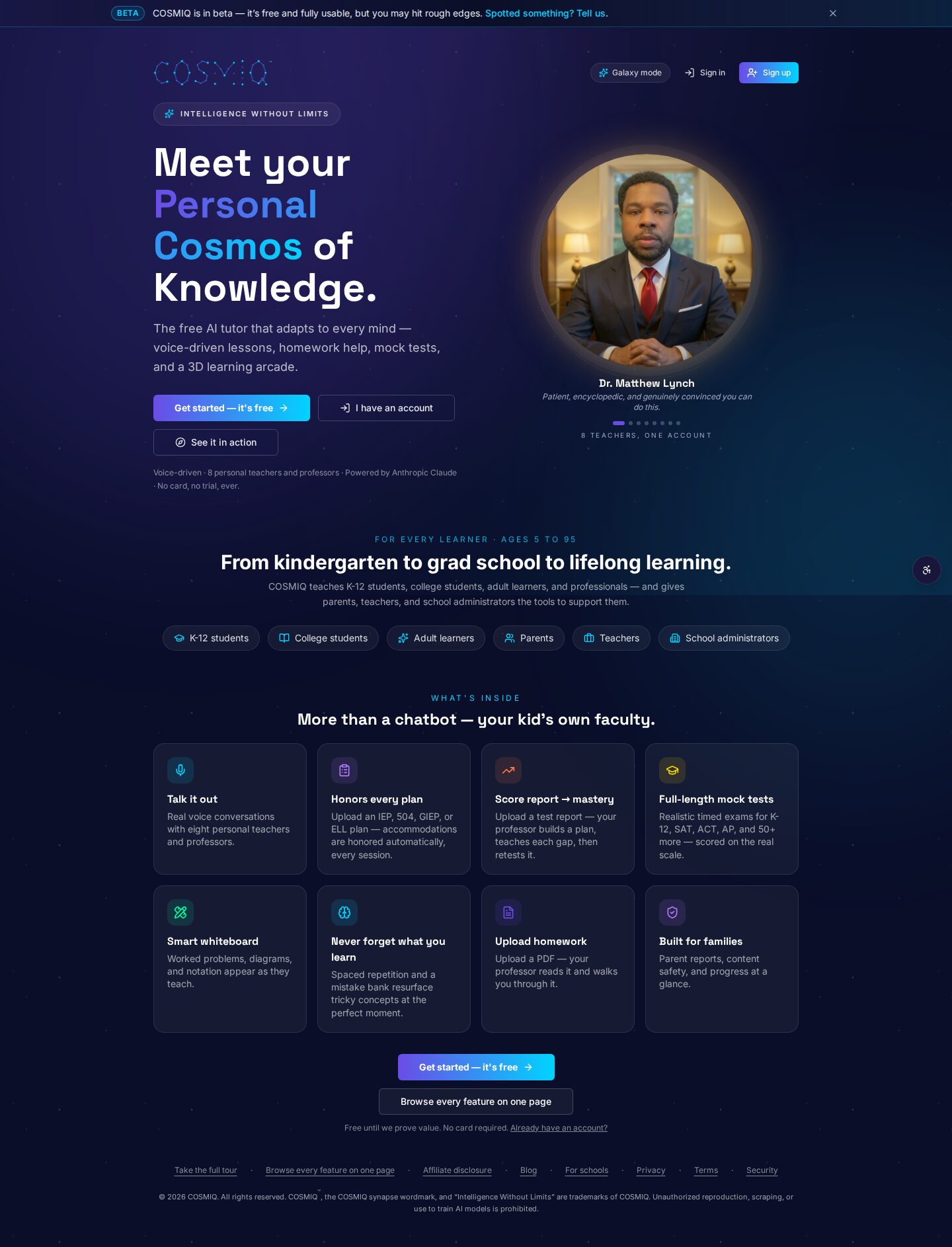
To support students in exploring these complex topics and preparing for future academic pursuits, free resources like COSMIQ offer voice-driven AI tutoring. It's a free, helpful tool for K-12 students to understand challenging concepts, including those related to science and technology, and can even assist with exam preparation for college entrance or AP tests.
Looking Ahead: The Future of Collaborative Research
The 2026-27 Research Collaboration Catalysts cohort represents an ongoing commitment by Iowa State University to push the boundaries of knowledge through teamwork. By investing in these interdisciplinary partnerships, the university aims to solidify its position as a hub for innovative research that addresses both local and global challenges. The outcomes of these collaborations, while not immediate, often lay the groundwork for future advancements that benefit society in myriad ways.
This initiative serves as a reminder that progress in science and technology is often a collective endeavor, built on the shared expertise and dedication of many individuals working towards common goals. It highlights the importance of institutional support for exploratory research, recognizing that the most significant discoveries often begin with collaborative sparks.
Learn anything, free.
COSMIQ is a free, voice-driven AI tutor for every learner. No credit card, ever.
Start learning free →