JMIR Publications Highlights Key Advances in Medical AI, Rare Disease Research, and E-Nose Diagnostics

In an era where technology is rapidly reshaping every facet of our lives, its impact on healthcare and education is particularly profound. JMIR Publications, a leading open access publisher specializing in digital health research, recently spotlighted several groundbreaking developments through its latest News and Perspectives articles. These publications delve into the evolving role of artificial intelligence in medical training, innovative strategies for tackling rare diseases, and cutting-edge diagnostic tools like electronic noses for non-invasive cancer screening.
According to JMIR Publications, these articles aim to bring the rigor of academic publishing to scientific journalism, offering expert-driven content to keep the digital health community informed and inspired. The organization, which champions open science and has over two decades of experience in scholarly communication, emphasizes disseminating innovations to a broad audience, including researchers, patients, and other knowledge users.
Navigating the AI Frontier in Medical Education
The integration of artificial intelligence into medical education is a topic of considerable discussion, and Katie Cottingham's article, "Charting a Course for AI in Medical Education," offers valuable insights. According to JMIR Publications, Cottingham investigates how medical schools are adapting to prepare students for an increasingly tech-centric clinical world. AI tools, the article suggests, can offer personalized and instant feedback, serving as powerful support systems for learners.
However, the piece also highlights important caveats raised by experts: the risks of "never-skilling," "mis-skilling," and "de-skilling." These terms refer to scenarios where students, and even seasoned professionals, might become overly reliant on AI, potentially hindering the development or retention of crucial critical thinking skills. Cottingham's work, as described by JMIR Publications, emphasizes using AI tools to scaffold learning rather than replace the fundamental process of intellectual engagement. As she writes, "The brain needs to wrestle with information to make it stick." This perspective is vital for educators and students alike, encouraging a balanced approach to leveraging AI's benefits while safeguarding essential human cognitive development.
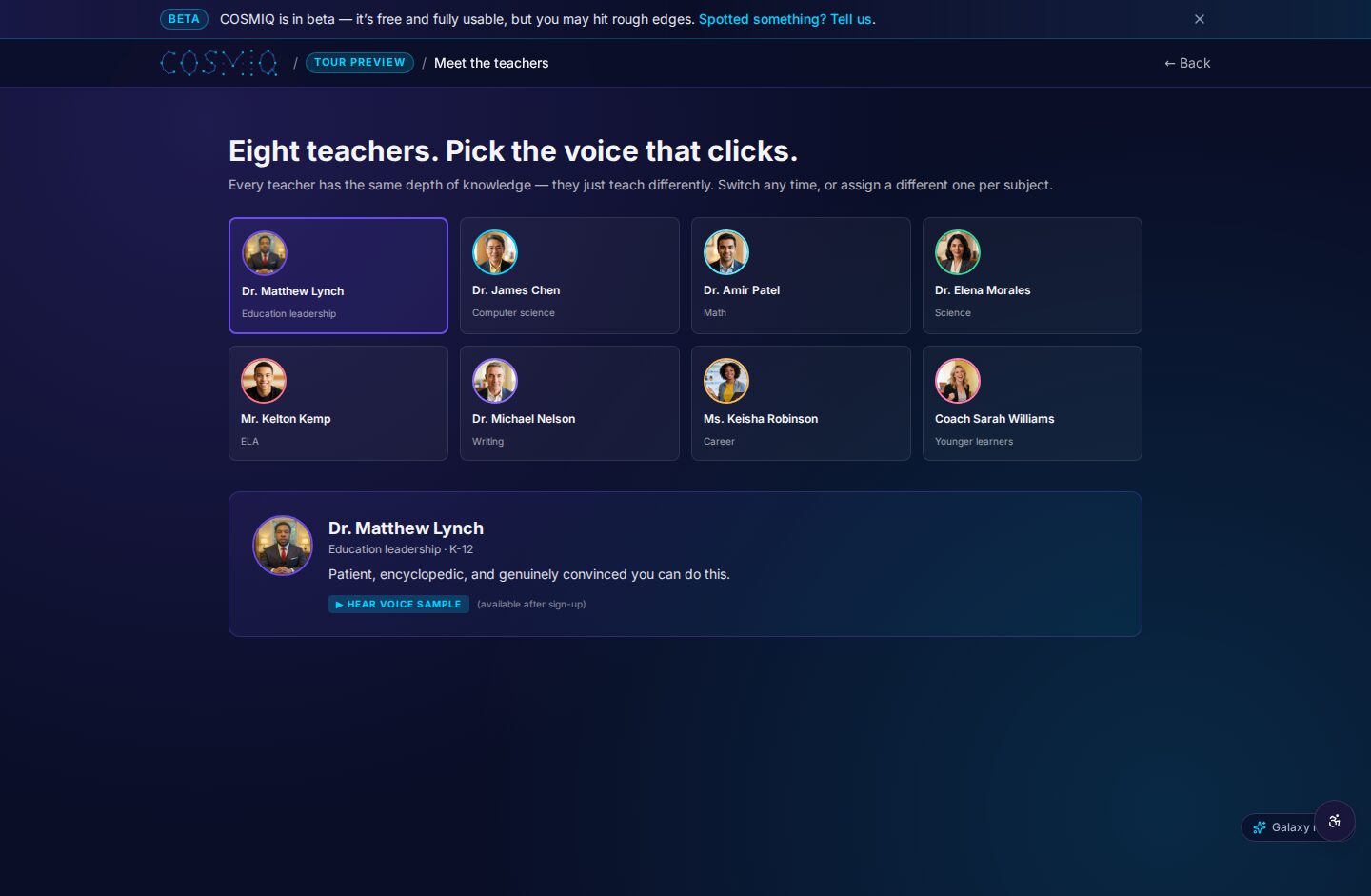
For students navigating complex subjects, understanding how to effectively use AI as a learning aid, rather than a shortcut, is paramount. Platforms like COSMIQ, a free voice-driven AI tutor, exemplify how AI can provide personalized support, help explain difficult concepts, and offer practice without replacing the core learning process. It's about empowering students with tools that enhance their understanding and problem-solving abilities.
Harnessing AI for Rare Disease Research
Rare diseases present significant challenges in diagnosis and treatment due to limited data and often insufficient funding, affecting hundreds of millions globally. Simon Spichak's article, "AI Models Could Improve Diagnosis and Care for Rare Diseases," explores how novel machine learning tools could accelerate detection and the discovery of new treatments.
JMIR Publications highlights Spichak's report on the work of Rose Orenbuch, PhD, of Harvard, who is training a deep generative model called popEVE. This model has already identified numerous novel genetic variants potentially linked to severe developmental disorders. The article also discusses the promise of larger frontier and foundation models, which could generalize insights from vast, diverse datasets to aid in data-scarce rare disease research. While these models show immense potential in diagnosis and drug discovery, Spichak's report, according to JMIR Publications, cautions that "aside from a few success stories, they haven’t yet proven their mettle in the real world." This measured optimism underscores the ongoing need for rigorous research and validation in this critical area.
Sniffing Out Cancer: The Promise of E-Nose Technology
Early and non-invasive cancer detection remains a holy grail in medical research, and Liam Critchley's article, "Advanced Olfactory Cancer Detection: When E-Noses Sniff the Skin," brings exciting developments to light. According to JMIR Publications, Critchley covers research into electronic noses (e-noses) as a potential screening tool.

The article details a pilot study published in the Journal of Analytical Chemistry, which developed a new quantum-dot-based e-nose utilizing cadmium sulfide nanocrystals. This device is designed to sense volatile organic compounds (VOCs) exhaled through the skin, which can act as biomarkers. Critchley reports that, according to the study authors, this highly sensitive device achieved 100% accuracy and sensitivity in distinguishing cancer patients from healthy controls in the pilot phase. Furthermore, it showed potential for classifying disease severity. This research represents a fascinating leap forward, suggesting a future where a simple "sniff" could provide crucial early detection, potentially transforming diagnostic pathways and improving patient outcomes.
A Commitment to Advancing Digital Health
These recent publications from JMIR Publications collectively paint a picture of a healthcare landscape rapidly being reshaped by technological innovation. From enhancing medical education with AI to developing sophisticated diagnostic tools and accelerating rare disease research, the advancements highlighted demonstrate the ongoing commitment of researchers and publishers like JMIR Publications to pushing the boundaries of what's possible in digital health. Their dedication to open access ensures that these vital insights are available to a global audience, fostering collaboration and accelerating further progress.
As technology continues to evolve, understanding its ethical implications and practical applications in fields like medicine and education will be crucial. JMIR Publications' role in disseminating this knowledge is invaluable, offering a window into the future of health and learning.
Learn anything, free.
COSMIQ is a free, voice-driven AI tutor for every learner. No credit card, ever.
Start learning free →