Minerva University Study Highlights AI's Impact on Student Learning and Assessment

The rapid integration of artificial intelligence into academic life presents both unprecedented opportunities and significant challenges. A recent study conducted by Minerva University sheds light on one such challenge, revealing that computer science students often struggle to explain AI-generated code they have submitted for assignments. This finding, according to Minerva University, suggests a potential disconnect between the polished work students can produce with AI assistance and their genuine understanding of the underlying concepts.
Minerva University, known for its innovative approach to education, conducted interviews with its faculty members, who unanimously reported an inability to reliably detect AI use in student submissions. This observation prompted a deeper investigation into student comprehension, particularly in a computer science course where students were asked to explain the code they had submitted. The results were striking: students averaged below 1.5 out of 4 when attempting to articulate their code, indicating a substantial gap in their understanding.
The Evolving Landscape of Academic Integrity
The study's supervisors, Dr. Alexis Diamond and Dr. Özgür Özlük, argue that AI isn't necessarily creating new problems but rather exposing long-standing weaknesses within higher education assessment. They suggest that colleges have historically often evaluated the final product of assignments without sufficiently verifying the learning process or the student's mastery of the material. AI, by enabling students to generate high-quality output without necessarily internalizing the knowledge, brings this issue into sharper focus.
It's also noteworthy, according to Minerva University, that all 20 faculty members interviewed for the study acknowledged using AI themselves. This highlights the pervasive nature of AI tools and the need for educators to understand both their potential and their implications for teaching and learning.
Beyond Detection: Rethinking Assessment
Given the difficulty faculty face in detecting AI use and the limitations of traditional assessment, the Minerva University study underscores the need for new approaches. Dr. Diamond and Dr. Özlük suggest that current AI detectors and simple disclosure requirements may not be sufficient to ensure genuine learning. Instead, they point to alternative assessment methods that faculty are currently exploring and testing.

These innovative methods are designed to reveal students' reasoning and understanding, rather than just evaluating a finished product. Examples include:
- Live Code Explanations: Students demonstrate and explain their code in real-time.
- Project Defenses: Students present and defend their projects, answering questions about their design choices and problem-solving processes.
- Pitch Competitions: Students develop and present solutions, requiring them to articulate their ideas clearly and logically.
- Oral Interviews: Direct conversations with students allow faculty to probe their understanding and identify any gaps.
For parents and teachers, this research provides valuable insight into the evolving demands on students. Encouraging students to explain their work, even when using AI as a tool, becomes crucial. The focus shifts from merely producing an answer to understanding how that answer was derived and being able to articulate the underlying concepts.
Supporting Deeper Learning in the AI Era
The Minerva University study serves as a powerful reminder that true education goes beyond surface-level output. It's about fostering critical thinking, problem-solving skills, and a deep understanding of subject matter. As AI tools become more sophisticated, the role of educators in guiding students toward genuine comprehension becomes even more vital.
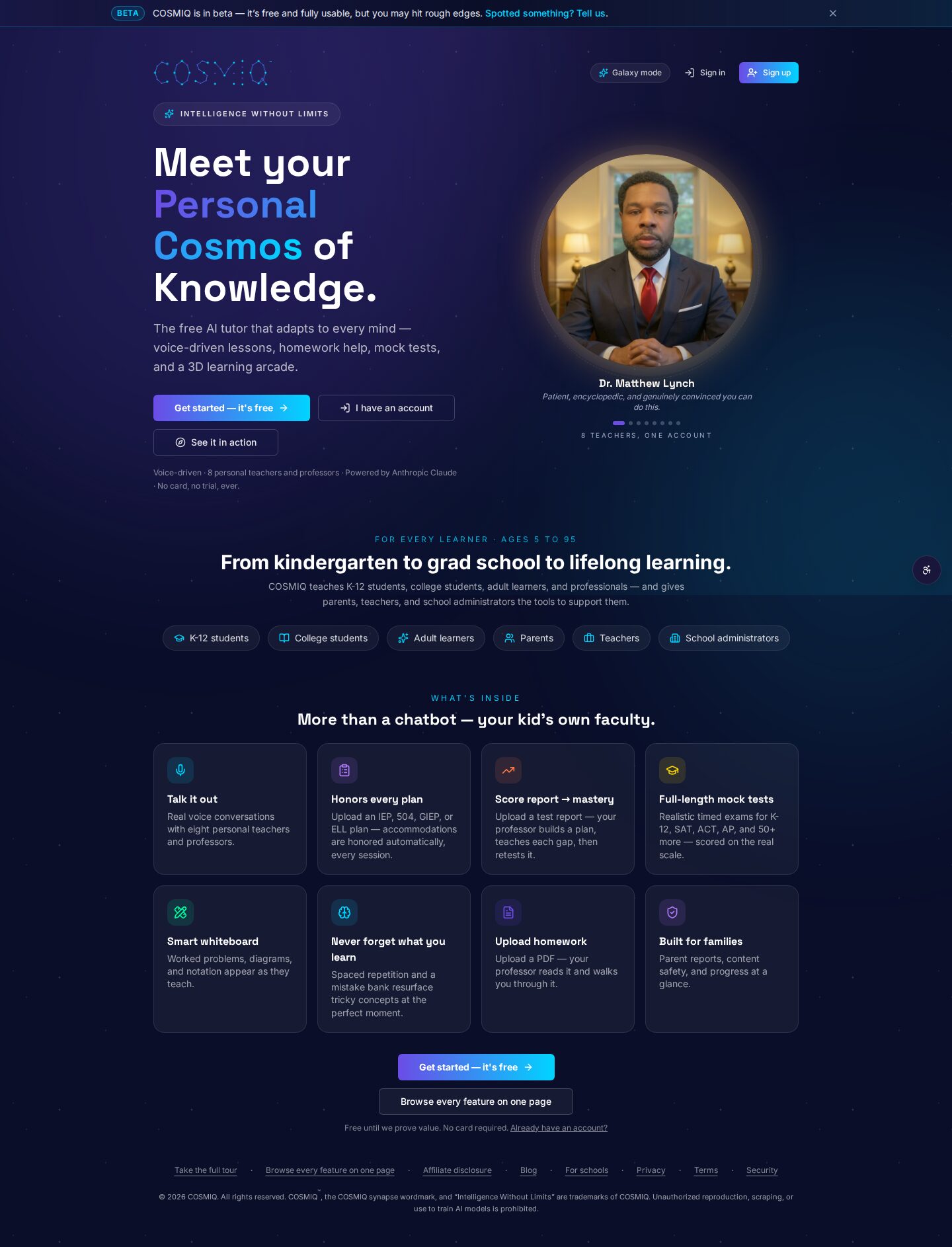
Platforms like COSMIQ can play a supportive role in this evolving educational landscape. Offering free, voice-driven AI tutoring for K-12 students, COSMIQ aims to help learners grasp concepts and practice explaining their understanding. Students can engage in conversational learning, asking questions and receiving explanations, which can be particularly helpful in solidifying knowledge and preparing for the kinds of oral assessments discussed in the Minerva study. For more resources, students can explore the free practice hub by grade and subject.
By focusing on interactive and explanatory learning, educators and tools alike can help students develop the skills needed to not only use AI effectively but also to truly understand and articulate the knowledge they gain. The work done by Minerva University highlights a critical area for growth in education, encouraging institutions to adapt and innovate their assessment strategies to meet the challenges and opportunities presented by artificial intelligence.
Looking Ahead: A Collaborative Approach
The findings from Minerva University—a Harvard-trained political economist and former World Bank Group evaluator, Dr. Alexis Diamond, and an operations-research expert who previously taught at SFSU and USF, Dr. Özgür Özlük—offer a valuable contribution to the ongoing conversation about AI in education. Their research underscores the importance of focusing on student learning outcomes and developing assessment methods that genuinely reflect understanding, rather than simply the ability to produce a final product. This collaborative spirit, where universities share their insights and findings, is essential for the entire educational community to navigate the complexities of AI effectively and prepare students for a future where these tools are commonplace.
Learn anything, free.
COSMIQ is a free, voice-driven AI tutor for every learner. No credit card, ever.
Start learning free →