NYC's AI Pause: What It Means for K-8 Learning and the Future of EdTech

The New York City Department of Education (NYC DOE) recently announced a temporary pause on the use of generative AI tools for elementary and middle school students. This decision, while specific to NYC, resonates deeply across the educational landscape, prompting educators, parents, and students everywhere to consider the implications of AI's rapid integration into learning environments. At COSMIQ, we believe this pause is an opportunity for thoughtful reflection, not a setback, as we collectively navigate the exciting yet complex future of AI in education.
Understanding NYC's Decision
The NYC DOE's pause is rooted in a desire to ensure that AI tools are implemented safely, effectively, and equitably for younger learners. Key considerations likely include:
- Age Appropriateness: The developmental stages of K-8 students differ significantly from high schoolers or adults. The types of AI interactions, the complexity of the tools, and the potential for misuse or misunderstanding need careful assessment for younger age groups.
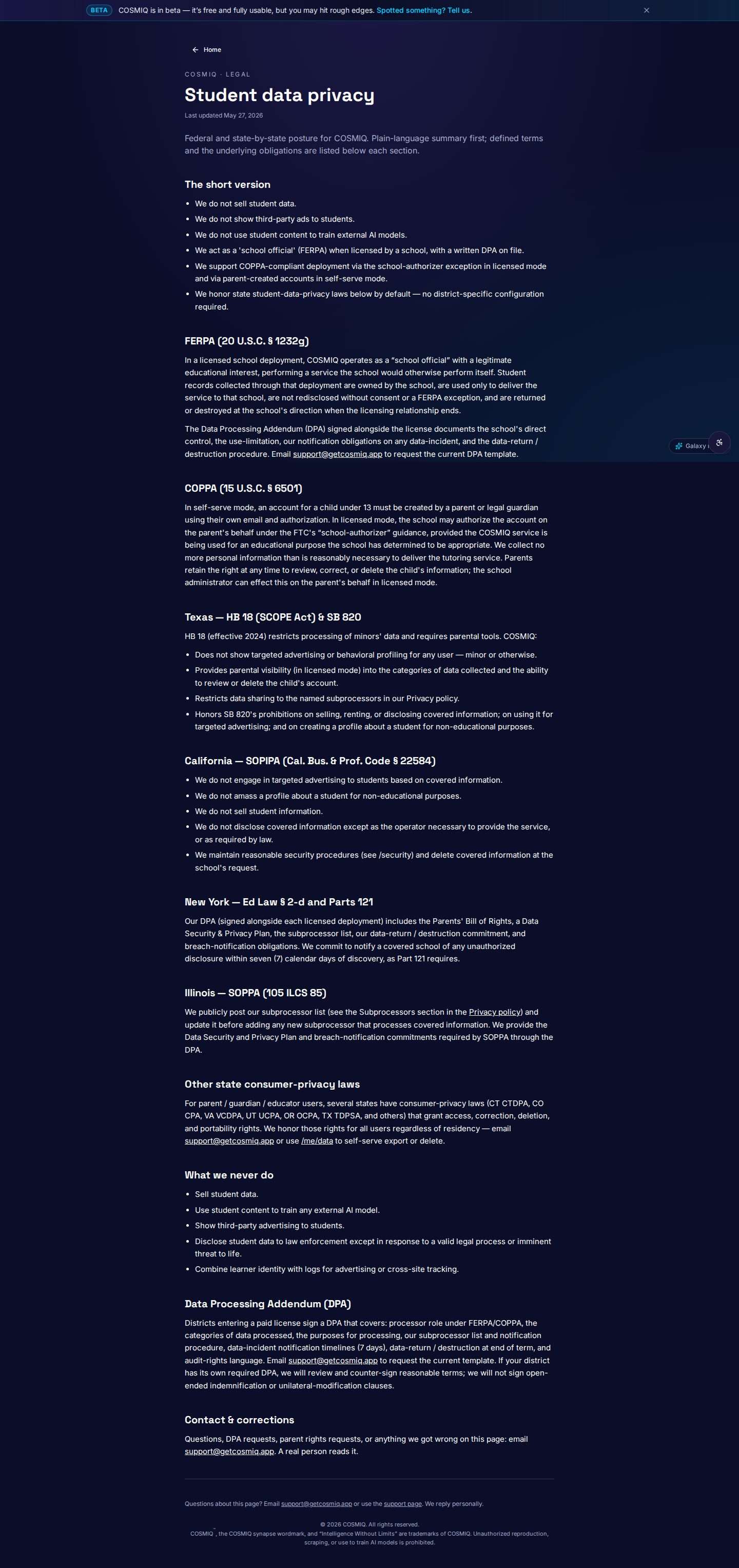
- Data Privacy and Security: Protecting student data is paramount. AI tools often rely on data input, and ensuring that these platforms comply with stringent privacy regulations, especially for minors, is a critical concern.
- Bias and Accuracy: Generative AI models can sometimes produce biased or inaccurate information. Educators need to be equipped to guide students in critically evaluating AI output, a skill that requires scaffolding, particularly for younger students.
- Equitable Access and Digital Divide: Ensuring that all students, regardless of their background or access to technology at home, can benefit from AI tools without exacerbating existing inequalities is a significant challenge.
- Teacher Training and Support: For AI to be a truly effective learning tool, teachers need comprehensive training on how to integrate it into their curriculum responsibly and pedagogically sound ways.
This pause provides the NYC DOE with time to develop robust guidelines, evaluate approved tools, and train staff, ensuring a more structured and beneficial reintroduction of AI for these age groups in the future.
The Broader Conversation: AI in K-12 Education
NYC's decision highlights a global conversation about how to best harness the power of AI while mitigating its risks in K-12 education. For parents, teachers, and students, this conversation revolves around several key areas:

For Parents: Advocating for Informed Choices
Parents play a crucial role in understanding how technology impacts their children's learning. When it comes to AI, consider:
- Asking Questions: Engage with your child's school about their policies on AI use. What tools are being used? How is student data protected?
- Promoting Digital Literacy: Help your children develop critical thinking skills to evaluate information, whether from traditional sources or AI.
- Balancing Screen Time: Ensure a healthy balance between digital learning and other forms of engagement, including reading, creative play, and social interaction.
For Teachers: Integrating AI Responsibly and Effectively
Teachers are on the front lines of educational innovation. As AI tools become more sophisticated, educators can:
- Focus on Pedagogy: Use AI to enhance existing learning goals, not replace them. AI can be a powerful assistant for personalized learning, feedback, and content creation.
- Develop AI Literacy: Teach students how to use AI ethically and effectively, including understanding its limitations and potential biases.
- Share Best Practices: Collaborate with colleagues to explore and develop effective strategies for integrating AI into various subjects.
For Students: Becoming Empowered Learners in an AI World
For students, AI presents both new tools and new challenges. Embrace AI as a learning companion by:
- Being Curious and Critical: Explore what AI can do, but always question its output. Is it accurate? Is it complete?
- Using AI as a Tool, Not a Crutch: Let AI help you brainstorm, organize, or get feedback, but always do your own thinking and learning.
- Understanding Ethical Use: Learn about plagiarism and the importance of original thought, even when using AI to assist your work.
Looking Ahead: A Balanced Approach
The NYC DOE's pause is a testament to the commitment to thoughtful and responsible innovation in education. It underscores that while AI holds immense promise to revolutionize learning, its integration must be guided by careful consideration of student well-being, privacy, and equitable access. As we move forward, platforms like COSMIQ are dedicated to developing AI tools that are not only powerful but also safe, transparent, and designed to genuinely enhance the learning experience for all students, ensuring that the future of education is both innovative and human-centered.
Learn anything, free.
COSMIQ is a free, voice-driven AI tutor for every learner. No credit card, ever.
Start learning free →