Slow Math: How AI Can Help Kids Learn From Mistakes

In math, getting an answer quickly is not always the same as understanding it. A student may arrive at the right number by guessing, copying a pattern, or using a calculator feature they cannot explain. Just as importantly, a wrong answer can reveal exactly where a learner’s thinking went off track. This is where “slow math” can be useful: pausing to examine the process, not merely correcting the result. When used thoughtfully, an AI tutor can make that pause easier by asking questions, identifying possible misconceptions, and guiding a student through a revision.
What “slow math” really means
Slow math does not mean making every child work at the same pace or turning homework into a long ordeal. It means giving enough attention to reasoning. Instead of moving from one answer to the next, students learn to notice what they did, test whether it makes sense, and revise when needed.
For example, if a student calculates that 3/4 is smaller than 2/3 because 4 is larger than 3, the useful next step is not simply hearing “incorrect.” The student needs to compare the fractions in a meaningful way: draw models, find common denominators, or reason about benchmark fractions such as one-half. The mistake becomes evidence of a specific idea that needs adjustment.
This approach matters because many math errors are not careless at all. They may come from a partially learned rule, confusing vocabulary, skipped steps, or a reasonable strategy applied in the wrong situation. Looking closely at errors helps students separate “I got this wrong” from “I can find out what I need to learn next.”
How AI can support mistake review
A voice-driven AI tutor can be particularly helpful during review because it can keep the conversation moving while the student works. Rather than presenting a polished solution immediately, a well-used AI tool can prompt learners to describe their method and inspect one step at a time.
Ask for hints before explanations
The most productive prompt is often not “What is the answer?” Try asking, “Can you give me one hint without solving it?” or “Which step should I check first?” This keeps the student responsible for the thinking while still providing support.
Make the student explain the error
After an incorrect answer, students can say or type their work and ask the AI to help locate the first questionable step. Encourage prompts such as:
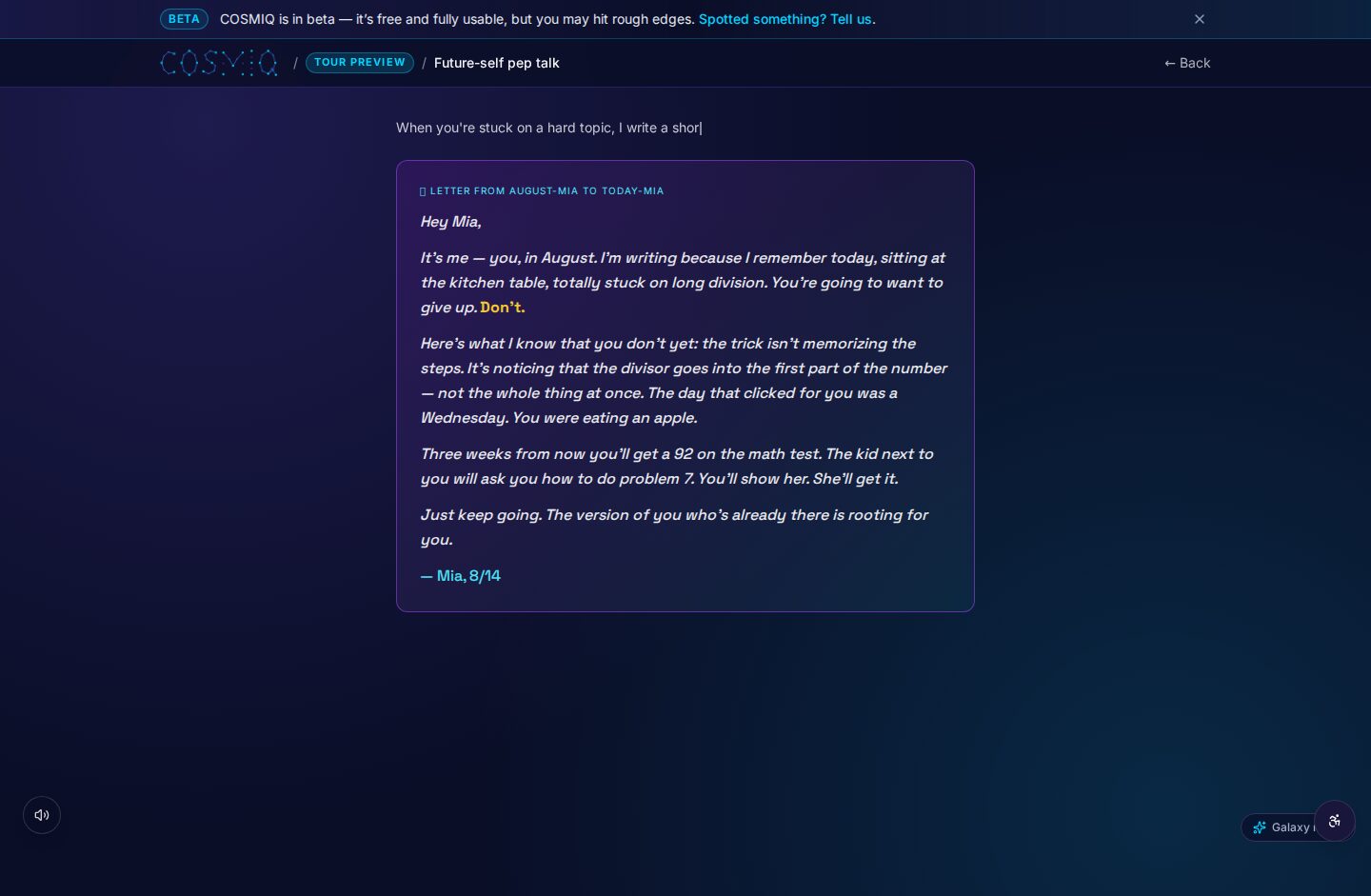
- “Here is how I solved it. Can you check my reasoning, not just my answer?”
- “What assumption did I make in step two?”
- “Can you ask me questions that help me find my mistake?”
- “Show me a different method after I try to correct mine.”
Explaining aloud is valuable because it exposes gaps that may stay hidden on paper. A student who can clearly justify each step is more likely to recognize when a procedure does not fit the problem.
Compare methods, not just answers
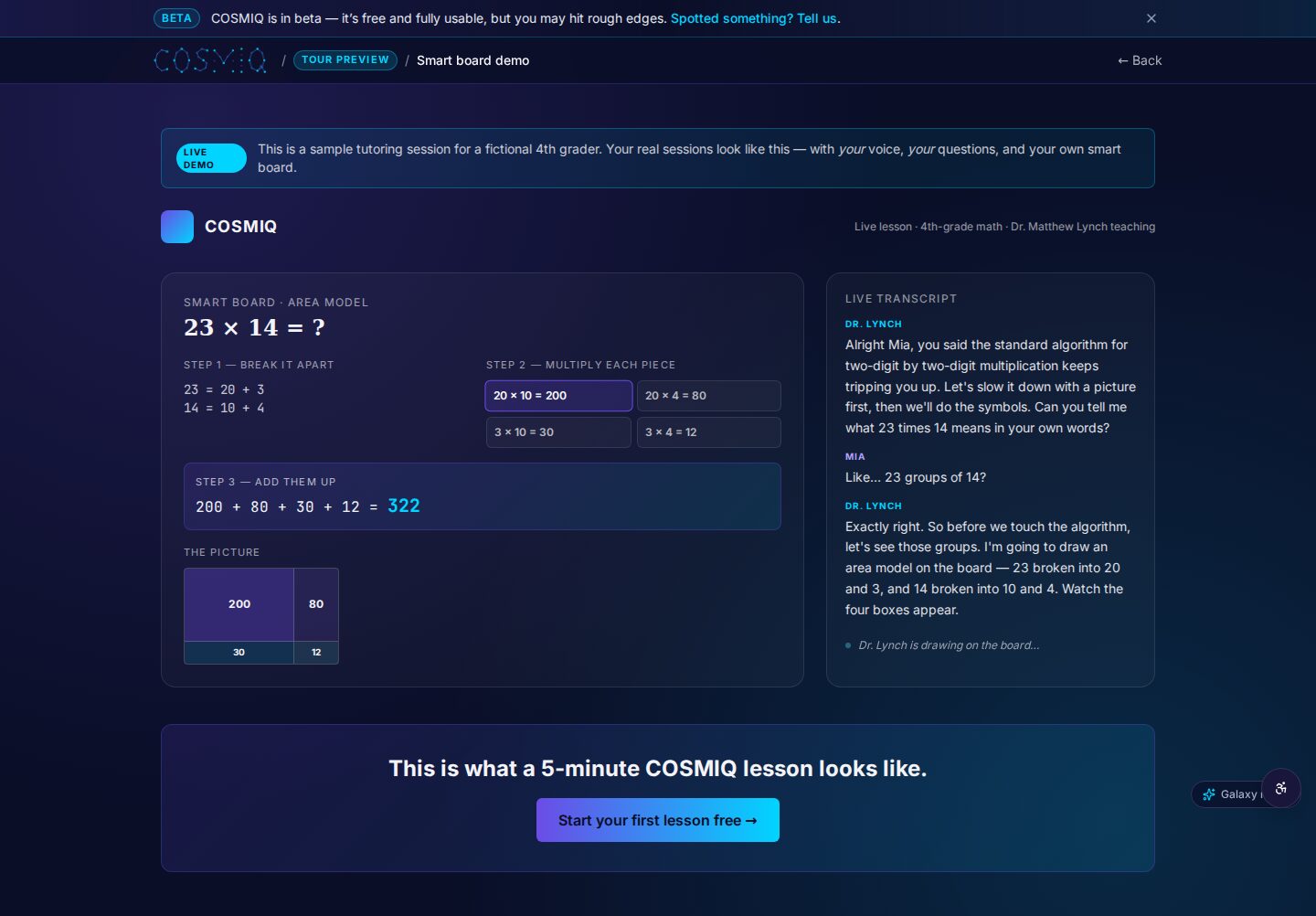
Many problems can be solved in more than one way. AI can suggest an alternative strategy—a number line instead of an equation, estimation before exact calculation, or a table instead of a verbal guess. Comparing methods helps students see which approach is efficient and why both methods do or do not agree.
A useful review ends with a student being able to say what changed in their thinking.
A practical slow-math routine for home or class
A brief, repeatable routine is more sustainable than asking students to analyze every single exercise in depth. Choose one or two meaningful mistakes from a practice set, quiz, or assignment. Then use this sequence:
- Pause before checking the solution. Ask the student to estimate whether their answer is reasonable. In a word problem, do the units and size of the answer make sense?
- Show the original thinking. Keep the work visible. Crossing everything out too soon removes useful clues about the error.
- Name the error type. Was it a calculation slip, a misunderstood concept, a reading error, or an ineffective strategy?
- Repair one step. Have the student revise the earliest step that needs changing instead of starting over automatically.
- Try a similar problem. Use a fresh example to check whether the revised idea transfers.
- Record a takeaway. A short note such as “When subtracting negatives, rewrite the operation first” is more useful than “be careful.”
An AI tutor can participate at several points in this routine: generating a similar practice problem, asking diagnostic questions, or helping turn the takeaway into a concise reminder. The student should still do the mathematical work and make the final judgment.
Guidance for parents and teachers
Adults can make mistake review feel safer by responding calmly to wrong answers. Avoid treating speed as the main sign of ability. Instead, praise specific learning behaviors: checking a claim, drawing a representation, changing a strategy, or explaining why an earlier approach failed.
When using AI, set clear boundaries. Ask students to attempt a problem first and share their reasoning before requesting help. Remind them that AI responses can be incomplete or mistaken, so they should verify explanations with class notes, a textbook, a teacher, or another reliable source. For younger learners, an adult can help frame the questions and ensure the tool is being used for coaching rather than answer collection.
Teachers may also use anonymized examples of common errors for whole-class discussion. The goal is not to spotlight who was wrong; it is to normalize revision. A class can compare two solutions, identify the decision point where they diverge, and discuss how to test each one.
Keep the goal focused on understanding
AI can make math practice feel faster, but its best role is not always to accelerate. Sometimes the most helpful response is a well-timed question that asks a student to slow down: “What does this number represent?” “How do you know?” “Could you check that another way?”
When children learn to review mistakes with patience, they gain more than a corrected worksheet. They build the habit of examining evidence, revising an idea, and trying again with better understanding. That is a math skill—and a learning skill—they can carry into the next problem.
Learn anything, free.
COSMIQ is a free, voice-driven AI tutor for every learner. No credit card, ever.
Start learning free →