Starter Questions for Measuring Learning

Measuring learning does not have to mean giving a formal test every time. For students, parents, and teachers, a few well-chosen questions can reveal far more than whether an answer is right or wrong. They can uncover understanding, misconceptions, confidence, study habits, and the next useful step. The aim is not to catch mistakes; it is to make learning visible.
Start with what the learner can explain
Recall questions have a place, but explanation questions are often more informative. When a learner puts an idea into their own words, you can hear whether they understand the connections behind it.
- What is this topic mainly about?
- Can you explain this idea as if you were teaching it to a younger student?
- What are the most important words or concepts here, and how do they connect?
- What example would you use to show how this works?
- What is the difference between these two ideas?
Listen for more than polished language. A learner may use imperfect wording and still show strong understanding. On the other hand, repeating a definition exactly may hide uncertainty. A helpful follow-up is: “What makes you say that?” It invites reasoning without making the conversation feel like an interrogation.
Ask questions that reveal thinking, not just answers
A correct answer can come from deep understanding, a lucky guess, or a memorized procedure. Ask about the route the learner took. This is especially useful in mathematics, science, reading comprehension, and exam-prep subjects where method matters.
- How did you get that answer?
- What was your first step, and why did you choose it?
- Where did you have to make a decision?
- Is there another way to solve or explain this?
- What part of the task felt easiest? What part required the most thought?
If the answer is incorrect, avoid immediately supplying the solution. Try: “Show me the point where you started to feel unsure.” This helps identify whether the issue is a missing fact, a misunderstood instruction, a calculation slip, or an ineffective strategy. Those require different kinds of support.
A mistake is useful evidence when the learner can examine what led to it.
Check confidence and identify gaps
Confidence matters because it affects whether students attempt challenging work, ask for help, and review effectively. Yet confidence and understanding do not always match. A learner may feel sure about an incorrect idea or doubt an answer they can justify well.
Use questions that separate “I know it” from “I recognize it” and “I could do it with help.”
- How confident do you feel about this topic: not yet, getting there, or ready to use it independently?
- Which part could you complete without notes or hints?
- What would you need to look up or ask about?
- What is one question you still have?
- Which mistake do you think you might make on a similar task?
For younger learners, offer simple choices such as “easy,” “stretchy,” and “not yet.” For older students, ask them to rate specific skills rather than an entire subject. “I can interpret a graph” is clearer and more actionable than “I am good at science.”
Turn the conversation into a next step
Measurement is most valuable when it changes what happens next. End a check-in by choosing one small, specific action. It might be revisiting a worked example, practicing one question type, making a comparison chart, or explaining the concept aloud.
- What is one thing you should review before moving on?
- What practice would help you test this skill again?
- What resource, example, or hint would be useful?
- When will you check your understanding again?
- What would progress look like on the next attempt?
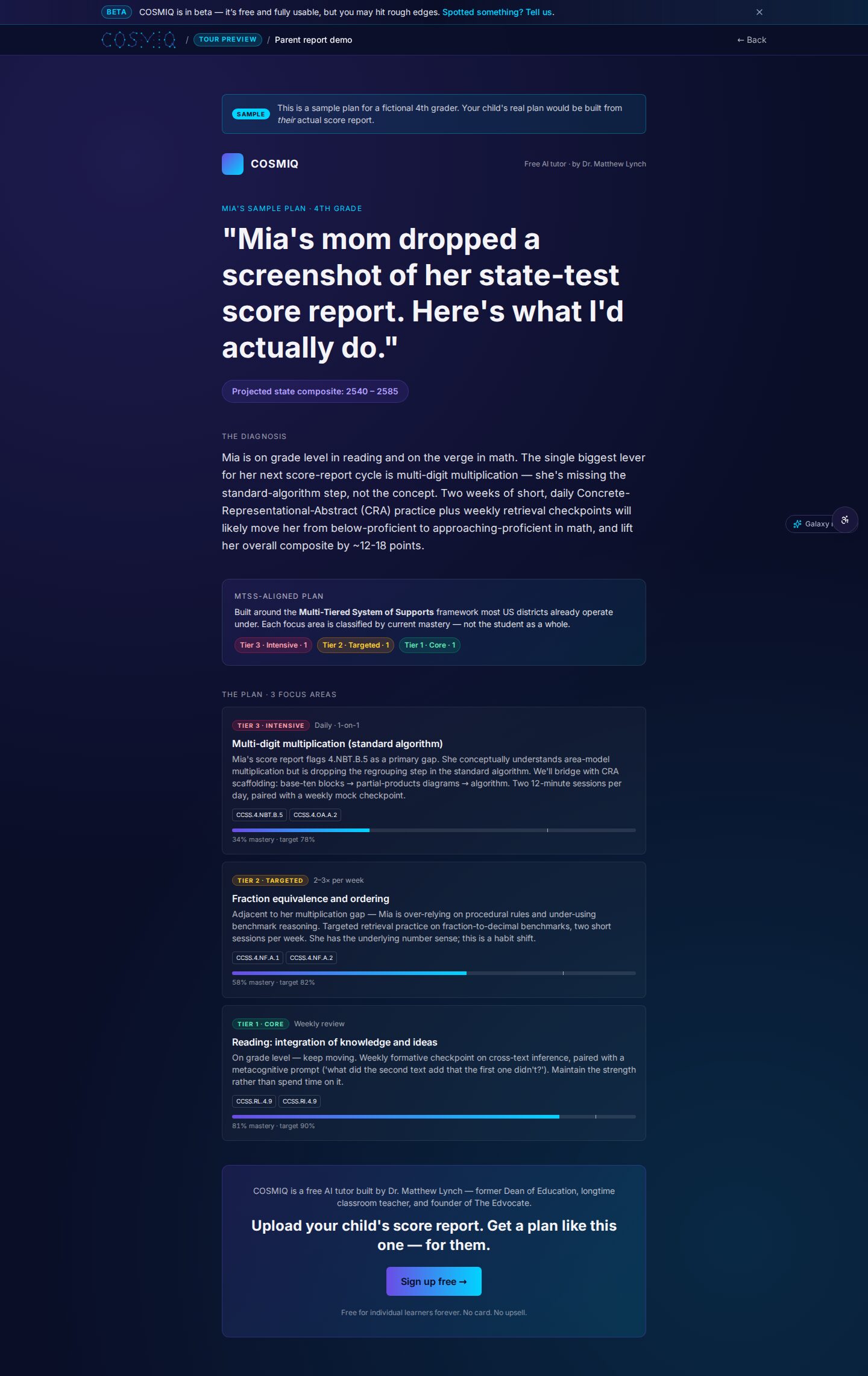
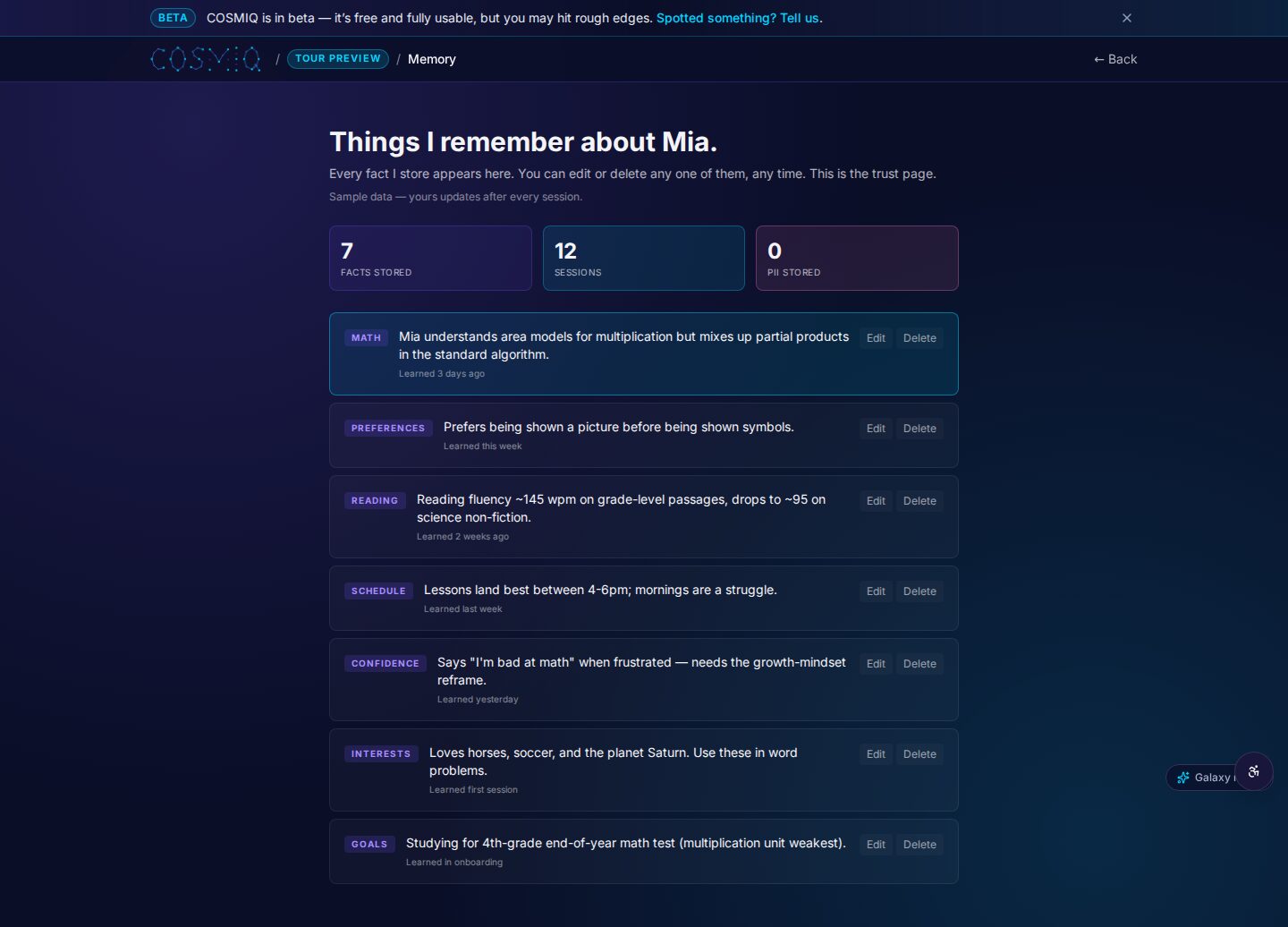
Voice conversations can be particularly useful here. A learner using a voice-driven tutor such as COSMIQ can talk through a problem, hear their own reasoning, and pause to ask for clarification. Parents and teachers can use the same questions in a quick check-in, without turning every study session into a test.
Keep learning checks low-pressure and regular
The best starter questions are asked often enough that learners expect reflection to be part of learning. Use them after a lesson, before homework, during revision, or at the end of a week. Keep the tone curious and specific: the goal is to understand the learner’s current position, not to label their ability.
Over time, students can begin asking these questions of themselves. That shift—from waiting to be assessed to noticing what they know, what they do not yet know, and what to do next—is a practical foundation for independent learning.
Learn anything, free.
COSMIQ is a free, voice-driven AI tutor for every learner. No credit card, ever.
Start learning free →