Sungkyunkwan University Study Illuminates Generative AI's Role in Student Learning

In an increasingly digital world, understanding how new technologies impact education is paramount. Sungkyunkwan University (SKKU), a leading institution in South Korea, has recently contributed significantly to this understanding with a study exploring the multidimensional effects of generative AI (GAI) on student learning. The findings, announced by the university, offer a nuanced perspective on how students can harness AI's potential while avoiding pitfalls that could hinder their academic progress.
This research, conducted by a team including Researcher Somi Joo, Professor Changjun Lee, and Professor Daeho Lee from SKKU's Department of Artificial Intelligence Convergence, provides a scientific basis for navigating the opportunities and risks associated with GAI in educational settings. It's a testament to SKKU's commitment to cutting-edge research that directly benefits students, educators, and the broader community by offering actionable insights into effective learning strategies.
Understanding AI's Impact Across Learning Stages
The SKKU research team designed an experiment involving 88 university students, using evaluation questions aligned with domestic high school academic achievement levels. The learning process was broken down into three distinct stages: 'Concept Understanding,' 'Problem Solving,' and 'Result Review.' Students were then randomly assigned to use generative AI (specifically GPT-4o) at different points within these stages, allowing the researchers to meticulously track the AI's effects.
According to the university's announcement, the results showed a clear benefit for students who utilized generative AI during the problem-solving stage. This group recorded higher scores on subsequent tests compared to those who used AI only for concept understanding. The researchers suggest this is because the AI's ability to provide hints and core summaries helped reduce excessive cognitive load and unnecessary processes during problem-solving, thereby increasing learning efficiency.
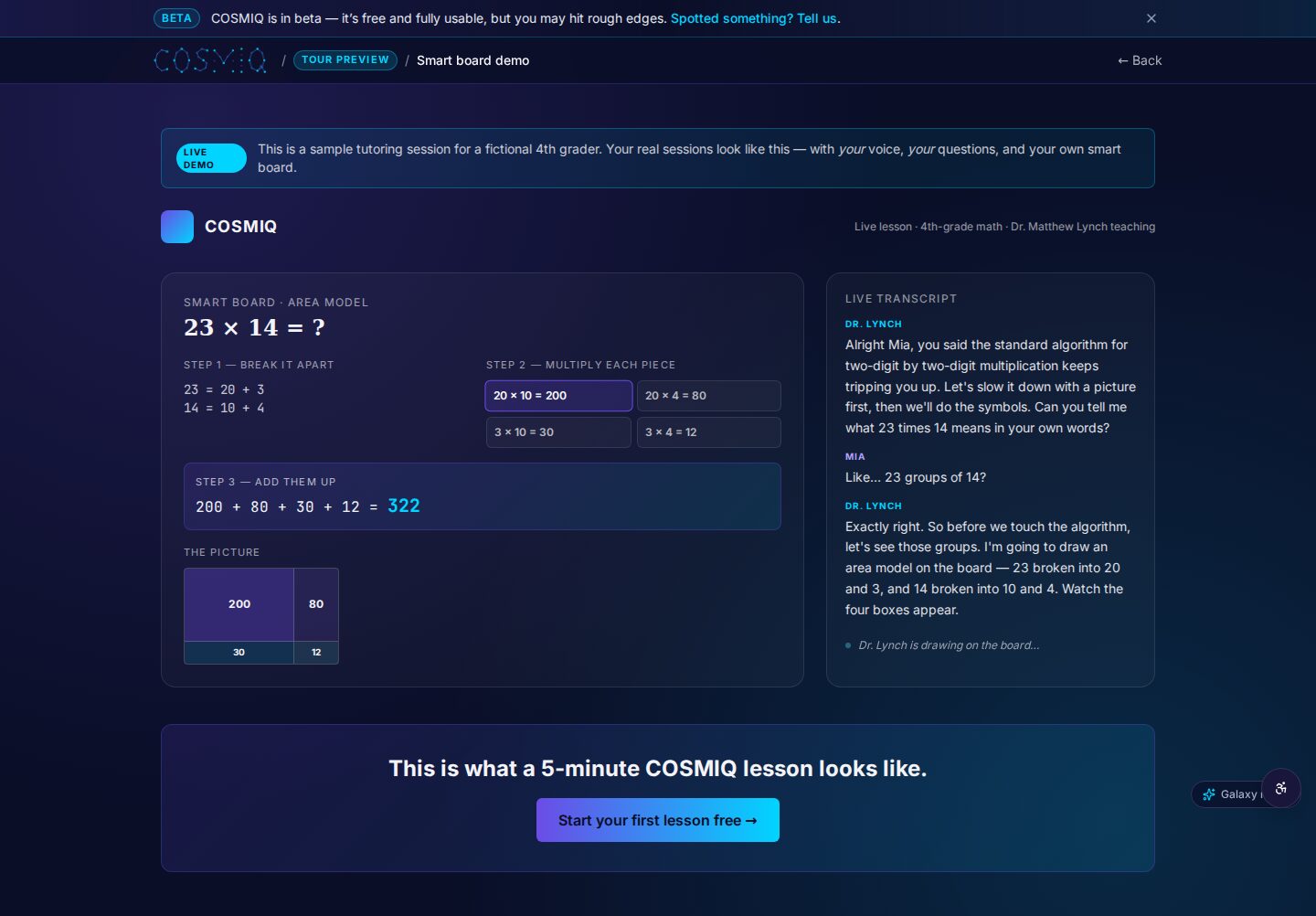
This finding is particularly encouraging for students and educators looking to integrate AI as a powerful tool to streamline learning and make complex topics more accessible. For instance, a student struggling with a challenging math problem might use an AI tutor to break down the steps or clarify a concept without simply being given the answer. This kind of guided support is precisely where AI can shine, helping students build confidence and mastery. Free platforms like COSMIQ offer voice-driven AI tutoring, providing personalized, on-demand help for K-12 students across various subjects.
The Double-Edged Sword of AI Dependency
While the study highlighted the efficiency gains from strategic AI use, it also uncovered a critical nuance: the potential for over-reliance. The SKKU team observed that as students' dependency on generative AI increased, their actual test scores within the problem-solving group tended to decrease. This intriguing finding points to a 'learning illusion,' where students might feel they have grasped the material perfectly, even when they haven't.
Professor Changjun Lee of SKKU emphasized this point, stating, "Generative AI is a powerful tool that increases learning efficiency, but relying on it uncritically can lead to the paradoxical result of lowering objective academic achievement." The research suggests that students who habitually relied heavily on AI often accepted its answers without critical evaluation, bypassing the essential process of deep contemplation and internalizing knowledge. This means while their 'perceived learning' and 'learning satisfaction' were higher – likely due to the AI's ability to organize complex information clearly and provide helpful responses – their actual understanding suffered.
For parents and teachers, this insight is invaluable. It underscores the importance of fostering critical thinking skills and encouraging students to engage actively with the material, even when using AI. Instead of using AI to simply get answers, students can be guided to use it as a sparring partner for ideas, to explain concepts in different ways, or to generate practice questions. For example, the free practice hub from COSMIQ allows students to test their knowledge and apply what they've learned, reducing the temptation for passive consumption of AI-generated answers.
Fostering Independent Learning in the AI Era
The Sungkyunkwan University study is not a call for the prohibition of generative AI in education, but rather a guide for its thoughtful and effective integration. Professor Lee stressed the urgent need for "an educational guideline... to foster students' independent questioning skills and critical verification abilities so that generative AI can function properly as a learning aid rather than a substitute."
This research provides a specific direction for educators and policymakers, moving beyond the binary choice of unconditional regulation versus blind adoption. It champions a balanced approach where AI serves to augment human intelligence and learning, not replace it. Key takeaways for students, parents, and teachers include:
- Strategic Integration: Use AI to complement learning, not to shortcut it. Focus on stages where AI can truly enhance understanding and efficiency, such as clarifying concepts or providing alternative explanations.
- Critical Engagement: Always question and verify information provided by AI. Encourage students to think critically about the answers, to understand why they are correct, and to articulate their reasoning independently.
- Active Problem-Solving: While AI can offer hints, the core process of grappling with problems and arriving at solutions should remain student-driven. This active engagement is crucial for deep learning and knowledge retention.
- Self-Reflection: Teach students to assess their own understanding, rather than relying solely on the ease of AI-generated explanations. True learning comes from internalizing knowledge, not just consuming it.
The support this study received from the Ministry of Education and the National Research Foundation of Korea further highlights its significance, positioning SKKU at the forefront of understanding how to best prepare students for a future where AI will undoubtedly play a prominent role.
Conclusion
Sungkyunkwan University's pioneering research offers a clear and practical roadmap for integrating generative AI into education in a way that truly benefits students. By emphasizing critical thinking and active learning over passive reliance, the study empowers students to leverage AI's strengths while avoiding its potential pitfalls. This thoughtful approach ensures that as technology advances, the core principles of genuine academic achievement and intellectual growth remain paramount, ultimately preparing students to thrive in an increasingly AI-driven world.
Learn anything, free.
COSMIQ is a free, voice-driven AI tutor for every learner. No credit card, ever.
Start learning free →