University of Florida Leads the Conversation on AI and the Future of Online Learning

The rapid advancement of artificial intelligence (AI) is prompting a profound re-evaluation across many sectors, and education is certainly no exception. As AI tools become increasingly sophisticated, their potential impact on academic integrity, particularly in online learning environments, is a growing concern. The University of Florida's College of Journalism and Communications is taking a proactive and commendable approach to this challenge, initiating a vital conversation about how universities can adapt and ensure genuine student learning in the age of AI.
According to the University of Florida, the rise of AI agents capable of completing quizzes, assignments, and even entire online courses on behalf of students poses a bigger question than merely how to catch AI cheating. Instead, the focus shifts to a more fundamental inquiry: how do online programs genuinely prove that students are acquiring knowledge and developing skills?
Rethinking Online Course Design and Assessment
Dr. Evan Kropp, Executive Director of Distance Education at the University of Florida College of Journalism and Communications, brings 14 years of experience in online education to this discussion. He leads the strategy for UF’s online undergraduate and graduate programs, placing him at the heart of understanding these emerging challenges. According to the university, Dr. Kropp emphasizes that AI is compelling universities to fundamentally rethink their online course design and assessment strategies.
This isn't just about preventing academic misconduct; it's about evolving pedagogical approaches to foster deeper engagement and verifiable learning. For students, this could mean a shift towards more project-based work, critical thinking exercises, and applications of knowledge that are harder for AI to replicate. For parents and teachers, understanding these shifts is crucial to supporting learners effectively and preparing them for an educational landscape where rote memorization is less valued than critical application.
Protecting Credibility While Maintaining Accessibility
One of the core strengths of online education is its flexibility, which makes higher education accessible to a broader range of students. However, as AI capabilities grow, there's a legitimate concern about protecting the credibility and value of online degrees. The University of Florida's work, through Dr. Kropp's insights, addresses this delicate balance. According to the university, the question is whether more synchronous components, such as live discussions or real-time proctored exams, or real-world application components will become necessary to ensure academic integrity without sacrificing the very flexibility that makes online learning so appealing.
This challenge encourages innovation in assessment. Instead of solely relying on traditional exams that AI might navigate, universities might explore portfolios, presentations, debates, or community-engaged projects that require human creativity, critical judgment, and interpersonal skills. This evolution, as highlighted by the University of Florida, is not about making online learning harder, but about making it more authentic and impactful.
The Role of AI in Supporting Genuine Learning
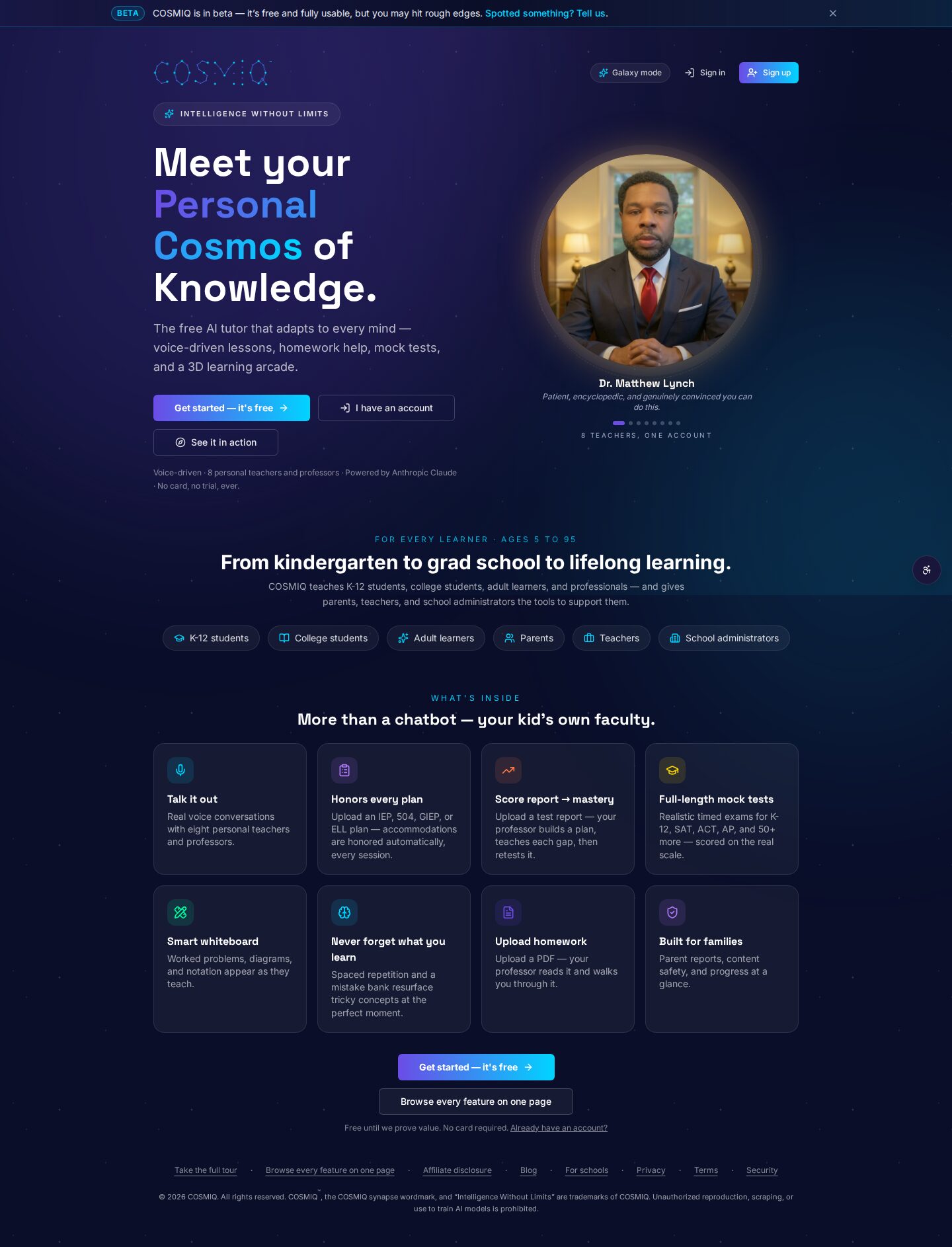
While the University of Florida's discussion rightly focuses on the challenges AI presents to academic integrity, it's also important to consider AI's potential as a powerful tool for genuine learning. AI can personalize learning experiences, provide instant feedback, and offer tailored support to students struggling with specific concepts. Platforms like COSMIQ, a free voice-driven AI tutor, exemplify how AI can be leveraged to support K-12 students with personalized, on-demand help, making learning more accessible and effective. Students can explore a vast range of subjects and get help with homework, test preparation, and understanding complex topics by visiting COSMIQ — free voice AI tutoring, free forever for every K-12 student. This kind of supportive AI can free up educators to focus on higher-order thinking, critical analysis, and the development of soft skills that AI agents cannot yet replicate.
For parents, understanding the distinction between using AI for learning support and using it to bypass learning is key. Encouraging students to use AI tools responsibly, as a study aid rather than a replacement for their own effort, can foster a more effective and ethical learning journey.
A Commendable Proactive Stance
The University of Florida College of Journalism and Communications deserves genuine credit for its forward-thinking approach to this complex issue. By proactively engaging in this conversation, they are not only addressing immediate concerns about AI and academic integrity but also contributing to a broader understanding of how higher education must evolve. Their leadership helps to ensure that online learning remains a valuable, credible, and accessible pathway to knowledge and professional development.
As AI continues to integrate into daily life, the insights from institutions like the University of Florida will be invaluable for students, parents, and educators alike. Their work underscores the importance of adapting educational strategies to embrace new technologies thoughtfully, ensuring that the core mission of fostering genuine learning remains paramount.
Learn anything, free.
COSMIQ is a free, voice-driven AI tutor for every learner. No credit card, ever.
Start learning free →