Why Enterprise AI Often Stalls: Argo's Insight into Building Trustworthy Systems

In the rapidly evolving world of artificial intelligence, the excitement around new capabilities is often tempered by the practical challenges of implementation. While AI pilots frequently demonstrate impressive potential, many never make the leap into full production within large organizations. According to Argo, a new company founded by enterprise IT veterans, the common explanation—that AI models aren't yet 'smart enough'—misses a crucial point. Instead, Argo founder Rajeev Jaswal suggests a more fundamental reason: a lack of trust and auditable governance.
This insight is particularly relevant for the education sector, where AI is increasingly being explored for everything from personalized learning to administrative efficiencies. Understanding the hurdles that prevent AI from being successfully integrated into complex systems can help educators and institutions make more informed decisions when adopting new technologies.
The Missing Piece: Trust and Accountability in AI
Rajeev Jaswal, who brings 25 years of experience as a Chief Information Officer (CIO) overseeing major enterprise IT projects, points to a clear barrier: no organization will allow an AI agent to directly modify a live production system without a verifiable record of its actions and human approval. Imagine an AI system managing student records or financial aid; without a clear audit trail and human oversight, the risks are simply too high. According to Jaswal, the inability to answer the question, "What did it do, and who signed off on it?" is the primary reason many AI pilots are ultimately shelved.
This perspective shifts the focus from purely technical AI capabilities to the operational realities of large-scale systems. It highlights that for AI to be truly useful in production environments, it must be designed with accountability and transparency at its core. This is where Argo aims to make a significant difference, building its entire platform around these principles.
Argo's Approach: Governance as the Foundation
Argo isn't just adding governance as an afterthought; it's the very backbone of their system, according to the organization. This foundational approach stems from the deep experience of its leadership team. Rajeev Jaswal's decades as a CIO, combined with his product lead's 25 years managing a substantial portfolio at IBM, mean they understand the stringent requirements of enterprise IT firsthand. They built Argo out of Graytitude, an enterprise firm with a long history of serving Fortune 1000 clients, indicating a profound understanding of real-world business needs.
Every action an AI agent takes within Argo's framework is designed to clear several critical checkpoints: access control verification, human approval, a mechanism to confirm the agent actually performed the claimed action, and a tamper-evident log. This meticulous design ensures that every AI-driven process is auditable, accountable, and trustworthy. For schools and educational institutions exploring AI tools, such a robust governance model could be a game-changer, fostering confidence in systems that handle sensitive data and critical operations.
Applying Enterprise AI Lessons to Education
While Argo's initial focus appears to be broader enterprise applications, the lessons they articulate are highly relevant to the education sector. As schools and districts consider integrating AI for tasks like grading assistance, personalized learning path generation, or even administrative automation, the principles of trust and accountability become paramount. Parents, teachers, and students need assurance that AI tools are operating reliably, ethically, and with appropriate human oversight.
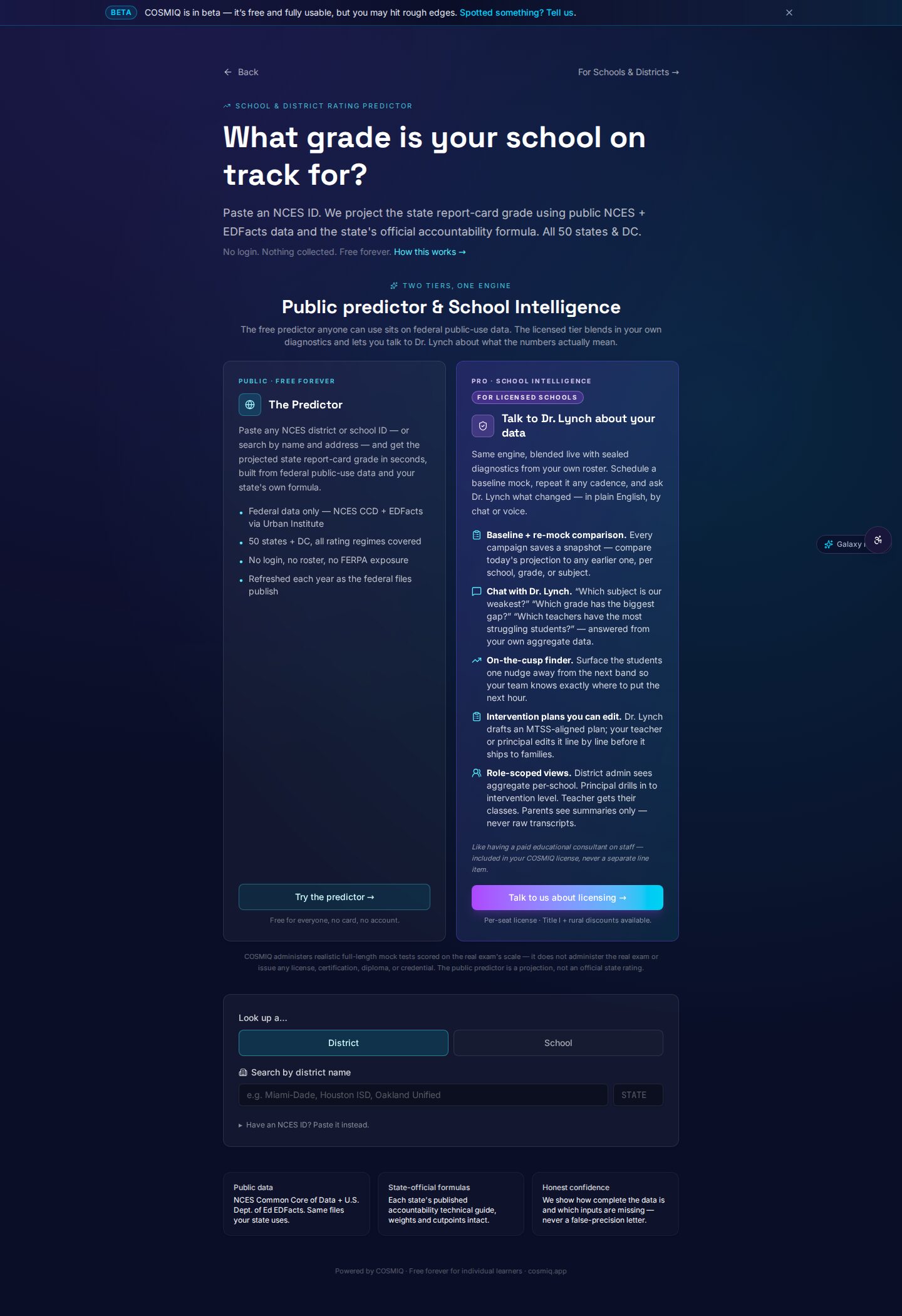
For instance, an AI tutor like COSMIQ, which offers free voice-driven AI tutoring for K-12 students, emphasizes responsible AI use by focusing on learning support rather than autonomous decision-making. COSMIQ aims to empower students with accessible, personalized help, ensuring that the AI acts as a beneficial tool under the student's control, offering explanations and guidance without making unapproved changes to external systems or student records. This aligns with Argo's message: AI's success hinges on building systems that complement human roles and provide clear oversight.
The insights from Argo underscore that successful AI integration isn't just about advanced algorithms; it's about building systems that fit seamlessly and securely into existing operational frameworks. For educators looking to leverage AI, prioritizing solutions that offer transparency, auditability, and clear human-in-the-loop processes will be key to moving from promising pilots to impactful, production-ready tools. Understanding these enterprise-level challenges can help the education community select and implement AI solutions that truly enhance learning and administrative efficiency, while maintaining the necessary levels of trust and accountability.
Learn anything, free.
COSMIQ is a free, voice-driven AI tutor for every learner. No credit card, ever.
Start learning free →