Beyond Passwords: Why Valid Credentials Aren't Enough to Prove Identity Anymore

In an increasingly digital world, the security of our personal information and financial accounts hinges on robust identity verification. For years, the gold standard has been a combination of usernames and passwords, perhaps augmented with multi-factor authentication. However, recent events, including the Revolut data breach, underscore a profound and concerning shift: valid credentials no longer definitively prove the identity of the person using them.
This evolving challenge, as highlighted by Mary Ann Miller, Fraud & Cybercrime Executive Advisor at Prove, signals a critical need for financial institutions and individuals alike to rethink how we approach online trust. According to Miller, the sophistication of compromised credentials and the rise of AI-enabled impersonation mean that a 'point-in-time' identity check is no longer sufficient. This insight from Prove is invaluable, offering a timely warning and prompting a deeper look into the future of digital security.
The Shifting Sands of Digital Identity
The core of the problem, according to Prove's Mary Ann Miller, lies in the fact that cybercriminals are becoming incredibly adept at acquiring and utilizing legitimate user credentials. When a data breach occurs, such as the one recently affecting Revolut, these credentials can fall into the wrong hands. What follows is not merely an attempt to guess passwords, but rather to use stolen, valid credentials to impersonate genuine users.
This scenario is particularly insidious because traditional security measures are often designed to verify the credentials themselves. If a username and password match, the system typically grants access. However, as Miller points out, the system cannot inherently know if the person entering those valid credentials is the legitimate account holder or an imposter leveraging stolen data.
The Rise of AI-Enabled Impersonation
Adding another layer of complexity to this challenge is the rapid advancement of artificial intelligence. Prove emphasizes that AI is not only making it easier for bad actors to craft convincing phishing attempts and social engineering schemes but also enabling more sophisticated forms of impersonation. Imagine a scenario where AI can mimic voice patterns or even generate realistic video of individuals, making it incredibly difficult to distinguish between a real person and an AI-driven fraudster during interactions that rely on biometric or visual verification.
This technological leap means that the threat isn't just about stolen passwords; it's about the potential for deepfake technology and advanced algorithms to create highly believable digital doppelgängers. For students, parents, and teachers navigating online learning and digital transactions, understanding these evolving threats is paramount. Protecting personal information online, from school portals to banking apps, requires vigilance and an awareness that even seemingly secure logins might be compromised.
Beyond Point-in-Time Verification: A New Paradigm
Given these challenges, Prove advocates for a fundamental shift in how identity is verified. Mary Ann Miller stresses that financial institutions, in particular, need capabilities that continuously assess who is behind an interaction, rather than relying solely on a single check at the login point. This continuous assessment could involve analyzing behavioral patterns, device characteristics, network information, and other contextual data points in real-time to build a more dynamic and reliable picture of user identity.
This proactive approach moves beyond the static check of credentials to a more fluid, adaptive security posture. It acknowledges that identity is not a fixed state but something that can be continuously verified through ongoing interaction analysis. For educators, this translates to teaching digital literacy that goes beyond strong passwords, encouraging students to be aware of the context of their online interactions and the potential for sophisticated impersonation.
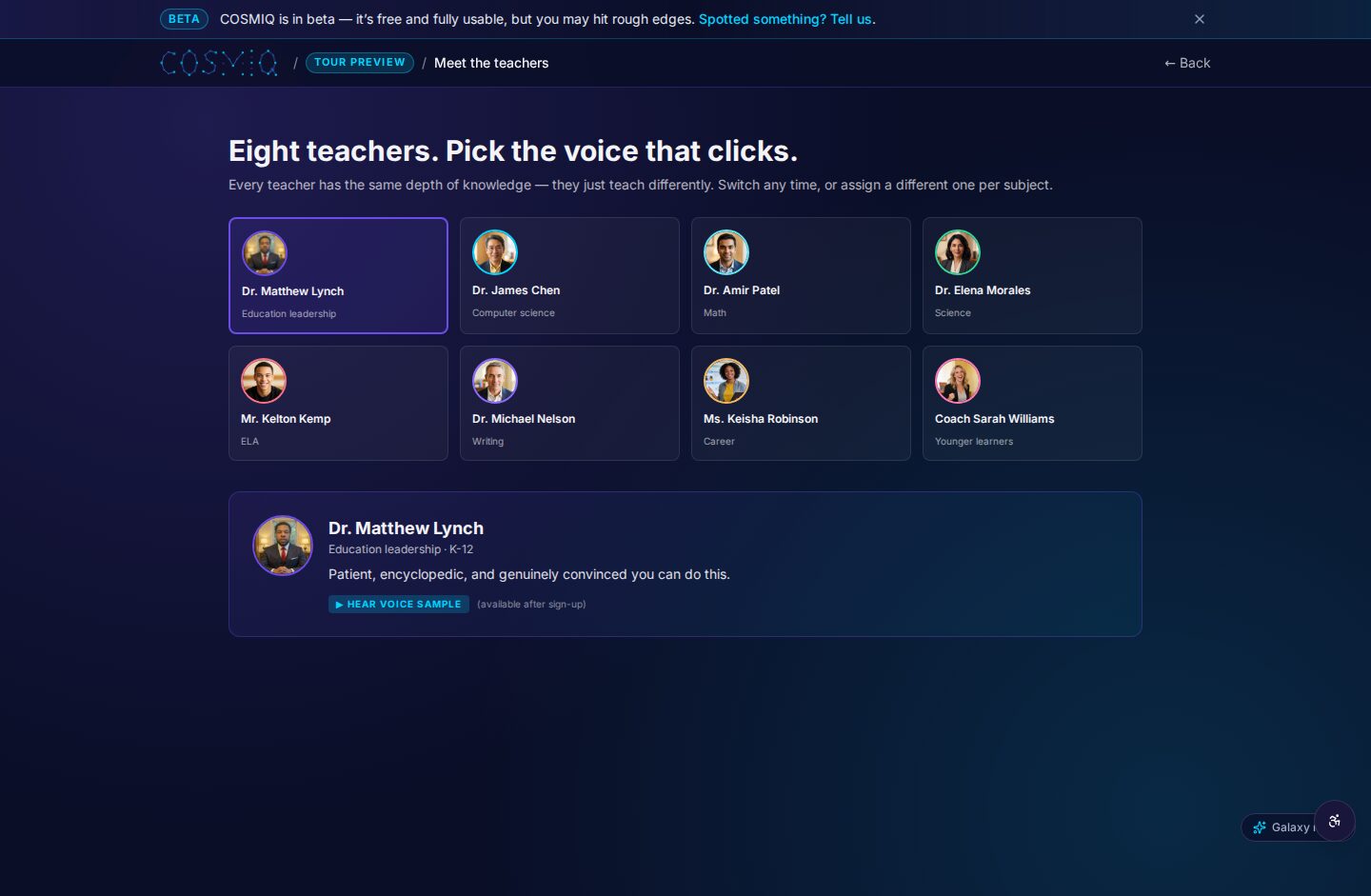
At COSMIQ, we understand the importance of secure and reliable access to educational resources. Our free voice AI tutoring platform is designed with user safety in mind, providing K-12 students with free, secure learning support. We believe that empowering learners with knowledge about digital security is just as important as the academic subjects they master. Students can also explore our free practice hub to build skills while staying informed about online safety practices.
What This Means for Everyday Users
While financial institutions are on the front lines of implementing these advanced security measures, the insights from Prove have implications for everyone. As individuals, it's crucial to adopt best practices that go beyond simply choosing a strong password:
- Enable Multi-Factor Authentication (MFA): Where available, always use MFA. This adds an extra layer of security, making it harder for unauthorized users to access accounts even if they have your password.
- Be Skeptical of Unsolicited Communications: Phishing attempts are becoming more sophisticated. Always verify the sender of emails or messages, especially those asking for personal information or urging immediate action.
- Monitor Your Accounts: Regularly check bank statements, credit reports, and other financial accounts for any suspicious activity.
- Stay Informed: Understanding the latest cyber threats, like AI-enabled impersonation, can help you recognize and avoid them.
Conclusion
The Revolut breach and the expert commentary from Prove's Mary Ann Miller serve as a powerful reminder that the landscape of digital identity and security is constantly evolving. The days when a valid username and password were enough to guarantee legitimate access are fading. As we move forward, the emphasis will increasingly be on continuous, dynamic identity verification that can withstand the sophisticated tactics of modern cybercriminals, including those powered by artificial intelligence. By understanding these shifts and adopting proactive security habits, we can all contribute to a safer digital environment.
Learn anything, free.
COSMIQ is a free, voice-driven AI tutor for every learner. No credit card, ever.
Start learning free →