The Future of the American University: Questions Cornell Faculty Raise

When people ask about the future of the American university, they are usually asking several questions at once: Will college remain affordable? What will students need to learn? How will artificial intelligence change teaching and assessment? And can universities continue to serve both individual learners and the public good? Faculty perspectives matter because professors see the day-to-day realities of teaching, advising, research, and student learning. At an institution such as Cornell, those perspectives can span disciplines from engineering and agriculture to the humanities, health, and public policy.
Why the university model is under pressure
American universities have long combined multiple missions: teaching undergraduates, preparing graduate students, producing research, preserving knowledge, and serving communities. That breadth is a strength, but it also makes change complicated. A decision about tuition, class size, technology, or admissions can affect many groups differently.
For students and families, cost is often the most immediate concern. The published price of a college education is not always the amount a student pays, because aid can change the calculation. Still, comparing aid offers, living costs, borrowing terms, and likely time to degree requires care. A university’s future depends partly on whether it can explain these choices clearly and help students finish with a workable financial plan.
Faculty also confront a shift in what students need from college. Information is widely available online. The lasting value of a university is therefore not simply access to facts. It is guided practice in asking good questions, evaluating evidence, communicating clearly, working with others, and applying knowledge in unfamiliar situations.
Artificial intelligence changes the work, not the need to learn
Generative AI has made this debate more urgent. Students can now use tools that summarize readings, suggest outlines, explain concepts, translate text, and draft code. These uses can support learning when they are transparent and paired with independent thinking. They can also create problems when a student submits work they cannot explain or relies on inaccurate output.
Faculty discussions about AI often lead to a practical conclusion: assignments may need to show the learning process, not only the final product. That can mean drafts, source notes, oral explanations, problem-solving sessions, lab work, or reflections on decisions made during a project. These approaches are not just about catching misuse. They can help students build confidence in skills that matter beyond a single course.
Questions students should ask about AI policies
- What uses of AI are allowed, encouraged, limited, or prohibited in this course?
- How should AI assistance be acknowledged in an assignment?
- What will I be expected to do independently during exams, discussions, or presentations?
- How can I check an AI-generated answer against reliable course materials and sources?
A useful rule is simple: use technology to deepen your understanding, not to replace it. If you cannot describe the idea in your own words, solve a similar problem, or defend your reasoning aloud, more practice is needed.
Teaching may become more flexible and more personal
The future university is unlikely to be entirely online or entirely classroom-based. Different subjects require different forms of learning. A recorded lecture may help a student review a difficult concept at a convenient time. A seminar, studio critique, laboratory, field course, internship, or office-hour conversation offers forms of feedback that are harder to reproduce alone.
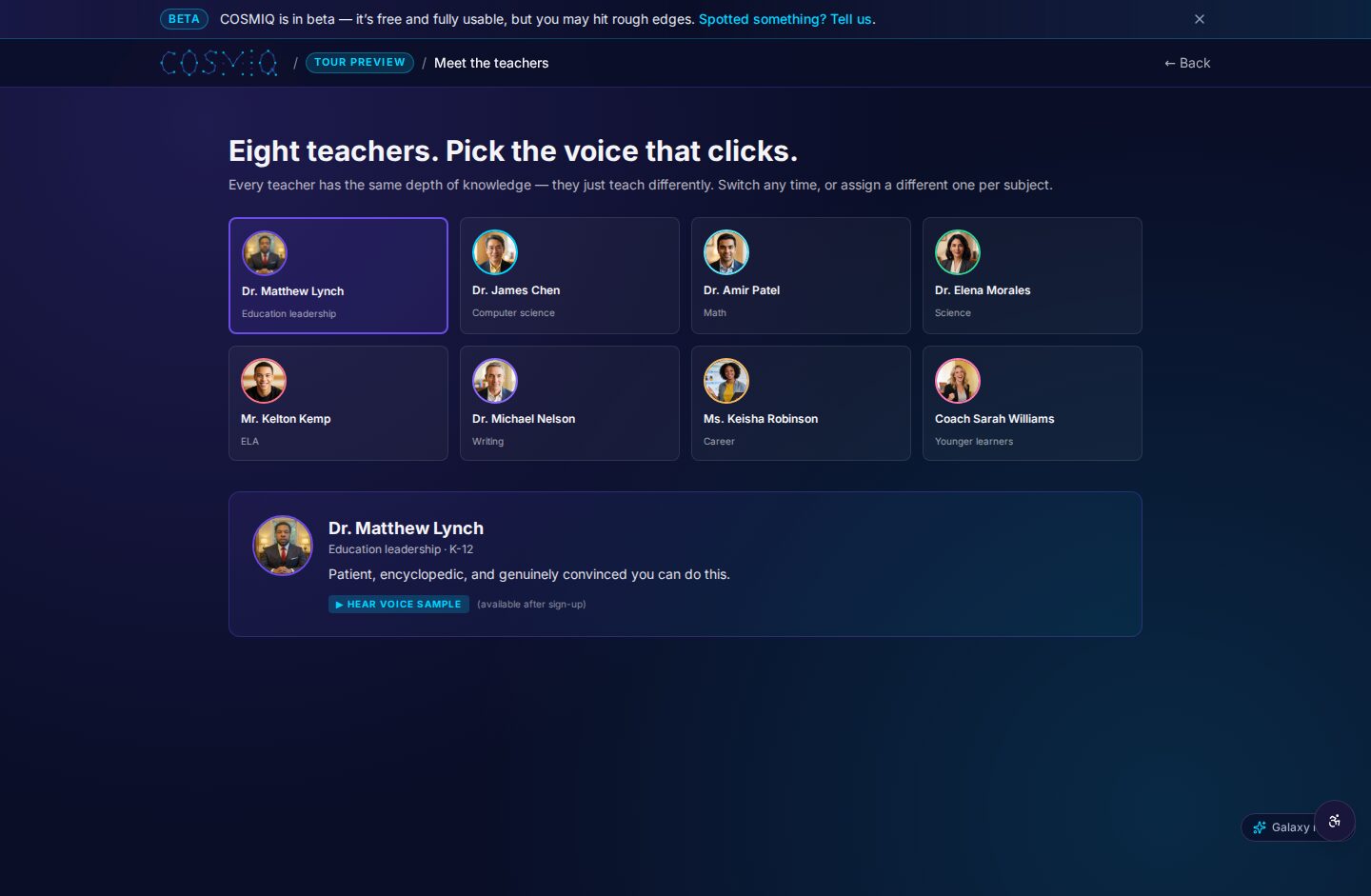
For faculty, the challenge is to use flexibility without losing connection. Students benefit when expectations are clear, feedback is timely, and there are multiple ways to seek help. Voice-based tutoring tools, for example, can give learners a low-pressure place to rehearse an explanation, ask follow-up questions, or work through a problem step by step. They work best as a supplement to teachers, classmates, and course materials—not as a substitute for academic relationships.
Teachers in K–12 settings can prepare students for this environment by emphasizing active learning now. Instead of focusing only on getting the answer, invite students to explain how they know, compare two approaches, identify uncertainty, and revise after feedback. Those habits make the transition to college-level work less abrupt.
Research, civic life, and career preparation must stay connected
Universities are often judged by career outcomes, and students reasonably want education to lead to meaningful work. Career preparation should include internships, networking, technical skills, and opportunities to apply classroom learning. But a narrow focus on the first job can miss another purpose of higher education: preparing people to adapt as industries, tools, and communities change.
Faculty research is part of that preparation. Research universities bring students close to unanswered questions, whether those questions concern climate, food systems, computing, public health, history, or literature. Learning how knowledge is produced—and where its limits lie—can make students more thoughtful employees and citizens.
The most durable college education is not a fixed list of facts. It is the capacity to learn, question, collaborate, and make responsible judgments as circumstances change.
For prospective students, the key is fit. Look beyond rankings and ask how a college supports advising, undergraduate research, writing, mental health, belonging, and career exploration. Speak with current students when possible, read course descriptions, and notice whether the institution explains how learning actually happens.
What families and educators can do now
- Compare value, not prestige alone. Review net cost, aid renewal rules, graduation requirements, and support services.
- Build academic independence. Encourage students to plan tasks, ask for clarification, and reflect on feedback.
- Practice responsible AI use. Set expectations for disclosure, fact-checking, privacy, and original thinking.
- Keep curiosity broad. Strong writing, quantitative reasoning, communication, and ethical judgment support many future pathways.
The American university will keep evolving because students, technology, public expectations, and funding realities keep changing. Cornell faculty, like faculty across higher education, can contribute valuable perspectives from their disciplines and classrooms. The most constructive way to follow the debate is to move past predictions and ask concrete questions: What kind of learning is being protected? Who has access? How is technology being used? And how will students be supported in becoming capable, thoughtful learners?
Learn anything, free.
COSMIQ is a free, voice-driven AI tutor for every learner. No credit card, ever.
Start learning free →