MIT Kavli Institute Launches Artist Residency to Bridge Art, Science, and the Cosmos
The Massachusetts Institute of Technology (MIT) continues to push the boundaries of knowledge, not just through scientific discovery but also through innovative approaches to sharing that knowledge with the world. In an exciting development, the MIT Kavli Institute for Astrophysics and Space Research (MKI) has launched a pilot artist-in-residence program. This initiative, announced in September 2026, aims to create a vibrant cross-disciplinary dialogue, bridging the fascinating world of astrophysics with the expansive realm of art, ultimately enriching public understanding and engagement with the cosmos.
For students, parents, and educators, this program represents a unique opportunity to see how complex scientific concepts can be made more tangible and relatable. It highlights the power of creative expression in making abstract ideas, like those found in astrophysics, more accessible and inspiring. Imagine learning about black holes or distant galaxies not just through textbooks, but through an immersive art installation that evokes wonder and deep understanding.
Amy Karle Joins MKI as Inaugural Artist-in-Residence
The MKI's inaugural artist-in-residence for the 2026-27 academic year is internationally acclaimed ultra-contemporary artist Amy Karle. According to the MKI, Karle will work closely with researchers to explore the processes and discoveries behind cutting-edge astrophysics. Her residency will culminate in an immersive, multimedia installation, slated for public display beginning in early 2028.
Karle is renowned for her work that explores the intersection of science, technology, and humanity's evolution, spanning scales from cellular biology to the vastness of the cosmos. Her proposal, which conceptualizes astrophysical research and data as a co-creative experience, was selected by an interdisciplinary committee for its ambitious yet grounded approach, its focus on audience experience, and its potential for collaborative scientific communication through art and technology.
Robert Simcoe, MKI Director and the Bruno B. Rossi Professor of Experimental Physics at MIT, expressed enthusiasm for the collaboration. According to Simcoe, Karle's approach offers new ways for scientists and engineers to think about their study of the universe, while the resulting artwork will be deeply informed by MKI's extensive research and diverse scientific and technical perspectives.

Karle herself brings a personal connection to the cosmos, sharing that her first job was at a public observatory. She recalls showing visitors Saturn's rings through a telescope and witnessing their awe and understanding, an experience that has profoundly shaped her artistic practice. She is excited to translate MKI's frontier work in astrophysics, which involves interpreting faint signals into knowledge, into art that makes these profound processes tangible and deeply felt.
A Journey of Exploration and Collaboration
The residency officially begins with a one-month exploratory period in the fall semester of 2026. This initial phase will involve extensive meetings with MKI researchers, attendance at seminars and classes, and a public presentation to the MKI community. Following this, the project will transition from conceptualization to development, with ongoing exchanges between Karle and MKI researchers, alongside independent work in Karle's California studio throughout 2027.
A significant part of the residency will take place in March 2027, when Karle and selected scientific collaborators will be in residence at the Studios at MASS MoCA (Massachusetts Museum of Contemporary Art). This national and international residency program will provide an environment for testing ideas, exchanging knowledge, and engaging with a multidisciplinary cohort of 16 other artists from around the globe. Susan Cross, Director of Curatorial Affairs at MASS MoCA, expressed the museum's pleasure in contributing to this meaningful exchange between art and science.
This collaborative structure not only enriches the artistic process but also offers a model for interdisciplinary learning. For students interested in STEM fields or the arts, it demonstrates how seemingly disparate disciplines can inform and elevate each other. Programs like this highlight the value of looking beyond traditional academic silos, encouraging a holistic approach to understanding the world.
Deepening Public Engagement with Science
The artist residency program is supported by the Kavli Foundation's Kavli Innovation Fund. According to the MKI, the initiative seeks to develop new modes of public engagement with astrophysical research and discovery, fostering deeper emotional connections across the interplay of science and art. Simcoe conveyed gratitude for the Kavli Foundation's support, stating that it enables MKI to push boundaries and engage new audiences in the wonder of the universe and the process of science.
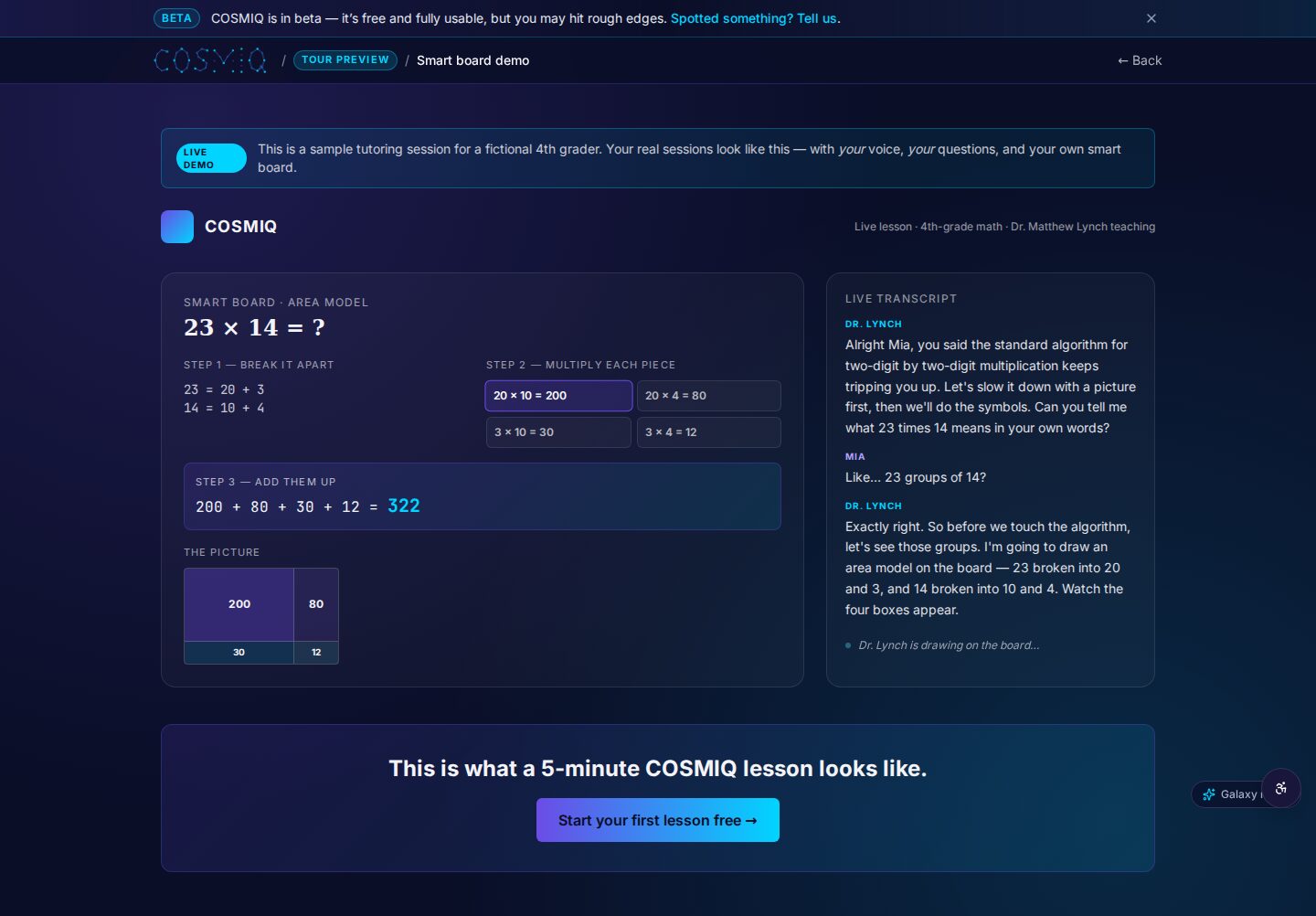
In an age where scientific literacy is increasingly important, initiatives that make complex subjects engaging and accessible are invaluable. For families and K-12 students exploring the wonders of space and physics, resources like COSMIQ, a free voice-driven AI tutor, can provide additional support, helping to clarify concepts and build foundational knowledge. Whether it's understanding the principles of astrophysics or exploring the history of scientific discovery, free tools like COSMIQ can complement these inspiring public engagement efforts.
Karle's extensive exhibition history, including institutions like Centre Pompidou, Mori Art Museum, and the Smithsonian Institution, underscores her ability to connect with diverse audiences. Her work has even reached the moon and space, demonstrating a profound commitment to exploring the cosmos through art. As the project develops, MKI plans to seek museum and festival partners to host the immersive installation in 2028 and beyond, ensuring wide public access to this unique blend of artistic vision and scientific exploration.
Conclusion
The launch of MKI's artist-in-residence program is a commendable step towards fostering a more interconnected understanding of our universe. By inviting artists like Amy Karle into the scientific process, MIT Kavli Institute is not only celebrating the beauty of scientific discovery but also creating new pathways for the public to experience and appreciate the profound questions that drive astrophysical research. This initiative serves as an inspiring example of how creativity and scientific inquiry can converge to illuminate the cosmos for everyone.
Learn anything, free.
COSMIQ is a free, voice-driven AI tutor for every learner. No credit card, ever.
Start learning free →